Start with the commitment, not the smallest first payment
A small initial payment can leave a large funding obligation later. Before comparing a mortgage with a developer payment plan or a cash purchase, write down the entire purchase commitment and when each part falls due. Then distinguish money already available from money you expect to obtain. A future loan, property sale or business receipt may be plausible, but it should not be presented as an unconditional source of funds before the necessary steps are complete.
The investment question is whether the funding route fits both the asset and your capacity to carry it. Keep the property's operating assumptions unchanged while comparing finance options. Otherwise a stronger rental forecast can hide a weaker borrowing arrangement. This page helps you choose the questions to resolve with a lender or seller; the linked preparation and cash-gap guides examine the transaction details more closely.
Separate an indication of borrowing capacity from released funds
HSBC describes approval in principle as an initial indication of how much it may lend, rather than a guaranteed home loan. Use that distinction when organizing your decision. Record what the lender has assessed, what documents remain outstanding and whether the chosen property has been considered. Do not treat a conversation about possible borrowing as equivalent to an offer with identified conditions, or an offer as proof that money is ready for completion.
For each stage, ask who confirms completion and what evidence you should retain. A useful funding plan has a responsible person and a deadline beside every unresolved step. If the amount depends on a valuation or updated borrower information, show the dependency explicitly. When discussing the purchase contract, have the relevant professional explain the consequences of a missed finance date and the protection, if any, provided by the actual wording.
Read the loan beyond its introductory rate
An introductory rate describes only part of a loan if later pricing follows another formula. Emirates NBD's published home-loan key facts statement illustrates fixed introductory periods followed by variable pricing linked to EIBOR plus a margin. That is a product example, not a universal offer or confirmation of your eligibility. Read your own quotation for the reference rate, margin, review dates and the period during which each arrangement applies.
Request comparable schedules using the same loan amount and term. Identify fees, insurance requirements and conditions affecting repayment or settlement. A lower advertised interest rate does not necessarily mean a lower total commitment for the period you expect to own the property. If you may sell or reduce the debt early, examine that route as well as the full-term illustration. Keep current contractual amounts separate from assumptions about future reference rates.
Examine a developer plan as a sequence of obligations
For a payment plan, obtain the actual installment schedule and the event or date triggering each payment. Distinguish construction-linked milestones from calendar dates and from any proposed post-handover obligations. Ask how the contract defines the trigger and what documentation accompanies a payment request. Do not infer rental income, immediate occupation or bank finance simply because an installment is described as payable at handover.
A comparison should show the purchase price and everything included in it, as well as the distribution of payments. If two offers use different prices or incentives, explain those differences instead of comparing installment percentages alone. Review cancellation, assignment and late-payment provisions with appropriate advice where needed. An attractive schedule does not establish rights that are absent from the contract, and a later installment remains a commitment even when it is outside this year's budget.
Identify the period of greatest funding pressure
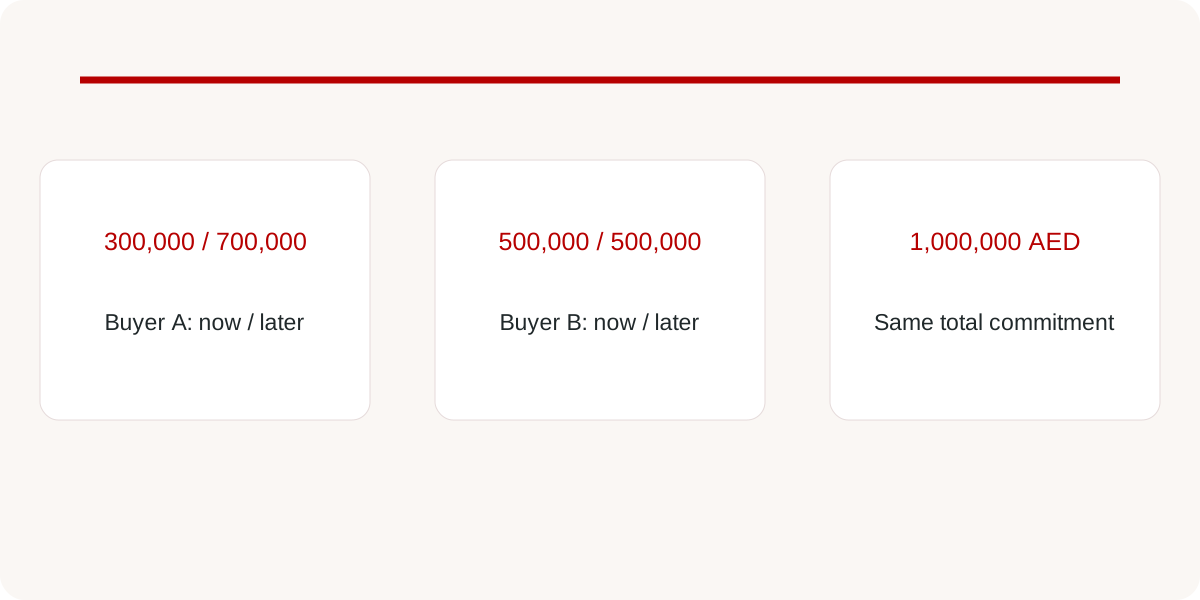
In a hypothetical illustration, Buyer A must provide AED 300,000 now and AED 700,000 later, while Buyer B must provide AED 500,000 now and AED 500,000 later. Both schedules total AED 1,000,000, excluding all other costs. The first uses less cash initially but concentrates more funding at the later date. Neither is automatically cheaper or safer. The result depends on confirmed resources, other obligations and the consequences if expected funds arrive late.
Add unpaid acquisition costs and a separately identified operating reserve to the relevant dates. Show deposits already credited so they are not counted twice. Test a delay in an expected receipt without assuming that the seller or bank will extend its deadline. These figures illustrate timing only; they are not payment terms for a project, a financing offer or a recommendation to choose one structure. The useful output is a calendar that reveals the most demanding date.
Choose the next action according to the unresolved risk
If borrowing capacity is unclear, start with lender preparation. If the valuation reduces the proposed loan, recalculate the cash gap before relying on your original budget. If a large future installment depends on selling another asset, examine the timing and an alternative funding source. If the loan remains affordable only with optimistic rent, revisit the property's operating assumptions rather than treating finance approval as proof of investment suitability.
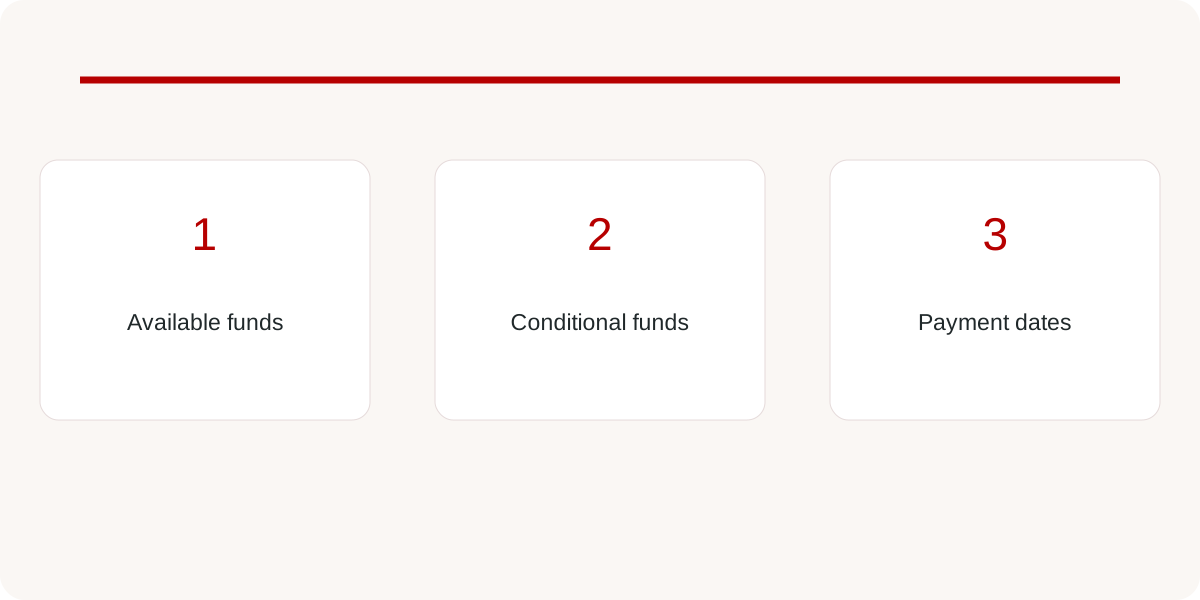
Document the route selected, the evidence supporting it and the conditions that would make you reconsider. Include the remaining debt or unpaid purchase balance at the date you may wish to exit. Revisit the plan when an offer expires, a key document changes or a contractual milestone approaches. The strongest comparison is one you can update without rebuilding its logic: price, available capital, conditional funding, payment dates and operating reserves should each remain visible.
- Identify the funds already available.
- List the conditions for each future source.
- Match every commitment to its payment date.
- Keep operating reserves separate from the purchase balance.
Sources and reference
- HSBC UAE — Approval in principle — Checked 13 October 2026
- Emirates NBD — Home loan key facts statement — Checked 13 October 2026