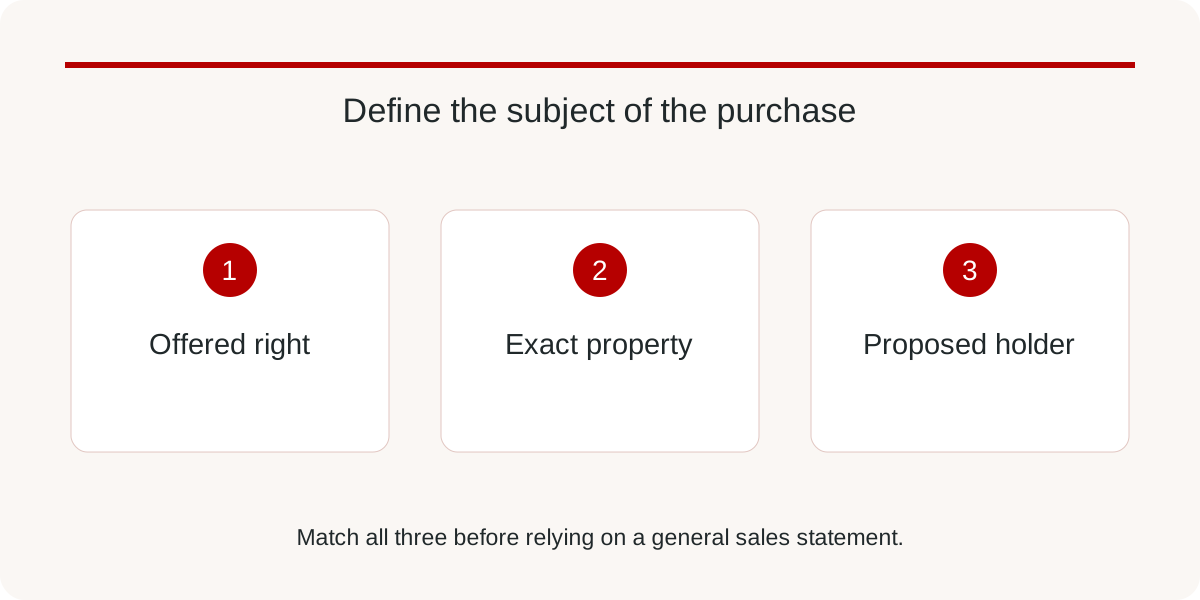
A Sharjah offer becomes easier to assess when the right, approval and proposed purchaser are defined together. Use the documents to resolve differences before comparing prices.
A useful answer names the right, the property and the buyer
Before you reserve a home in Sharjah, the important question is what the proposed transaction would put in your name. An advertisement saying that international buyers are welcome is a starting point, but it leaves several matters unresolved: the legal description of the right, the property covered by the relevant approval, and the identity under which you intend to purchase. Bring those matters together before comparing payment plans. Two apartments with similar floor areas and prices can represent different commitments if their documents describe different rights, remaining terms or transfer conditions. A viewing confirms physical features; it cannot settle those documentary differences.
Prepare a short description of your intended purchase before requesting advice. State whether you are considering an existing home or an unfinished unit, buying personally or through an entity, and planning to occupy, let or later sell it. Add the exact project and unit references already available. This helps the department or adviser answer a concrete question instead of responding with a general statement about foreign investment. You do not need to circulate identity documents to everyone involved in the search. Share necessary transaction information through the appropriate verified channel once the recipient and purpose are clear.
Read the ownership announcement within its stated boundaries
The Executive Council announcement of 1 November 2022 describes ownership without a time limit for all nationalities within real estate development areas and projects. Its stated setting matters. A market-wide slogan does not identify the approval covering a particular property, and the announcement is not a personal transaction clearance. Ask how the offered development falls within the applicable arrangements, with a reference that can be checked. Keep a dated record of the answer alongside the offer. An attractive location or a developer's familiarity to overseas purchasers does not resolve that question by itself.
The official first-half 2026 report separately discusses projects approved for ownership under the relevant resolution. That later reporting is a useful reminder to investigate the project's approval, rather than assume every advertisement in the emirate offers an identical right. It is historical reporting for a defined period, not a live list of units that can be bought today. The practical next step is to identify the development, phase and property in your own file and request current confirmation for that transaction. Do not substitute an aggregate market figure for the document that actually addresses the proposed purchase.
Keep ownership and usufruct in separate comparison fields
If one document describes ownership and another uses usufruct, retain both descriptions until the difference is explained. Usufruct concerns a right to use and benefit from property; it should not be translated into unrestricted ownership simply to make a sales summary shorter. Ask what the instrument grants, to whom, for which asset and on what terms. For an offer described as time-limited, request the commencement date, end date and remaining period applicable to your purchase. Do not insert a familiar number of years taken from another emirate, another project or an older article.
The comparison should show how the right supports your intended use. If you expect to hold the home for a long period, the treatment of the remaining term and any extension provisions becomes a specific question for review. If you expect to sell earlier, ask about transferability and the documentation a future buyer would need. These questions do not establish that a restriction or renewal option exists in your case. Their purpose is to obtain an answer from the relevant instrument. A claimed extension or conversion should have its own evidence; it should not be assumed from the word investment.
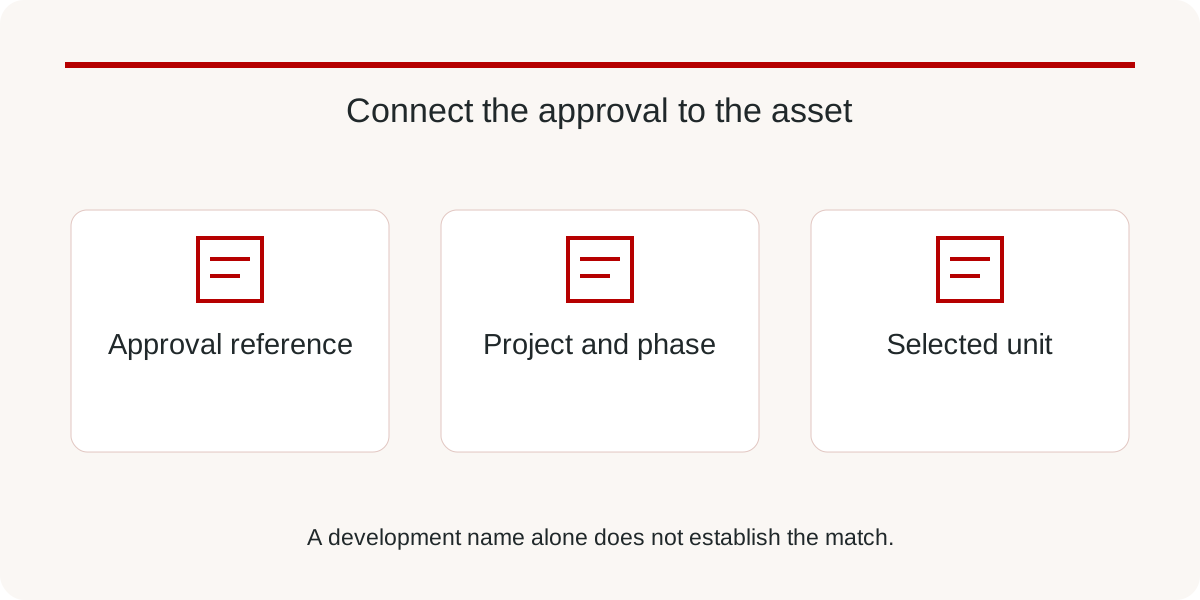
Connect the approval to the exact asset being offered
A master development name can cover several buildings, phases or plots. Record the identifiers used in the offer, the draft agreement and the supporting property record, including any differences in spelling. Where the approval document uses a land or project reference rather than the advertised building name, ask for the link between them. A brochure map can help you understand the geography, but it should not silently fill a gap in the transaction documents. The question is whether the approval being relied on covers the asset and proposed right under discussion, not whether it describes a nearby development with a similar name.
Mixed-use schemes need particular care in ordinary comparisons. An answer given for a residential apartment should not automatically be extended to a shop, office or plot in the same wider project. Ask whether the property category and intended activity match the documentation. Similarly, identify whether parking or storage is included in the selected unit's rights, separately documented or merely available under another arrangement. Keep the floor plan, unit schedule and relevant written explanation together. This prevents a communal amenity or optional space from appearing in the comparison as though it were an asset you will acquire outright.
Confirm who will be recorded as the purchaser
An individual, a couple purchasing together and a company are different proposed purchasing arrangements. Make the intended holder explicit before relying on an answer obtained for somebody else. Ask the relevant department or qualified adviser what evidence is required for that arrangement and whether the project approval supports it. Do not assume that a person's ability to purchase is automatically identical to the position of a company they own. If your plan changes from a personal purchase to an entity purchase, revisit the answer before signing instead of treating the name change as a clerical correction.
For a purchase involving more than one person, ask how their interests would be recorded and what authority is needed from each participant. If someone will act under a power of attorney, have the proposed authority checked for the particular act rather than assuming a general appointment covers everything. Family succession and estate planning are separate questions worth raising where relevant, especially across jurisdictions. A general marketing statement cannot resolve them. Keep the advice connected to the actual proposed holder and documents, and obtain appropriate professional review without assuming a standard outcome for every nationality or family situation.
An existing seller's documents describe the starting position
When buying a completed property from an existing holder, inspect what that holder actually has and what they propose to transfer. Request the relevant current record through the proper channel, then compare the recorded asset and right with the offer. A key, a utility account or a previous rental agreement is not a substitute for understanding the seller's documented interest. Ask who must participate in the transfer and which outstanding matters require resolution. Where financing or another registered interest is involved, obtain an explanation of how the transaction would deal with it, rather than relying on a general promise of a clear transfer.
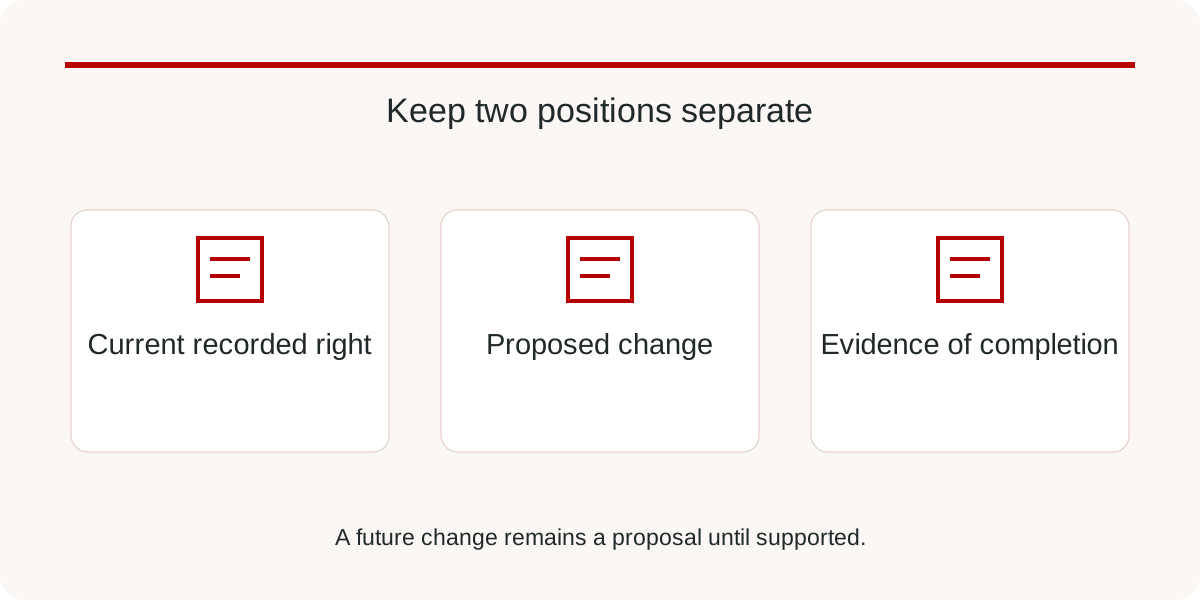
An older instrument may use wording that differs from a recent advertisement. Do not assume that a subsequent policy announcement has automatically rewritten that particular instrument. If a seller describes an available conversion, ask what process and approvals apply, which party must initiate it, when it would be completed and what documentary result the buyer would receive. Keep the existing position and the proposed future position in separate columns. Until the necessary evidence is available, assess the purchase on the basis of the verified position and treat the proposed change as an unresolved transaction condition.
An off-plan contract requires a clear explanation of the registration path
For an unfinished home, separate the booking document, purchase agreement, construction timetable and eventual registration outcome. They answer different questions. Ask which document records your interest at the relevant stage, which entity is responsible for the sale and how the selected unit is identified through the process. Obtain an explanation of the steps applicable to this Sharjah transaction instead of importing a Dubai platform name or a procedure used in Abu Dhabi. A development may be marketed internationally while the practical documents still need careful review in the language and form used for the transaction.
Read payment obligations alongside the questions that remain open. If a booking deadline arrives before you have an answer about the offered right, discuss that issue before paying and request a written explanation of the booking terms. Establish what the payment reserves, what happens under the stated cancellation provisions and whether any promised condition is actually included. Do not infer that every reservation is refundable or that a future approval is assured. Keep the receipt, payee information and payment purpose consistent with the reviewed file; unexplained changes should be resolved through a verified contact route.
Review the uses and obligations that matter after purchase
A description of ownership does not by itself explain every practical permission associated with a home. If you intend to let it, alter it, operate a business from it or use it for short stays, request the rules that address that activity. Distinguish the property right from building regulations, licensing and contractual obligations. A residential unit's ability to accommodate guests physically is not evidence that commercial visitor accommodation is permitted. Ask the question in terms of the exact use you have in mind, including who would operate it, and retain the source of any answer.
The same distinction helps when reviewing costs. Ask which shared services, maintenance responsibilities and management arrangements would affect the holder of the offered right. A statement that a home is fully owned does not show that its running costs are negligible or that all facilities are included. Request the available budgets, invoices and governing documents, noting their periods and any assumptions. For an existing property, separate historic expenditure from the next owner's expected commitments. For a new development, identify estimates as estimates. This financial work complements the rights review and should not be replaced by it.
Obtain a transaction-specific fee breakdown
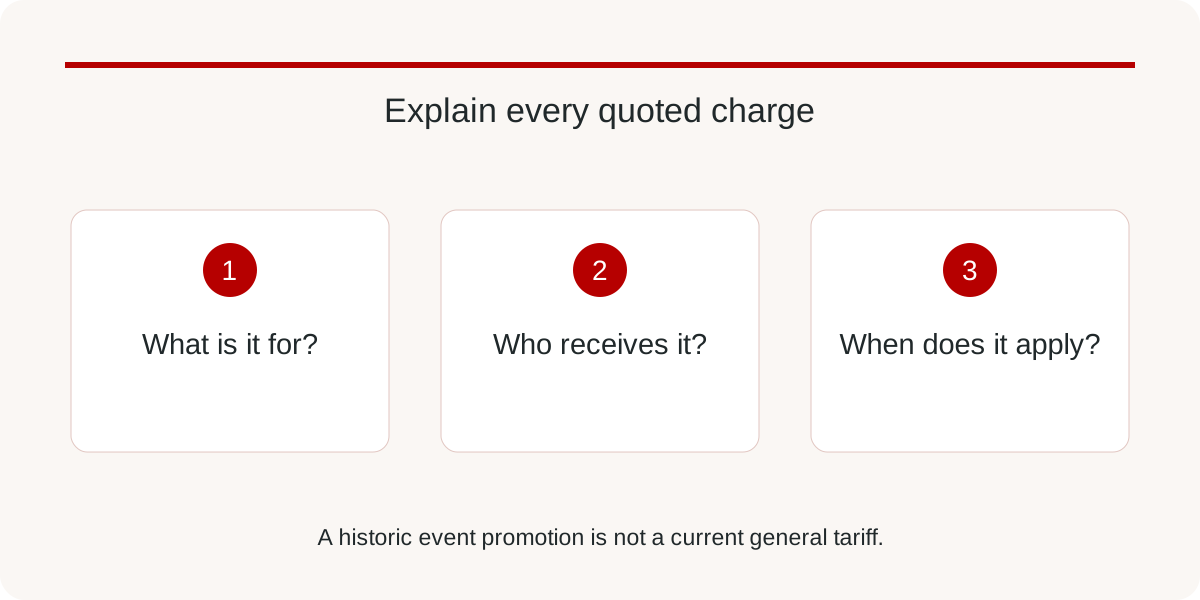
Ask for a written schedule that distinguishes the property price, registration-related amounts, professional charges and any separate contractual payments. Identify the recipient, calculation basis and payment date for each item. A percentage with no explanation is difficult to verify and can conceal differences between offers. Have the responsible party clarify which amounts apply to the buyer, seller or developer under the proposed arrangement. This guide does not provide a universal Sharjah fee rate: the useful figure is the current confirmed amount for the right, buyer and transaction being considered, supported by an appropriate reference.
An official ACRES 2026 announcement described reduced fees for transactions within that exhibition. It illustrates why the period and conditions attached to a fee statement matter. A saved event advertisement should not be presented as the general rate for a later purchase. If a seller says a promotion applies to your offer, ask for its scope, dates and written treatment in the quotation. Separate a developer's contribution from a reduction in an official fee, and check what happens if the transaction timetable changes. Do not use a historic promotional percentage as a proxy for identifying the property right.
Make translations explain the same transaction
Build a small terminology sheet from the actual documents, not from a generic bilingual property glossary. Preserve the Arabic description of the right and its matching English or Turkish explanation, together with the document reference. Where a translation chooses freehold, ownership, usufruct or a term referring to duration, ask whether it communicates the same legal scope as the original. A readable translation should make the distinction clearer rather than remove it. Keep property identifiers, dates, parties and qualifications unchanged even when sentence structure is rearranged for natural reading.
If versions appear inconsistent, record the exact clauses and request a reconciled explanation before relying on either summary. A salesperson's message can be helpful context, but it should not silently replace the agreement. Ask how any correction or promised condition will appear in the documents used for the transaction. For material legal uncertainty, use a suitably qualified local adviser who can examine the full text. Their task is not merely to approve a translated keyword; it is to explain what the complete arrangement would mean for the particular purchaser and intended use.
Work through a hypothetical mismatch before committing
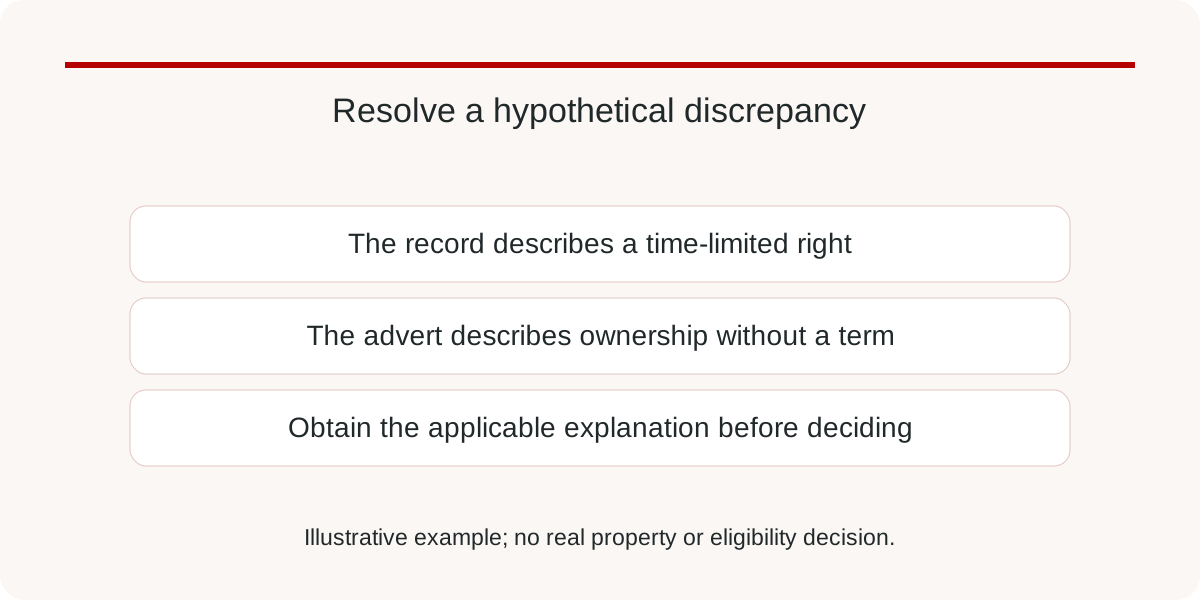
Imagine a resale apartment advertised as ownership without a time limit, while the supplied record describes a time-limited right. The seller says that a change can be arranged, but no evidence of completion has been provided. This is an illustrative situation, not a report about a real Sharjah project. The useful response is to identify the current record, ask what exactly is proposed to change and obtain confirmation of the applicable route. Keep the price comparison provisional while the two descriptions remain different. The size of a discount cannot explain away uncertainty about the subject of the purchase.
Now suppose the parties provide a revised agreement that makes the proposed change a condition. Have an adviser examine whether that wording addresses the identified concern, what evidence will demonstrate fulfilment and how the payment timetable relates to it. Review who carries the relevant costs and what the agreed consequences are if the condition is not met. These are questions for the actual contract, not assumed consumer protections supplied by this example. The outcome might be a clarified purchase, a different offer or a decision to wait; each can be reasonable when based on the documented position.
Leave the review with a decision that can be explained
Your final comparison should allow another person to understand the purchase without reconstructing a chain of sales messages. Record the current right, property identifiers, proposed holder, approval reference, relevant term if any, and the answers about intended use and transfer. Attach the document version supporting each conclusion and keep unresolved questions visible. Avoid a single tick labelled legally checked when different issues were answered by different parties at different times. If the property or purchasing structure changes, identify which conclusions need to be revisited instead of carrying every earlier answer forward automatically.
Bring that concise file to the next discussion with PGI, together with your budget and practical requirements for the home. It enables a useful comparison between offers that actually fit the proposed purchase, while reserving legal interpretation and transaction approval for the appropriate professionals and authority. Once the right and approval scope are understood, the next decisions concern the property's condition, operating costs and suitability for the intended occupants. Keep those assessments connected but distinct. A convincing purchase case should remain understandable without an unsupported promise about future conversion, resale speed, rent or investment returns.
Questions to close before making a commitment
- What right and exact property does the current record describe?
- Which approval applies to this development and proposed purchaser?
- Do the contract, translation and marketing offer describe the same right?
- If a change is proposed, what proves completion and how do payments relate to it?
- Which current fees and use or transfer conditions apply to this transaction?