Choosing where to investigate is different from choosing a property. A location comparison should narrow your work to places where your investment purpose can be tested properly. It should also explain why other places have been set aside, without reducing entire emirates to slogans about lifestyle or returns.
Make the comparison answer the same question
A beachfront apartment, an urban family home and a unit in an emerging community can all appear under the broad heading of UAE property investment. Comparing their advertised prices alone tells you little about which serves your purpose. Begin with the same intended use, approximate property format and ownership horizon in each place. This does not require identical buildings. It requires an honest explanation of the differences before you interpret a price or operating estimate.
Choose a small set of comparison fields that you can investigate consistently. Include the total commitment you can make, the people the property must suit, your ability to oversee it and the information needed to evaluate a later sale. Keep personal preferences visible as preferences. A familiar city or a destination you enjoy visiting can reasonably influence your decision, but it should not be presented as evidence of stronger financial performance.
Let the geographic scope of the evidence stay visible
The UAE provides the national setting, while emirate, district and building evidence answer progressively more specific questions. A national economic measure belongs at the first level. A local market report may help you investigate an emirate. Neither automatically describes the property you might own. Mark the geography beside each important source in your comparison so that a broad statement cannot quietly become a claim about a particular neighbourhood.
Dubai Land Department publishes real estate data, while Abu Dhabi Real Estate Centre maintains its own market-report series. They provide different starting points for research; their pages should not be treated as interchangeable tables without checking definitions and periods. The same discipline applies when extending a shortlist to another emirate. An information gap deserves further investigation, rather than a substituted Dubai assumption or an unsupported conclusion that the market is either stronger or weaker.

Compare convenience for the occupant and for you
The person using the home and the person owning it may need different things. An occupant might judge the address through work journeys, household routines or access to services. An overseas owner must also consider how inspections, repairs and decisions will be arranged. Investigate both sides. A location that you personally enjoy visiting may still require an operating arrangement you are not prepared to supervise.
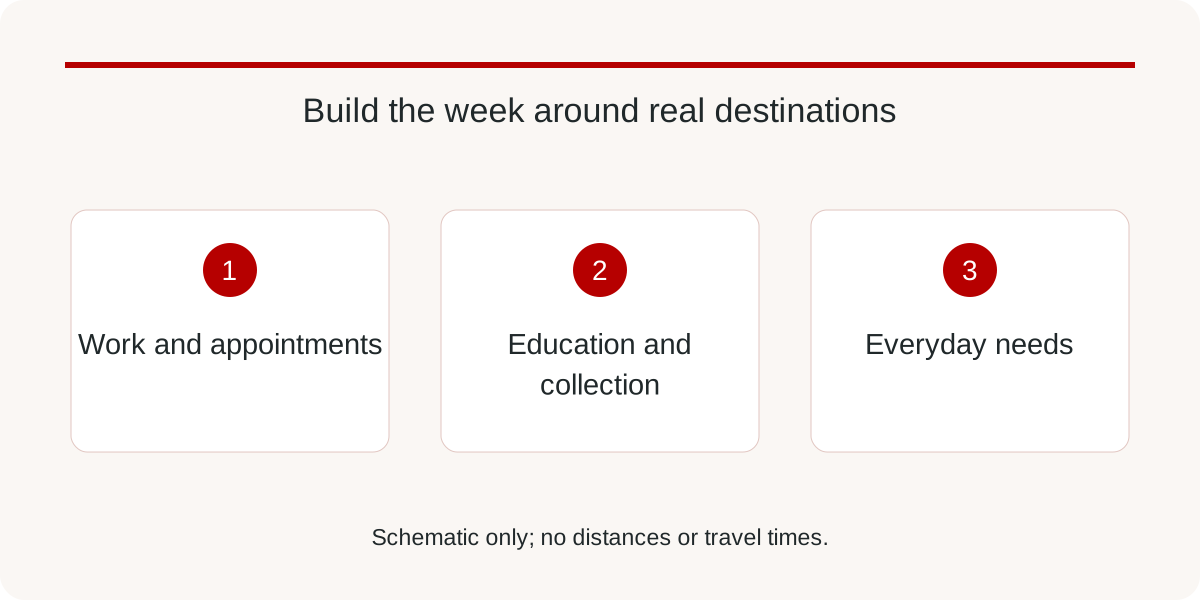
Write down the trips and tasks that matter before collecting destination names. A map of attractive amenities becomes more useful when connected to a real routine: the entrance someone will use, the route they will travel and the service they actually need. For the owner, ask what can be verified remotely and when a local representative must attend. These practical comparisons make the research more specific without inventing journey times or assuming a facility guarantees demand.
Compare the available properties behind each place name
A place cannot be assessed only through its best-known development. Examine whether your budget and intended use lead to a useful choice of properties or depend on a single unusual listing. Record where the homes differ in size, completion stage, condition and expected preparation. When the affordable choice in one location is a smaller or less complete property, make that trade-off explicit instead of attributing the entire difference to geography.
Think about the alternatives an eventual occupant or buyer could consider. The relevant comparison set may cross a neighbourhood boundary and may exclude properties marketed under the same district name. Start with the problem the home solves, then identify other homes that solve a similar problem. This gives a location shortlist more substance than collecting prestigious names, while leaving the detailed building and unit assessment for the next stage.

Place future changes on the correct timeline
Announcements about infrastructure or new destinations can be worth following, but the date and status of the underlying information matter. Keep a proposed change in a separate column from facilities available to occupants today. Identify the source of the announcement and the part of your assessment it could affect. This makes it easier to revisit the idea when better information arrives without allowing a future possibility to dominate an otherwise weak present-day case.
Your own timetable belongs beside the location's timetable. If you expect to use a property soon, a benefit that may emerge much later solves a different problem. Conversely, a longer intended holding period does not remove the need to understand present costs and practical limitations. Investigate what ownership would look like if an anticipated improvement were delayed or did not influence this particular home as expected.
Finish with a research choice, not a league table
The output of this stage can be a short note for each location: why it remains relevant, which properties illustrate the case and what evidence is still missing. Distinguish a place you have rejected from one you simply have not researched sufficiently. This distinction becomes valuable when new listings arrive. You can reopen a genuine question without repeatedly revisiting locations that do not fit your stated purpose.
Use the emirate chapters below to move into a narrower investigation. Begin with the locations where published guides are available, then request a specific research brief for another market when it is relevant to your plan. The objective is a defensible shortlist, not a universal ranking of all seven emirates. Different investors can reasonably reach different conclusions because their available time, intended use and ownership constraints differ.
Sources & further reference
- Dubai Land Department: real estate data Checked 2026-10-08
- Abu Dhabi Real Estate Centre: market reports Checked 2026-10-08