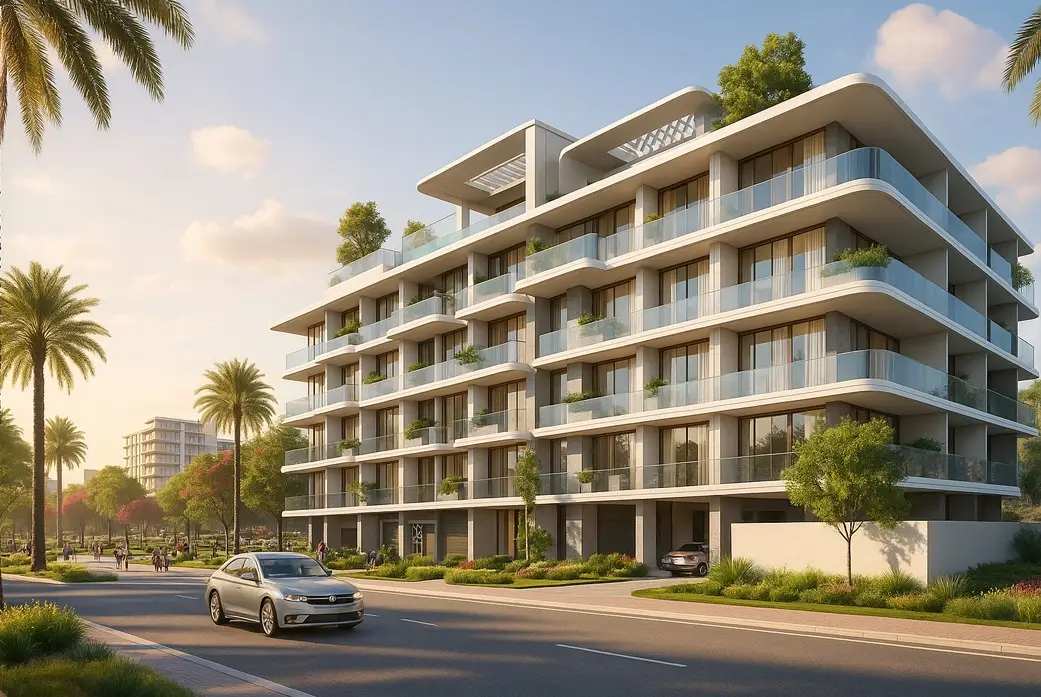
A large development is rarely described by a single date that answers every buyer's question. The home, surrounding streets, resident facilities and wider infrastructure may have different evidence and different schedules. This reading collection brings together Dubai South, Expo City Dubai and Dubai Creek Harbour. It helps you compare the relationship between the property you would buy and the place you expect to use. Start with your occupancy needs, then examine the relevant phase; do not let a broad masterplan substitute for the identity and condition of the selected home.
Find the boundary of the thing being described
When a presentation names a district, ask which development, phase and building the statement concerns. A familiar brand or masterplan name may cover more ground than the actual purchase. Record the unit reference and any project identifiers alongside the plan version. Keep promotional descriptions, contract documents and official records in separate categories. If two documents use different names, resolve the relationship before carrying information from one into the other. Similar names alone do not prove they describe the same registered project.
The Dubai South guide is a useful starting point for questions about the location, timing and ownership of a specific residential choice. The Expo City Dubai guide focuses the reading on districts, mobility and delivery evidence. Use these guides to formulate precise requests. Their inclusion together does not mean that a statement about one location applies to the other, or that all properties within either name share the same status.

Keep separate dates for separate dependencies
Write your intended moving date first. Beneath it, list the events needed for the move: access to the actual home, an agreed handover process, essential services and any arrangements specific to your household. Give each event its own evidence and date. A contractual target, a developer update and a confirmed appointment are not interchangeable. Where you have only an estimate, retain that label instead of converting it into a settled calendar entry.
Then consider what happens if one dependency takes longer. This is a practical scenario, not a prediction that a project will be delayed. You may need temporary accommodation, storage, another journey pattern or flexibility in a current tenancy. Identify who would manage each arrangement and seek relevant costs before relying on it. A plan that only works when every date falls exactly as hoped is different from a plan with a workable alternative. Keep that difference visible in the purchase discussion.
Read project status at the right level
The Dubai Land Department project-status service provides a project-name or project-number search and points users to Project Status in Dubai REST. Match the identity before interpreting the information. Record when it was checked and which project the result concerns. A result for a registered project should not be extended to every neighbouring phase, an individual apartment's condition or a separate public-infrastructure programme.
Ask what remains unverified after reading the record. A percentage or general project status does not, on its own, show the finish of your kitchen, the resolution of defects or the arrangements for moving in. Read the existing off-plan due diligence guide for that narrower question. Keep technical inspection, contractual interpretation and practical move-in preparation distinct, obtaining appropriate professional help when the issue requires it. A clear division prevents one document from being asked to prove everything.

Inspect the surroundings for the period you will actually live there
The Dubai Creek Harbour guide connects views, phases and daily living. Use it to investigate the selected building's position, rather than treating the whole masterplan as a single completed setting. For each feature important to you, distinguish what you can use now from what is under construction or described in a future plan. If a facility is shown in a rendering, ask for the separate evidence of its current status and the conditions of access.
Look at the ordinary route you would use during the first months of occupation. Where will you enter, collect deliveries, obtain daily essentials or reach transport? If part of the answer depends on another phase, record that dependency. Do not assume an empty plot remains open or that an announced connection is already operating. Equally, do not turn uncertainty into a claim that something will not be delivered. Describe what is known and what still needs a dated answer.
Choose according to your tolerance for unfinished questions
Compare candidates using the same occupancy requirement. One household may need current services that can be tested immediately; another may be able to wait while maintaining an alternative home. Neither preference establishes a universal investment ranking. Write down which unresolved questions you can carry and which must be answered before committing. If your budget or planned move depends on a particular event, treat the evidence for that event as central rather than as an optional footnote.
Bring the project identifiers, document dates, moving requirements and alternative arrangements into a focused enquiry through PGI's contact page. Ask the adviser to connect each answer to the correct property and source. The useful outcome is a clearer sequence of decisions and checks. It is not a promised delivery date, a guaranteed increase in value or an assumption that all future facilities will be available when your household first needs them.