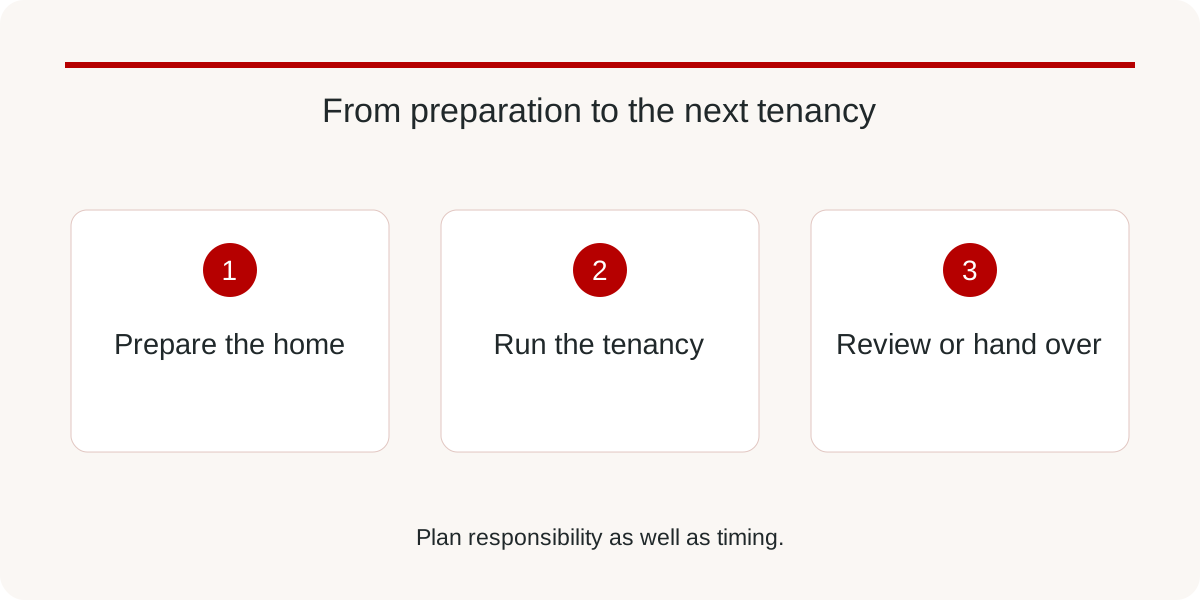
A workable tenancy starts with a home, a registration route and an operating plan that fit together. Follow the responsibilities from preparation to departure.
Plan the first tenancy before relying on the first rent
A home can be ready for a viewing without being ready for a tenant. The rooms may be clean while the registration route remains uncertain, the cooling account belongs to somebody else or nobody has authority to approve a repair. For an Abu Dhabi owner, a practical letting plan connects those details before the proposed occupation date. Start with the actual home and a conventional residential tenancy. Holiday accommodation, subletting and other uses need their own permission and operating checks; a residential purchase or an attractive location does not establish that any of those uses is available.
Work backwards from a realistic handover rather than forwards from an advertised rental figure. Decide what has to be repaired, who will prepare the agreement, which registration service applies and how the occupier will obtain access and utilities. Put uncertain dates beside the tasks that cause the uncertainty. This makes it possible to distinguish a property problem from an administrative dependency. A working budget should accommodate the preparation period without treating expected rent as money already received. The useful outcome is a home that can be offered on clear terms, supported by people who can carry out those terms.
Identify the jurisdiction from the property record
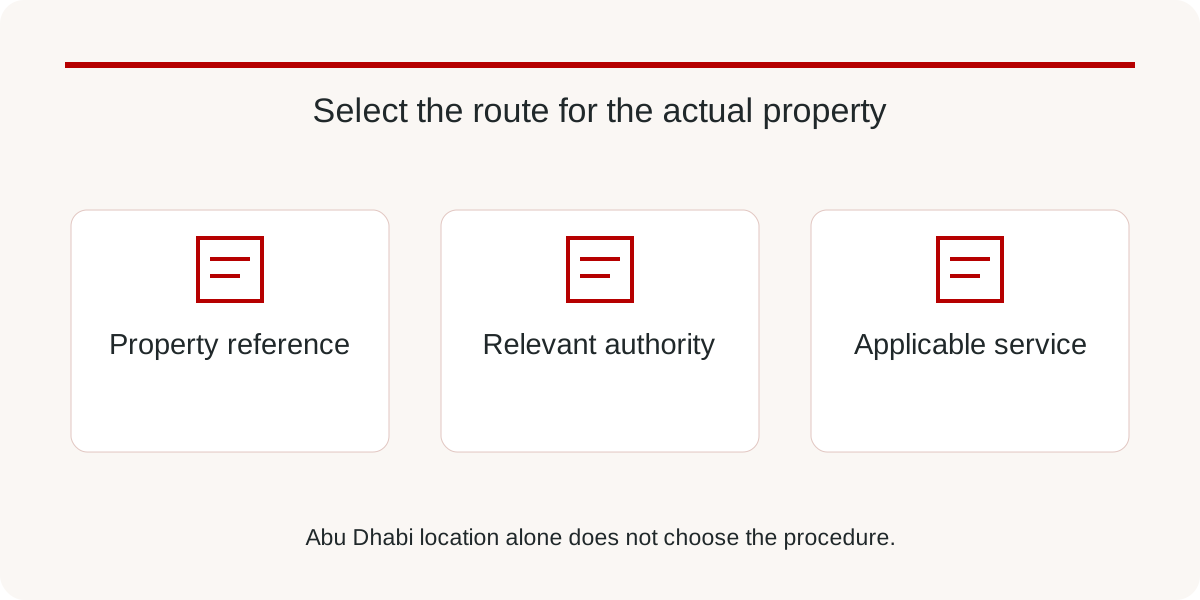
The name Abu Dhabi is not enough to select a registration procedure. Establish the exact address, property reference and relevant authority before borrowing instructions from another building. ADGM's real estate services describe its framework across Al Maryah and Al Reem islands. An owner evaluating a home there therefore needs to check the applicable ADGM route, rather than assuming a Tawtheeq process applies because the home is in Abu Dhabi. Keep the property record with the service information used for the decision. Marketing district names and a familiar agency form should not override the actual jurisdiction of the property.
For a home using the municipal tenancy route, confirm the current Tawtheeq service and the party who will complete it. Do not copy an old portal address, fee table or account-opening checklist into the tenancy plan without checking it. An owner who has previously rented a Dubai home should also set aside Dubai-specific registration and renewal instructions. Similar tasks can involve different authorities, approvals and contract requirements. If the route is unclear, resolve that specific point before promising a tenant that paperwork is complete. A written answer tied to the property is more useful than an assurance that all local rentals work alike.
Separate the letting agent from the authorised manager
Advertising a home, introducing an occupier, preparing registration and managing the tenancy are different jobs. Write down which of them the proposed service actually includes. A fee for finding a tenant does not necessarily buy inspections, maintenance coordination, renewal work or account reconciliation. Ask who signs documents, who can receive money, who handles a registration query and who remains available after the tenant moves in. Where an owner appoints a representative, check that the authority given is appropriate to the task and accepted by the relevant service. A general business relationship is not a substitute for that review.
AccessRP's official guidance distinguishes the owner, a representative with relevant authority and a management company operating under an active property management agreement. It is a useful reminder to align the platform role with the actual arrangement, rather than sharing the owner's login with whoever is assisting. Keep personal authentication under the account holder's control. In the management agreement, also set a reporting interval and a procedure for changing or ending the appointment. These are practical questions to settle before work starts, so that the operating file, keys, outstanding invoices and current tenancy can be handed over coherently if the manager changes.
Define what the tenant is being offered
Walk through the property using an inventory that matches the proposed advertisement. Record included appliances, fitted items, furniture if any, parking allocation and access devices. Distinguish an item supplied with the home from a shared building facility and from a nearby amenity. Check the condition and operation of the things you intend to promise. A photograph can show that an appliance was present, but not that it worked or that its maintenance is included. Where an item will be repaired or replaced before occupation, identify it and agree how completion will be demonstrated before the handover is treated as ready.
Keep the inventory specific enough to support later discussion without turning it into a catalogue of every cosmetic mark. Dated photographs, room references and short descriptions can identify existing damage and help separate it from a subsequent issue. Agree the process for recording observations at handover and obtaining both parties' acknowledgement. This record is evidence of condition, not an automatic decision about who must pay for a future repair. Payment responsibility still depends on the applicable agreement and rules. For a furnished offer, confirm the actual contents rather than assuming that everything visible in the marketing photographs forms part of the tenancy.
Build the contract around the intended occupation
Before preparing the final agreement, reconcile the proposed start and end dates, rent schedule, permitted use, named parties and property reference. Check which bills and services the offer includes and which require a separate account. List any promised pre-occupation work with an accountable person and a realistic completion point. A tenant should not have to discover the meaning of “ready” while a delivery vehicle waits outside. If the parties agree a concession or a different payment arrangement, reflect it accurately in the current documentation instead of leaving an older proposal and a later message to compete with each other.
Have contractual questions interpreted by an appropriately qualified professional when needed, especially where an existing tenancy, representative or unusual condition is involved. Do not assume a notice period, renewal adjustment or early-exit payment from another emirate applies. The same restraint matters when a manager suggests a standard clause: ask which transaction it is meant to cover and whether it fits the current rules and agreement. The operating plan can assign someone to monitor dates and obtain advice; it should not manufacture a legal answer. Retain the agreed version so that future rent collection, maintenance and renewal discussions refer to the same terms.
Treat registration as a completed task with evidence
Once the correct local route is established, identify who initiates the tenancy registration, who supplies the information and what approvals remain. The official AccessRP service describes a landlord-led process with tenant review and approval; use its current instructions for a property within that scope. For a municipal tenancy, obtain the current Tawtheeq requirements from the responsible service. Keep submitted and completed states separate in the working file. Sending a document to an agent is not the same milestone as receiving the relevant registration outcome, and an application reference should not be presented as if every required step has finished.
Check the resulting record against the agreed tenancy rather than simply filing the attachment. A wrong unit reference, party name or date can create practical problems when the occupier later needs a service connected to that record. If something differs, use the applicable correction process and retain the updated result. Do not change an official document locally to make it look consistent. Record fees from the current service and the agreed allocation of costs, without treating an old internet table as a quotation. Registration is one part of readiness: it does not inspect the home, test appliances or settle every question about the contract.
Reconcile utilities with the right premises and person
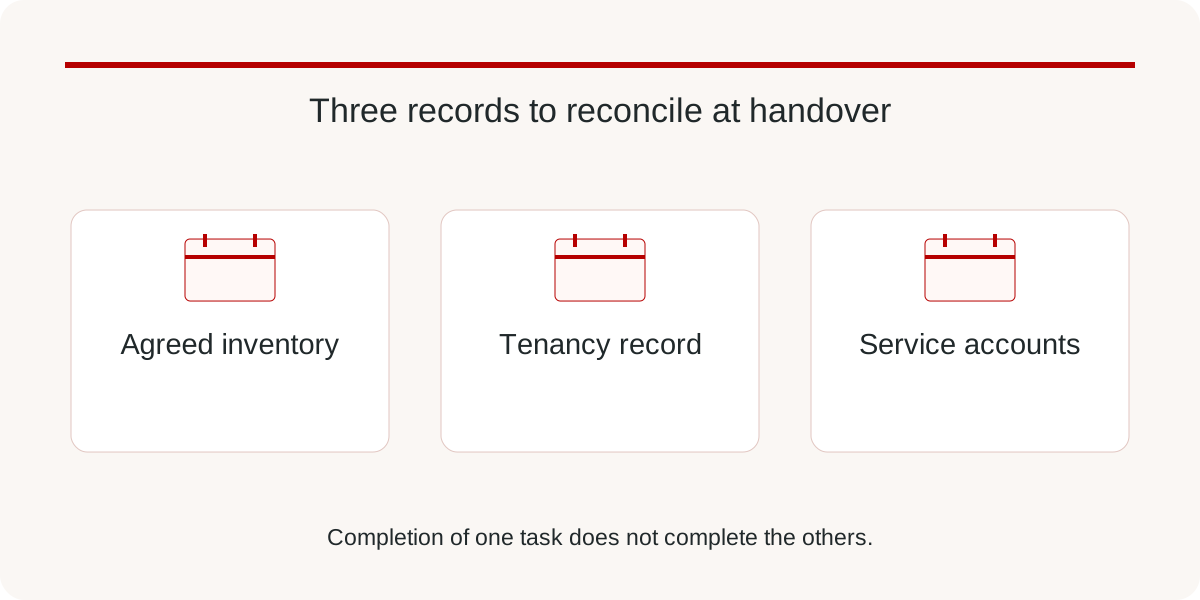
Water and electricity arrangements should be discussed before move-in, alongside cooling and other building-specific services. Ask the relevant provider which application or account update the specific tenancy requires. Use the current instructions applicable to the premises and confirm the resulting account and connection status. An expected system link is not evidence that a particular tenant's account is already correct. Match the premises reference, account holder, start date and contact details. Where the property has an unusual or shared arrangement, ask the provider to clarify it rather than relying on a neighbouring unit's bill or another tenant's experience.
Keep separate services separate in the budget. Water and electricity guidance does not establish how cooling, gas, internet, parking or access arrangements are billed for every building. Ask the relevant provider or building manager what applies, who opens each account and which charges continue during an empty period. Record meter readings where appropriate and any evidence of account transfer or closure. A light that turns on during the viewing does not tell you whose account will receive the next bill. The handover plan should make the transition understandable to the owner and tenant without assuming that all services change automatically on the same date.
Prepare a cash calendar as well as an annual budget
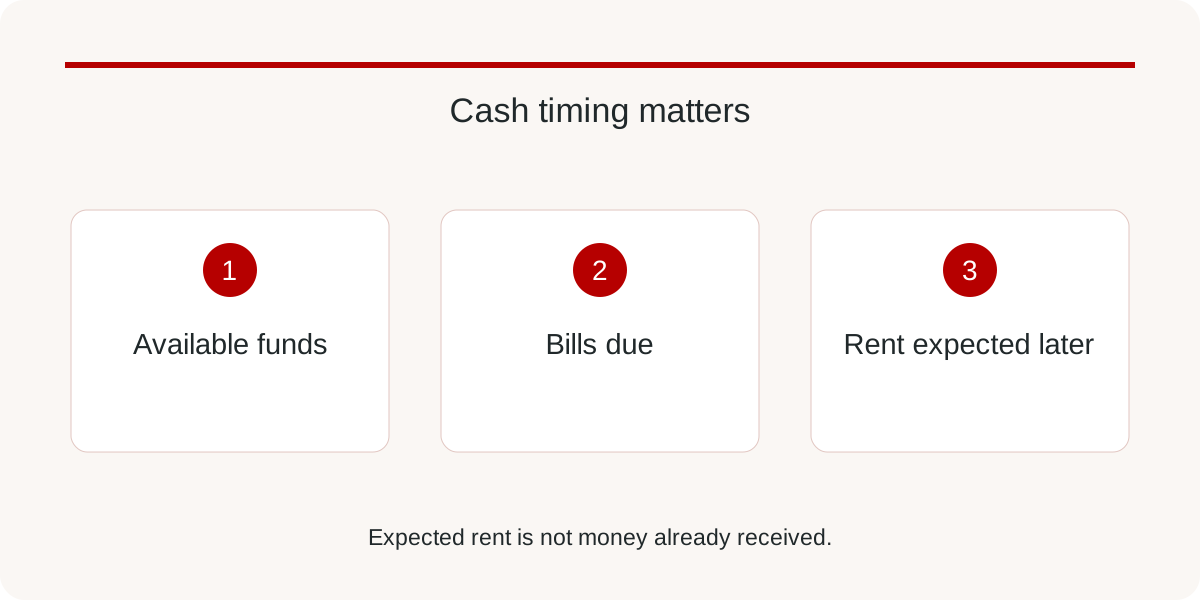
Annual rent and spendable income are different figures. Set out the dates when money is expected to arrive and when the owner must pay for preparation, management, service charges, repairs and other verified commitments. Keep deposits and money held for another party distinct from operating income; their treatment follows the applicable agreement and rules. Enter quoted costs with the quotation date and scope, and mark unconfirmed allowances clearly. This allows you to see whether an attractive annual total still leaves a short-term funding gap when several bills arrive before the next rent payment. The gap needs funding even if the tenancy eventually performs as planned.
Use a simple arithmetic exercise to test the timing without presenting invented local prices. Suppose an owner has a confirmed maintenance invoice payable before the next scheduled rent receipt. Moving the expected receipt earlier in a spreadsheet does not solve that obligation; the owner needs available funds or an agreed alternative with the relevant party. Repeat the exercise for an empty period and an unexpected repair. Choose assumptions openly rather than calling them a market forecast. Review the resulting reserve against the owner's actual resources and commitments. A budget is useful because it exposes decisions, not because it can make every scenario produce a positive number.
Give repairs an approval route before they become urgent
Agree how a tenant reports a problem, who assesses it and when the owner must approve expenditure. Keep emergency contacts and building procedures accessible, but do not turn a spending limit into permission to disregard a genuine safety issue. A manager's authority, the tenancy terms and the building's rules should fit together. Ask for an estimate describing the problem and proposed work, then retain the completion record and invoice. A vague request to “fix the air conditioning” is harder to review than a diagnosis that identifies the affected equipment, the work required and any separate responsibility of the building or service provider.
For recurring issues, compare previous reports before approving repeated visits that do not address the cause. A useful maintenance record shows when the tenant reported the issue, what access was agreed, who attended and what changed afterward. It also identifies work still outstanding. Plan lawful access and reasonable communication through the applicable arrangement; ownership should not be treated as unrestricted permission to enter an occupied home. If responsibility is disputed, preserve the evidence and obtain appropriate advice instead of making an unsupported deduction or withholding a service. The operating procedure should make practical resolution easier while keeping contractual questions with the right decision-maker.
Make remote reporting show exceptions as well as totals
An owner abroad needs more than a message saying that everything is fine. Ask for a compact report showing receipts, unpaid items, paid invoices, upcoming obligations and unresolved property issues. Link material entries to supporting records, with sensitive information limited to the people who need it. Keep the owner's bank details and the tenant's identity documents out of general enquiry threads. The manager should explain significant differences between the plan and what happened: a delayed receipt, a higher repair quotation or work postponed because access was unavailable. These explanations help the owner choose the next action without searching through unrelated correspondence.
Review whether the service is doing the work the agreement describes. A low management fee is not a useful comparison if essential work is charged separately or omitted; a higher fee is not proof of better delivery. Compare the same task list, reporting obligations, inspection arrangements and handover responsibilities. Record the decision you made after reviewing an exception, including any approval or further question. This prevents a pending matter from disappearing into the next reporting period. The purpose is a manageable relationship in which each party knows what they can do, what needs approval and what evidence will accompany the action.
Prepare renewal or departure without assuming the outcome
Put the tenancy end date and the dates requiring review into the operating calendar well before a decision becomes urgent. Verify the applicable notice and renewal requirements for the actual jurisdiction and agreement when planning the next step. Do not infer that a proposed sale, the owner's return or a different rental strategy automatically changes an occupier's rights. Compare continuation with departure using the real costs of preparation and any period without rent. A higher advertised asking rent elsewhere is not a complete reason to choose turnover; the comparison also needs the achievable terms, property condition and lawful route for the current tenancy.
For an agreed departure, coordinate inspection, keys, access devices, final readings and the applicable account and registration steps. Separate the condition discussion from the utility reconciliation and keep supporting records for each. Confirm the actual process for any deposit settlement rather than inventing a universal deadline or deduction rule. If a new tenant is expected, avoid promising access before the previous handover and required preparation are resolved. The file should show what is closed, what remains payable and what work is needed next. Departure becomes easier to manage when it was included in the original operating plan instead of treated as an unexpected event.
Decide whether the property fits the way you can own it
Before committing to a rental purchase, put the location and home beside the operating plan. Can you fund the preparation period, appoint the necessary help and keep oversight of unresolved matters? Does the building's actual service arrangement fit the budget you want to maintain? Are the proposed tenancy and registration route clear enough to discuss with a prospective occupier? These questions connect the investment decision to the work of ownership. They do not establish future rent, occupancy or resale value. A property may remain attractive while needing a different purchase timetable, repair allowance or management arrangement from the one initially imagined.
Bring PGI the specific property reference, intended residential use, known operating costs and the questions that still affect the decision. A useful conversation can compare suitable homes and identify which answers should come from the authority, provider, building manager or a legal adviser. Keep the Abu Dhabi location guide for the broader shortlist and the project-verification article for an off-plan purchase. This operating guide addresses the later task of preparing and running a tenancy. Used together, the material should help you move from a promising offer to a practical ownership decision, with the remaining work visible before you rely on rental income.
Before offering a move-in date
- Identify the property and applicable registration authority
- Confirm the agreed inventory and unfinished preparation
- Assign registration, utilities and repair responsibilities
- Fund the preparation period and record the next review date