Aldar Properties combines two activities that are often blurred in a developer profile: creating property for sale and owning property that produces recurring income. Its Abu Dhabi communities are the best-known starting point for many homebuyers, but its present business also includes residential development in Dubai and Ras Al Khaimah, investment in operating assets, and international development platforms. Understanding which activity a particular announcement concerns is essential to understanding the company.
That distinction has become especially relevant as Aldar expands. A villa release in Dubai, a residential building acquired for future rental use in Sharjah and an apartment project on Saadiyat Island can all appear in the company’s news. They do not describe the same role or offer the same route to an individual purchase. The developer, investor, owner and manager may be connected within the group while remaining different responsibilities in a specific project.
This profile explores that structure alongside the company’s history, current leadership and selected residential communities. The Aldar properties for sale page provides a way to move from the company background into PGI’s property catalogue. The article draws on official sources reviewed in October 2026, preserving the geography, dates and scope of the claims. Announced plans are not presented as completed places, and corporate financial results are not used as promises about an individual home.
An Abu Dhabi company that changed through development and acquisition
Aldar’s origins lie in Abu Dhabi’s development during the mid-2000s. Its corporate history includes its 2005 listing on the Abu Dhabi Securities Exchange and the growth of a residential and mixed-use portfolio across several of the emirate’s major destinations. For a buyer, the listing is relevant because the company publishes financial and corporate information that can be read alongside its project material. It does not remove the need to examine the actual property being offered.
The company’s subsequent history includes a major combination with Sorouh Real Estate in 2013. Aldar’s annual reporting documents the merger and the resulting changes to the group. This matters when older project records carry the Sorouh name or when historical delivery figures are compared across periods. The corporate perimeter changed, so a later portfolio should not be interpreted as though the same collection of businesses existed unchanged from the beginning.
The distinction between development and investment became increasingly visible as the company grew. Its history includes the acquisition of assets from Tourism Development & Investment Company in 2018 and the establishment of Aldar Investment Properties. These events helped shape a business that both develops new places and holds operating real estate. They are separate milestones from launching a residential phase or handing over a home.
In 2021, Aldar introduced an operating model organised around Aldar Development and Aldar Investment. Its reporting describes the former through development, sales and project-management activities, and the latter through investment properties and related operating businesses. That framework remains a useful starting point for reading the company, even as individual platforms and geographic interests continue to evolve.
Development and investment answer different questions
Aldar Development concerns the creation and sale of property, alongside development-management work and international platforms. A purchaser researching a new home will often encounter this part of the business through a launch, a community plan or a construction update. The central questions concern the project being developed, the home offered for sale and the terms and stage of that offering.
Aldar Investment concerns a different relationship with real estate. An asset can be acquired or developed to remain within an income-producing portfolio rather than sold individually to retail purchasers. In that case, the company may become a long-term owner or landlord. An announcement about such an investment does not automatically create a new set of homes available to buy through an ordinary property-sales search.
This distinction is especially useful when reading the phrase develop-to-hold. It describes the intention to create property that will be retained as an investment asset. It should not be confused with a general off-plan residential launch. Both involve development, but the intended ownership and revenue model differ. A company can pursue both models within the same emirate or even within a wider destination.
The difference also affects how corporate numbers should be read. Development sales, rental income, assets under management and construction-contract awards measure different things. A large figure in one category should not be relabelled as another. For a homebuyer, the benefit of understanding these categories is that they prevent impressive company-wide statistics from obscuring the specific facts relevant to the purchase.
The people leading the group and the development business
Aldar’s current leadership page identifies Mohamed Khalifa Al Mubarak as chairman and Talal Al Dhiyebi as group chief executive officer. It identifies Jonathan Emery as chief executive officer of Aldar Development. These roles sit at different levels of the organisation and should not be collapsed into a single generic management title. The chairman, group executive leadership and development-business leadership have distinct functions.
The same official page identifies Faisal Falaknaz with the group’s finance and sustainability responsibilities, alongside executive roles covering people, communications and legal affairs. This is relevant to a company whose work extends across development and operating assets. Planning a community, financing a portfolio and managing the legal framework of transactions are connected activities, but they require different professional responsibilities.
For a homebuyer, the leadership structure is useful background rather than a substitute for project-level communication. A construction question may require the team responsible for the relevant development, while an ownership-service issue may belong to a different channel. A senior executive’s biography does not establish that the person personally reviews every unit or handles every customer request.
Dates remain important when reading older announcements. A release issued at a project’s launch may name the executive who held a role at that time. That historical attribution can be accurate without being a current management list. This article uses current official leadership information for present roles and dated announcements for historical events.
Reading the 2025 results as company information
Aldar’s February 2026 results announcement reported group sales of AED 40.6 billion for FY 2025, including AED 35.5 billion in the UAE. These are company-reported sales figures for a defined reporting period. The distinction between group and UAE scope matters because Aldar also operates through international businesses. A group total should not be presented as sales from one emirate or one community.
Sales also differ from completed construction, rental income and a purchaser’s future investment return. A development business can recognise sales while projects move through later construction stages. The fact that homes have been sold does not mean they have all been handed over, and a company’s sales activity cannot establish the rental performance of a unit being considered by an individual buyer.
For a residential search, the most useful implication of the reporting is often the breadth of the portfolio. The company’s activity spans several destinations and business categories. That gives a buyer more projects to investigate, but it does not make their specifications, surroundings or delivery stages uniform. The corporate overview and the individual project serve different purposes in the research process.
The same caution applies to construction awards. Aldar reported substantial contract awards across residential, commercial, infrastructure and logistics work during 2025. The inclusion of several asset types means the total is not a count or value of completed residential homes. The contract announcement explains commissioned work across a programme, while a home’s completion requires evidence for that home and project.
Yas Island: several residential settings within one destination
Yas Island is a major part of Aldar’s Abu Dhabi residential portfolio, but it should not be treated as one uniform housing product. The island contains different communities and accommodation formats, including apartment-led developments and villa or townhouse neighbourhoods. Their relationship to water, parks, golf and wider leisure destinations varies. The island name supplies a broad location; the project name supplies a more useful residential identity.
For a household, that variety can be practical. One buyer may want a home arranged around private outdoor space, while another prefers an apartment with shared building facilities. Someone drawn to a canal setting may prioritise orientation and balcony use, while someone considering a villa may focus on the garden, arrival sequence and distribution of rooms. These are different decisions within the same wider destination.
The presence of major visitor attractions on Yas Island is relevant context, but it should not be converted into a list of private amenities for every residence. A nearby leisure destination does not automatically provide free access or a particular journey time from a home. Nor does its existence establish the rental demand or income that a specific property will achieve.
The useful approach is to identify the residential community first, then examine how the selected home connects with the places the household expects to use. A map of the island can help orient the search, while the actual building or plot plan explains the immediate surroundings. Both scales matter, but they answer different questions.
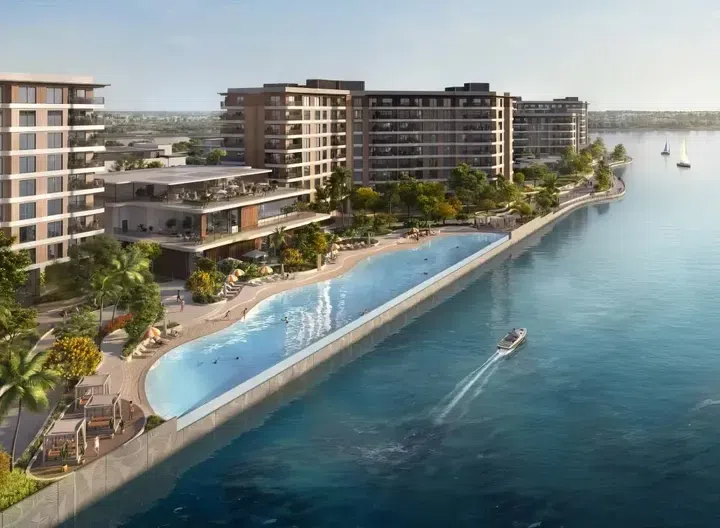
Gardenia Bay and the canal-side apartment concept
Gardenia Bay was announced by Aldar in August 2023 as a residential community on Yas Island with a canal-side setting. The launch material describes apartment accommodation and a landscape-led plan, including shared spaces and an emphasis on shade and pedestrian movement. These features explain the project’s concept without establishing that every element is already complete or that every apartment has the same view.
The relationship between buildings and outdoor space is central to that concept. Orientation can affect shade and the way residents use shared areas, while the distribution of paths and facilities influences movement through the development. The company’s design intentions provide useful context. The selected apartment’s position and plan determine how an individual resident would experience them.
A canal-side setting also requires precise language. A residence can be within the community without every room facing the water. A balcony view, access to a promenade and a private outdoor space are different features. The relevant unit information should make clear which applies, rather than allow a general waterfront description to stand in for all three.
The original launch announcement included a future handover expectation for the first phase. That is part of the project’s historical programme, not a current completion confirmation. As with any phased development, the applicable building, release and current documentation should remain visible when discussing timing. A later phase should not inherit an earlier phase’s date by association.
Yas Acres: an established community with continuing additions
Aldar announced Yas Acres in 2016 as a golf and waterfront-oriented residential development on Yas Island. Later releases added further villa and townhouse collections. This history illustrates how a community can contain established residential areas while continuing to introduce new homes. The name of the wider community does not establish the same construction or occupancy stage for every release within it.
The golf facility has a specific identity. Aldar’s current destination material describes Yas Acres Golf & Country Club as a nine-hole course designed by Fry/Straka. It should not be confused with Yas Links or rewritten as an eighteen-hole course. The distinction matters both for factual accuracy and for a buyer whose interest is specifically connected with golf.
The relationship between the course and a home also needs to be defined at property level. Living in a golf-oriented community does not establish a golf-facing position for every plot or an automatic membership entitlement. The view and the use of a facility are separate questions. A buyer may value one, both or neither, depending on the household’s priorities.
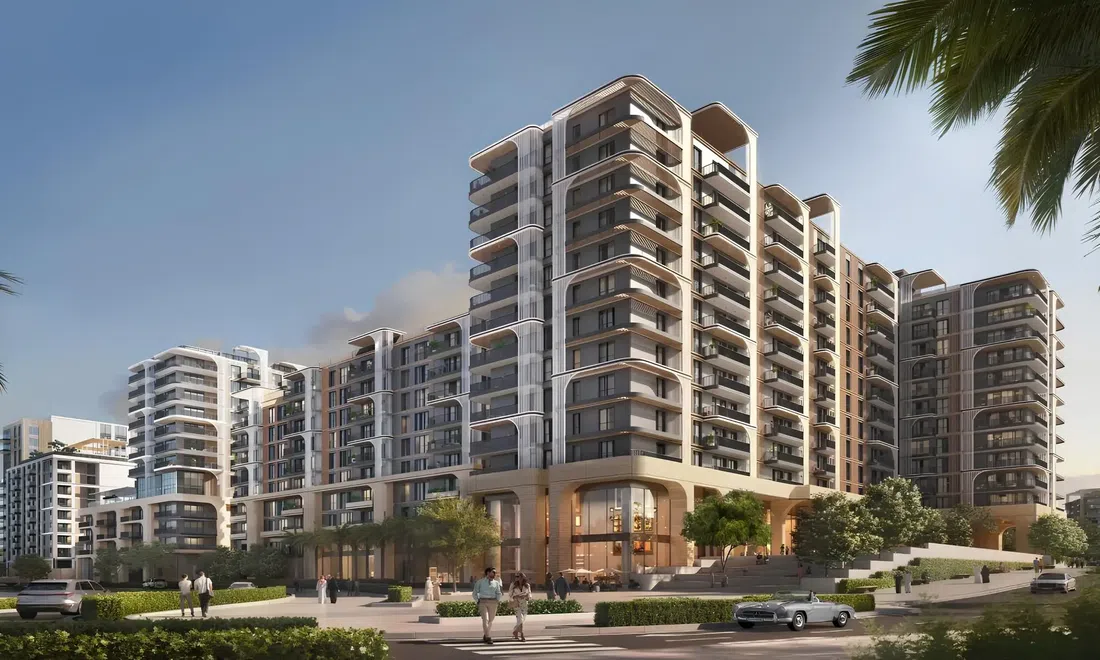
In June 2026, Aldar announced The Orchids as a new collection within Yas Acres, describing 217 homes across townhouse and villa categories. That announcement is an example of a new release within an established master plan. It should not be used to suggest that all those newly announced homes were already occupied simply because the surrounding community had an established identity.
Yas Acres consequently provides several points of entry into an Aldar search. A buyer may investigate an existing home, a particular earlier collection or a newer release. The community context remains useful across those enquiries, while the property’s condition, category and timetable need to stay attached to the specific offering.
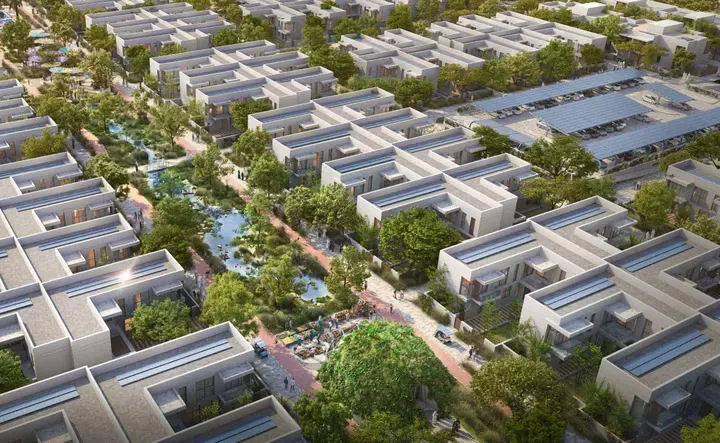
The Sustainable City – Yas Island and the partnership behind it
The Sustainable City – Yas Island was launched in January 2023 through a partnership between Aldar and Diamond Developers. Keeping both parties visible is important because the development’s identity is based on a specific partnership, not solely on a broad association with sustainability in the Aldar portfolio.
The official launch describes a community concept built around open green space, walkways and community farming areas. These are planning and lifestyle features. The word sustainable should not be used as a substitute for a documented performance result, a guarantee of household savings or proof that every proposed system is operating. Design intentions, certifications and measured outcomes are different kinds of evidence.
For a resident, the practical relevance lies in how the community is arranged and how its systems are intended to be used. A walkable plan may reduce the need for some internal vehicle trips, while shared growing spaces create a different kind of communal activity. The actual experience depends on the delivered environment and operating arrangements, not simply on the project name.
Saadiyat Island: culture, coastline and several residential identities
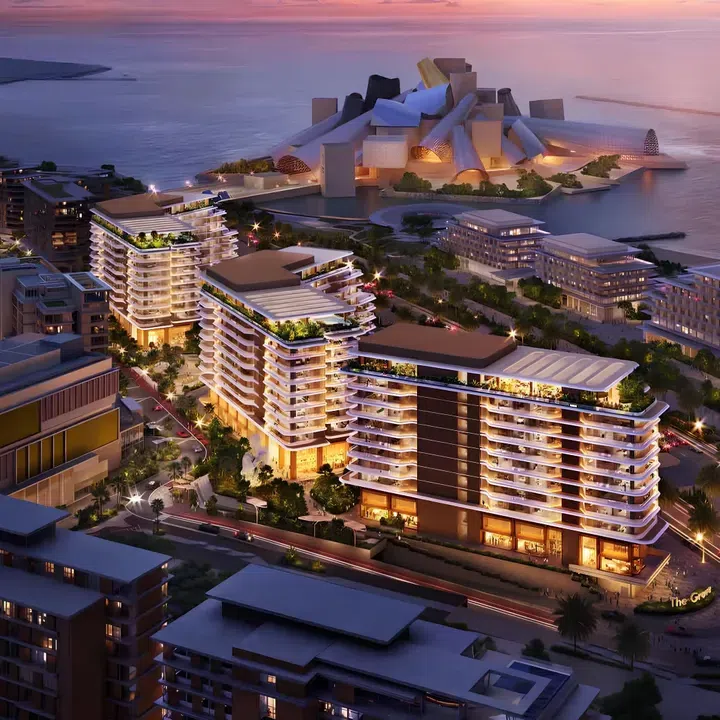
Saadiyat Island is another central part of Aldar’s Abu Dhabi portfolio. Its residential context combines coastal locations with the Cultural District and a range of apartment and villa projects. These different settings should not be compressed into a single statement that every home is beachfront or directly beside a museum. The actual project and its position within the island determine that relationship.
The cultural setting can be a meaningful reason to investigate a home. A person who regularly visits exhibitions or values the architecture and public spaces of the district may consider those factors alongside the residence itself. That is different from claiming that a cultural address guarantees a financial premium or makes every nearby apartment equally desirable to every buyer.
The coastline introduces another set of preferences. A buyer may want a direct view, a route to a beach or a particular relationship between indoor rooms and outdoor space. Those are not interchangeable features. The selected building and unit need to establish which applies, while the island’s wider coastal identity remains background.
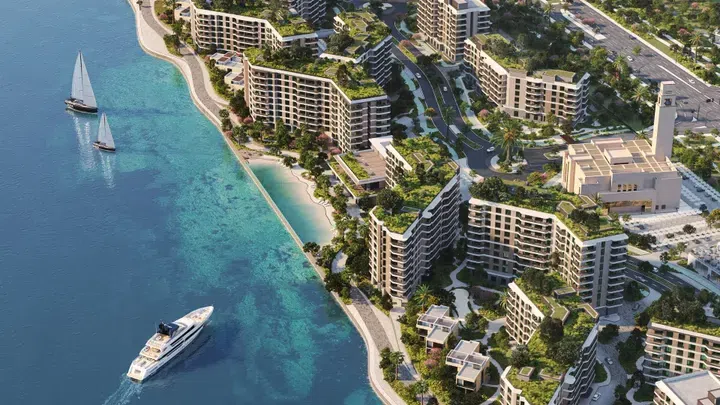
Aldar’s Saadiyat projects also span different development stages and design approaches. A branded residence, a compact apartment collection and a larger home may sit within the same destination but serve distinct needs. The project names therefore matter. They help keep the intended product, architecture and documentation attached to the correct residence.
Saadiyat Grove and the September 2026 announcement
In September 2026, Aldar announced that Saadiyat Grove’s retail and dining destination was intended to open in the fourth quarter of the year. The release places it within the Cultural District and describes a wider mix of retail, hospitality, residential and office uses. The announced opening period remains a planned milestone in this article; it is not treated as evidence that the destination was already operating when the source was reviewed.
The mixed-use character is important to the residential story. A home in or near a district combining cultural destinations, shops, workplaces and hospitality has a different surrounding pattern from an isolated residential compound. The way these uses connect can influence daily activity, visitor movement and the character of shared spaces. The relevant project plans should explain those connections at the scale of the building.
The Grove announcement also names residential offerings within the wider district. This demonstrates how an umbrella destination can contain several distinct projects. A general statement about the district should not replace the specification or timeline of an individual residence. The commercial destination’s opening and a home’s handover are separate events even when they form part of a coordinated plan.
For a buyer, the most useful information is the relationship between the residence and the surrounding uses. That may include the intended route to retail, the arrangement of public and private space, or the position of a residential entrance. A master-plan image can show the overall concept, while more detailed plans are needed to understand how it works for a particular home.
Mamsha Gardens, Mamsha Palm and the importance of the full name
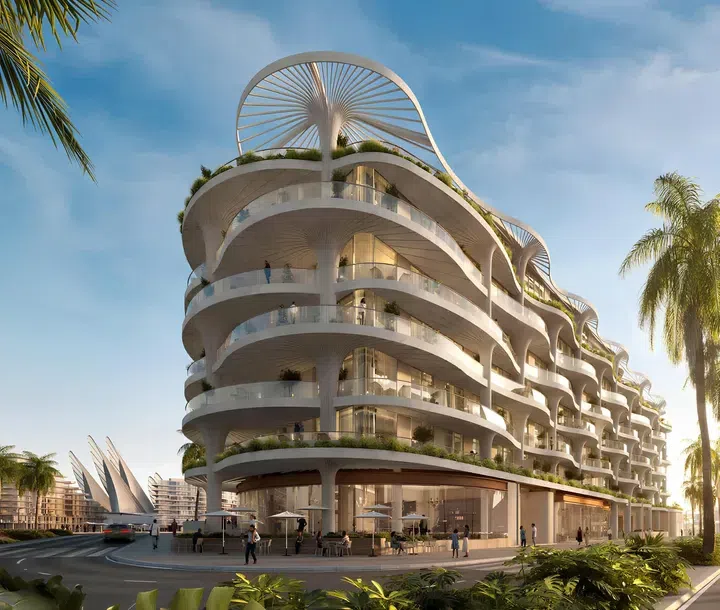
Several Saadiyat residential projects use the Mamsha name, but they should not be treated as one development. PGI’s catalogue includes Mamsha Gardens Building 7 and Mamsha Palm. The full project and building names help identify which plan, specification and programme the reader is examining.
Aldar’s official Saadiyat presentation associates Mamsha Palm with architect Koichi Takada and a Japanese-inspired design approach. That is a project-specific architectural relationship. It should not be transferred to Mamsha Gardens or another residence merely because the names share a word. Design attribution is most useful when it stays attached to the actual project it describes.
Mamsha Gardens also appears in a different kind of company announcement. In May 2025, Aldar reported a sale of a residential building there to Gaw Capital Partners. The event concerns an institutional transaction in a named building. It is not a declaration that every Mamsha Gardens apartment is available to individual buyers or that all buildings have the same ownership arrangement.
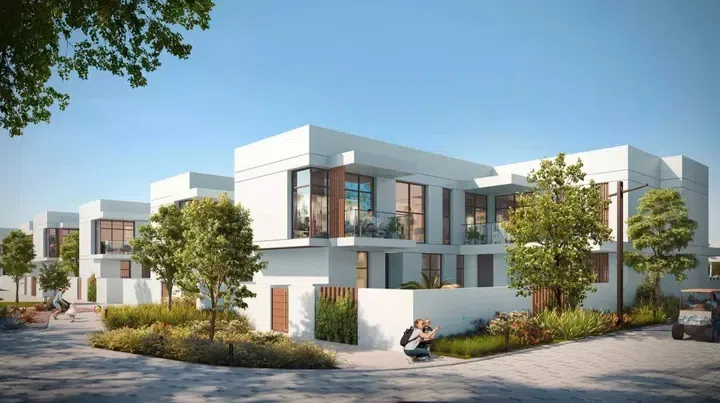
This example brings the company’s development and investment relationships back into focus. A project can contain homes offered through different ownership or sales channels, while an institutional transaction can concern an entire building. The right enquiry should identify the specific property and the party offering it, rather than infer the sales route from a general project article.
The Arthouse, Manarat Living and The Row Saadiyat
PGI’s Saadiyat catalogue also includes The Arthouse, Manarat Living 3 and The Row Saadiyat. These names represent different residential projects or releases within the wider island setting. Their presence in one location search should not lead to a shared description that erases their individual design or phase identity.
The numbered Manarat Living releases are a useful example. A statement about an earlier collection does not automatically describe the programme or unit types in a later one. The release number needs to stay visible in the title and supporting information. This is especially important where search results abbreviate the name and make distinct developments look interchangeable.
Aldar’s material for The Row Saadiyat identifies collaboration with BIG, Bjarke Ingels Group. That provides a specific architectural reference for the project. It is more informative than an unsupported claim that every building in the district has the same design pedigree. The relevance to the homebuyer comes through the actual plan and spaces, rather than the architect’s name alone.
The Arthouse is identified in Aldar’s wider Saadiyat material as one of the district’s residential offerings. Its place within that context helps a reader understand the cultural setting, while the selected property needs its own current details. The article does not assume that sharing a district gives every project the same access, outlook or service package.
Dubai: a partnership that opened a new residential market
Aldar’s move into Dubai brought its residential development business into a different market from its established Abu Dhabi base. The partnership with Dubai Holding, established in 2023, is central to that expansion. Haven, Athlon and The Wilds belong to this development relationship. Dubai Holding’s participation should not be read as a change that makes Aldar a subsidiary of Dubai Holding; the companies work together through the announced venture.
In February 2026, the partners announced a further expansion involving two land plots and almost 14,000 planned homes. The stated gross development value exceeded AED 38 billion. Gross development value is an estimate attached to the development programme: it is not cash already earned, completed property value independently established by sales, or a forecast of the return available to someone buying a home there.
The announcement described a family community opposite Nad Al Sheba on the D54 corridor and a separate development opportunity on Palm Jebel Ali. It indicated a 2026 launch intention for the first and a 2027 launch intention for the second. These are dated plans. This article does not present either announcement as proof that every proposed collection has launched, that individual homes are available, or that construction has reached a particular stage.
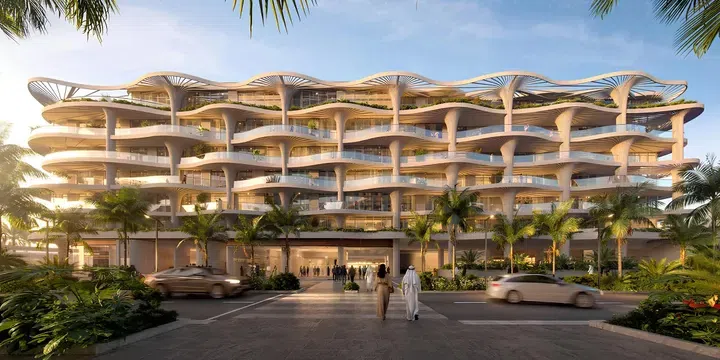
This distinction also clarifies the relationship between Aldar and Nakheel. Palm Jebel Ali belongs to Nakheel’s master development portfolio, while a separately announced Aldar and Dubai Holding scheme can occupy land within that wider setting. A district can contain more than one development entity. The name on the sale agreement, the building’s registration and the precise project identity are more useful than assigning every home on an island to a single developer.
Haven: Aldar’s first Dubai residential community
Haven was introduced in October 2023 as Aldar’s first residential development in Dubai. Its launch description centred on wellbeing through the design of the neighbourhood: shaded routes, landscaping, outdoor spaces and a community treehouse. These are identifiable elements of the proposal, rather than a medical promise that living in the development improves a resident’s health.
The launch collection included three- and four-bedroom townhouses and villas with three to six bedrooms. That mix matters because Haven is not simply a collection of interchangeable detached homes. A townhouse may share a boundary with a neighbouring house, while a villa’s arrangement, side access and outdoor area follow a different plan. Bedroom count alone does not capture those differences, particularly when comparing space for visitors, storage or household help.
The treehouse is a useful example of a community feature that gives Haven its own identity. It should be described as a shared facility within the development’s concept, not as a private feature delivered with every villa. Equally, shaded walking routes and landscaped areas are neighbourhood infrastructure; their relevance to a particular house depends on where that house sits in the plan and which routes have been completed when the household moves in.
The original announcement set environmental and wellbeing certification targets. A target is not the same as a certificate subsequently awarded to a specific building or completed community. For that reason, the profile describes the design intentions without claiming that every Haven home has already achieved a particular certification level. Buyers interested in building performance can ask for the current assessment and the scope it actually covers.
Haven is most useful to consider through a daily routine: where the main living space opens, how the garden connects to it, where parking sits, and how residents reach the shared spaces. Those concrete details make the wellbeing concept understandable. They also provide a better basis for comparing a townhouse with a villa than repeating the same lifestyle description for both.
Athlon: movement and recreation shape the master plan
Athlon followed in May 2024 as the partnership’s second residential community. Its stated focus is active living, with movement integrated into the neighbourhood through routes, parks and recreational spaces. Aldar’s launch material positioned it beside Global Village and described a mix of villas and townhouses, with homes across the three- to six-bedroom range.
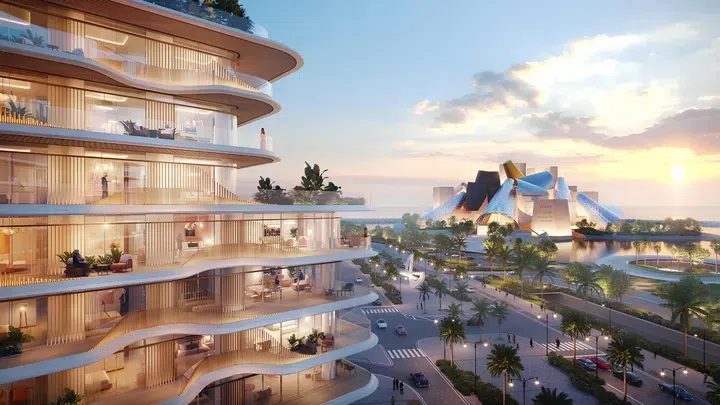
The difference from Haven is in the organising idea. Haven’s early material emphasised a quieter wellbeing setting, while Athlon placed physical activity at the centre of the development. This is useful context when choosing between communities, but it does not establish that one is objectively better for every family. A household with cyclists, runners or children using outdoor play areas may examine the route network differently from one prioritising a secluded garden.
The central park and activity spaces are part of a wider master plan. A house facing an active area can have a different relationship to visitors, lighting and movement from one in a quieter internal position. That variation should be explored on the plot plan. A general statement that a community contains parks is not enough to establish the view, walking route or level of privacy of a particular home.
For someone comparing Athlon homes, the useful questions concern the layout and location together. Does the ground floor support the way the family gathers? Is there a separate place for work or study? How does the house connect to the nearest planned route? These questions make the active-living idea specific without inventing facilities, access rights or completion dates that the selected collection has not documented.
The Wilds: a different landscape concept in Dubai
The Wilds was announced in February 2025 as the third community under the Aldar and Dubai Holding partnership. Its initial description identified a location opposite Global Village on Sheikh Mohammed bin Zayed Road and a proposed collection of almost 1,700 homes. The announcement included villas, mansions and apartments, showing a broader range of residential forms than a single villa enclave.
Its distinguishing feature is the nature-led landscape plan. Aldar described ecological corridors and spaces intended to support biodiversity, with a community pavilion called The Nest. These are development design intentions. The scheme should not be presented as an existing natural forest, protected habitat or completed ecosystem merely because the launch imagery contains mature planting and wildlife references.
The launch also identified architect Nabil Gholam in connection with five- and six-bedroom mansions. That attribution belongs to the specified collection. It would be inaccurate to extend the architect’s role automatically to every apartment or villa in the wider development without further evidence. Keeping the collection name visible helps preserve that distinction as later phases are introduced.
For readers interested in landscape, the practical assessment extends beyond how green a rendering appears. The planting plan, shade, irrigation, maintenance responsibilities and relationship between gardens and public areas all affect the eventual residential experience. A home beside a landscaped corridor may have a different outlook and boundary arrangement from one facing an internal street, even when the floor plans are similar.
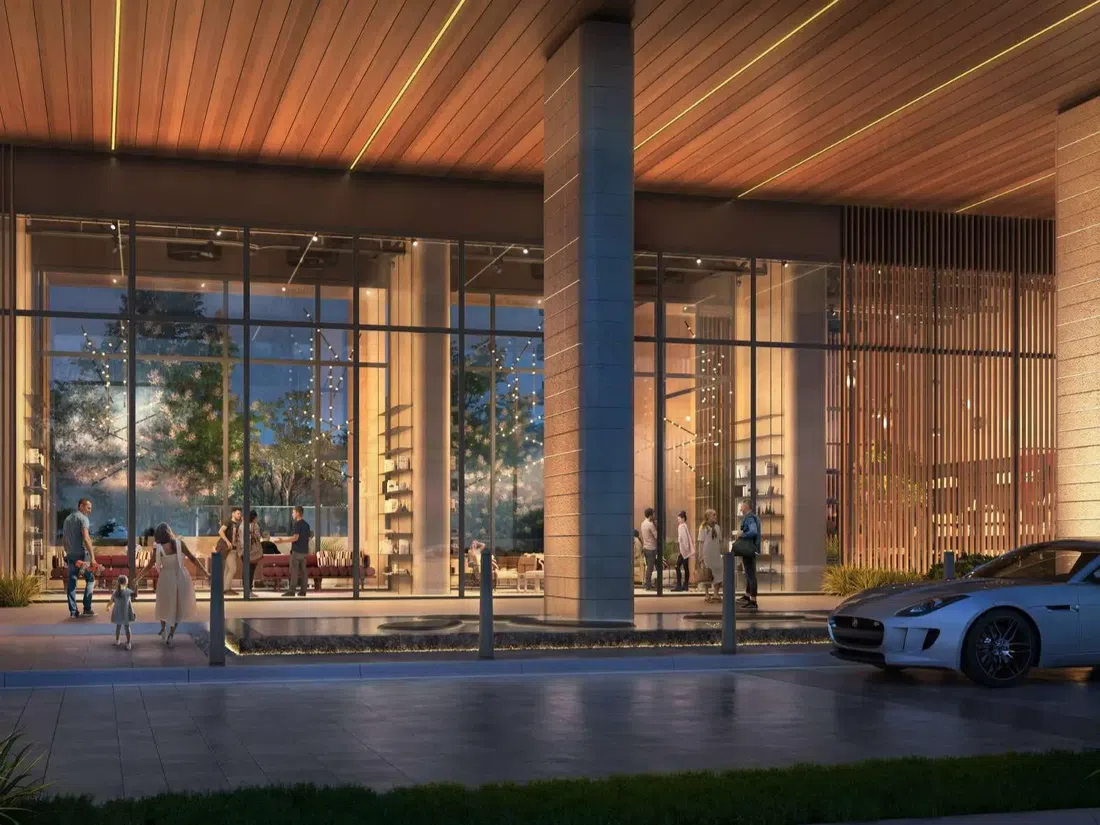
Haven, Athlon and The Wilds therefore give Aldar’s Dubai portfolio three recognisable starting points: wellbeing, activity and landscape. Their themes help organise a search, while the final decision still depends on the selected home, its documented specification and the stage of the particular release. The themes are not substitutes for those details.
Ras Al Khaimah: Nikki Beach Residences and Rosso Bay
Aldar’s residential presence in Ras Al Khaimah adds a coastal market to a portfolio often associated with Abu Dhabi. Its official property directory identifies Nikki Beach Residences and Rosso Bay within the emirate. Both need to be considered in their own location and project context, rather than described as extensions of Yas Island or Saadiyat.
The September 2023 announcement of the Nikki Beach Global partnership described three branded residential buildings within a wider beachfront community on Al Marjan Island. The subsequent November launch introduced the residential offering and outlined a range of services. The brand relationship gives the development a particular hospitality reference, but it does not make the apartments hotel rooms or establish a hotel operating agreement for every owner.
The service model deserves close attention. Aldar’s launch material distinguished services such as concierge and valet arrangements from additional options available on an à-la-carte basis. A description that simply promises “all hotel services included” would lose this distinction. The current purchase documents and service arrangements need to explain which services are included, which are optional and how charges are calculated.
An Al Marjan Island address also does not mean that every apartment has an uninterrupted sea view. Building position, floor, orientation and neighbouring structures shape the outlook. The project’s beachfront setting can be described at community level, while the view from a particular living room requires the relevant plan and evidence. Renderings illustrating the overall development should carry that context.
Rosso Bay provides another route into Aldar’s Ras Al Khaimah residential portfolio. Its identity should remain separate from Nikki Beach Residences, even where both appear in the same emirate search. A branded service description from Nikki Beach should not migrate into a Rosso Bay listing unless that listing has its own supporting material. Shared developer identity does not make the service packages interchangeable.
Neither coastal positioning nor hospitality branding establishes rental permission or a future income level. Owners considering letting should obtain the applicable local and building requirements for their intended arrangement. This article does not estimate yields or claim that a resort setting guarantees year-round occupancy. Its purpose is to identify the development and explain the distinctions that matter before examining a specific offer.
Sharjah: Aldar as an investor in an Arada development
In October 2026, Aldar announced its first real estate investment in Sharjah through an AED 1.1 billion forward purchase of nine residential buildings in Aljada from Arada. The announcement described more than 1,100 homes across three blocks, with delivery by Arada expected in the fourth quarter of 2029. This is an important addition to Aldar’s geographic footprint, but it is a different kind of activity from launching a new Aldar master community.
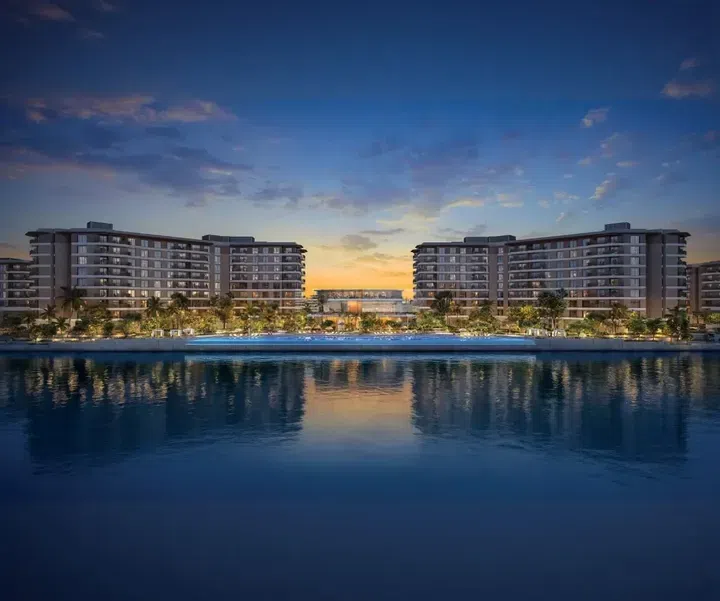
Arada is the developer responsible for the announced delivery. Aldar’s role in this transaction is that of investor and future owner of the acquired residential buildings. Calling Aljada an Aldar-developed community would misrepresent the relationship. It would also confuse readers searching for Arada properties with those looking for homes directly developed and sold by Aldar.
A forward purchase means the agreement concerns assets to be delivered in the future. The transaction announcement does not establish that the apartments were complete in October 2026, occupied by tenants, or individually available for retail purchase through a broker. Those would be separate facts requiring their own evidence. The expected delivery quarter should remain attached to the announcement date because programmes can change.
The acquisition also illustrates Aldar’s investment strategy: holding residential buildings can create an income-producing portfolio once the assets are delivered and let. That corporate strategy should not be converted into a promised yield for an individual homebuyer. The company’s acquisition economics, financing and operating scale differ from the circumstances of a person purchasing one apartment.
For an overview of the company, the Sharjah transaction belongs alongside its development activities, with the role clearly labelled. It shows expansion across the UAE without erasing the contribution of the other developer. This distinction is particularly valuable in search results, where a short headline may mention Aldar and Aljada together without explaining who builds, who owns and when delivery is expected.
Rental housing and the development-to-hold programme
Aldar’s development activity does not consist entirely of homes offered for individual sale. Its development-to-hold programme creates assets that the group intends to retain within its investment portfolio. The October 2026 Sharjah announcement placed that broader programme at AED 21 billion. The figure describes the company’s programme at that time; it is not a list of completed properties or available retail stock.
In April 2026, Aldar and Abu Dhabi’s Department of Municipalities and Transport announced plans for 9,000 value-housing rental units in Mohamed Bin Zayed City and Baniyas. Under the announced arrangement, Aldar would develop and manage the communities on land held through long-term leases. The intended use is rental housing. It would be misleading to turn that announcement into an advertisement for 9,000 apartments available to buy.
Earlier announcements also described new homes for the Abu Dhabi rental market in Al Shamkha and on Yas Island, alongside other commercial and logistics development. Residential rental buildings, offices and logistics facilities answer different occupier needs. Group-level spending across those categories cannot be used to infer the number of family apartments or villas that will enter the sale market.
Egypt and the United Kingdom: a wider group footprint
Aldar’s international expansion helps explain the scale of the group, while remaining separate from the characteristics of its UAE homes. In 2021, an Aldar-led consortium acquired a controlling interest in SODIC, an Egyptian developer. In December 2023, Aldar announced the acquisition of London Square, a UK residential developer. These transactions extended the group’s development platform beyond the UAE.
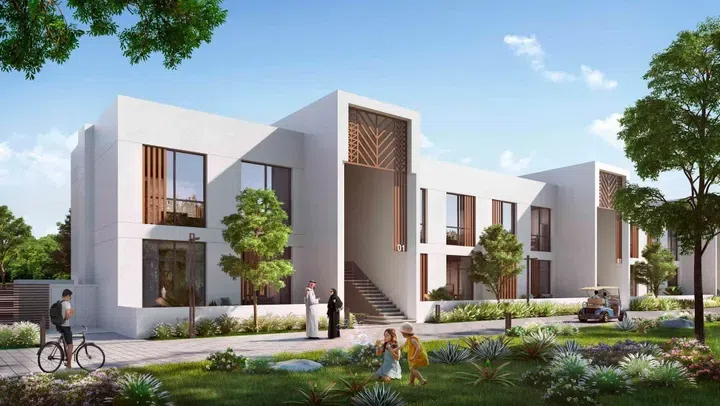
The London Square announcement described the acquisition of the company in full and identified the United Kingdom as Aldar’s first expansion outside the Middle East and North Africa. This is a corporate milestone. It does not mean that a Dubai purchaser acquires rights in London Square projects, or that a UK home follows the same ownership, tax, construction or financing arrangements as an Abu Dhabi apartment.
SODIC also retains its own market and development context. A group profile can explain the ownership relationship without attributing every historic SODIC completion to Aldar’s direct UAE delivery record. The same care applies to acquisitions generally: a company’s earlier history remains relevant, but the date of the ownership change matters when describing what the acquiring group itself delivered.
Sustainability claims need a defined scope
Aldar’s project announcements frequently discuss environmental performance, wellbeing, landscaping and more efficient buildings. These subjects are relevant to residents because they can influence shade, cooling, water use, materials and the way shared spaces function. The useful question is what a particular project has committed to or achieved, and how that result is documented.
There are several different stages in a sustainability claim. A design can target a rating, an assessment can recognise a particular design submission, and a completed building can receive a certification covering a defined scope. Those stages should not be compressed into one statement that every home is “certified sustainable.” Nor does a corporate target establish the performance of an individual apartment.
Gardenia Bay’s launch material, for example, described design measures and a targeted rating. Haven’s original material also set certification ambitions. These are useful records of the proposed approach, but a current article needs later evidence before describing those targets as completed achievements. Where that later evidence has not been established, retaining the word “target” preserves the meaning of the source.
Residents can also examine features that are understandable without relying on a badge: external shading, orientation, the relationship between glass and solid walls, the position of outdoor spaces, and the maintenance of planting. These details should come from the actual plans and specification. A rendering with trees cannot establish measured energy savings, and no saving percentage is assumed here.
Finding the right Aldar property on Property Gulf
The broad Aldar properties for sale search is a starting point for readers who want to see the developer’s portfolio represented in the catalogue. It can then be narrowed by property type and location. The results are a search tool, not a statement that every project discussed in this article currently has an available unit or an unchanged launch price.
Readers seeking apartment living can use Aldar apartments for sale, while those interested in larger ground-connected homes can explore Aldar villas for sale. The distinction is particularly useful across a portfolio that includes Saadiyat apartment collections, Yas family communities and Dubai villa developments. A developer filter should remain applied as the search is narrowed so that the results continue to match the intended company.
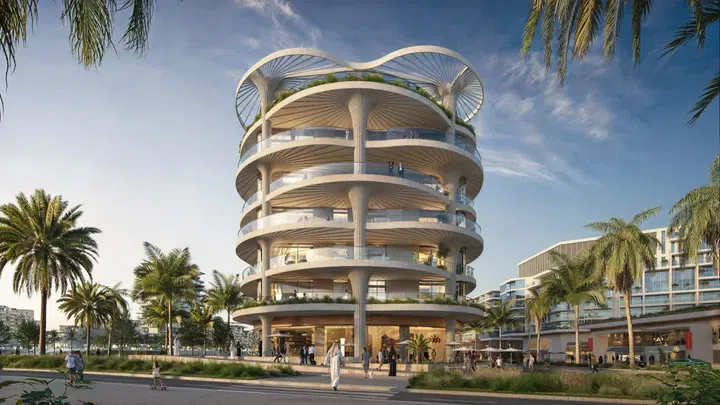
Project links provide a more focused next step. Someone attracted to canal-side apartment living can examine Gardenia Bay. A reader exploring Saadiyat’s cultural setting can look at The Row Saadiyat or the specific Manarat Living 3 release. These links serve different residential interests; they are not interchangeable recommendations.
When a property catches the reader’s attention, the enquiry should identify the project and the type of home required. A request for a two-bedroom apartment in a named Saadiyat development is more actionable than a general request for “the best Aldar investment.” Budget, intended use and preferred timing can then guide a review of current documented options without assuming a return or promising stock that has not been confirmed.
Aldar’s story is rooted in Abu Dhabi, but its present portfolio includes development partnerships in Dubai, coastal residential projects in Ras Al Khaimah, investment expansion into Sharjah and businesses overseas. Understanding those roles makes the company easier to assess. The strongest property decision comes from connecting that wider story to a clearly identified home, with its own location, plans, services and current terms.
Sources and editorial scope
Prepared using primary Aldar material reviewed on 25 October 2026. Historical announcements are identified as such; launch targets are not reported as completed works. This company profile does not provide a valuation, a rental forecast or confirmation of current unit availability.
Aldar leadership; 2025 financial results; Dubai Holding partnership expansion; Haven launch; Athlon launch; The Wilds launch; Nikki Beach partnership; Nikki Beach Residences launch; Ras Al Khaimah portfolio.
Gardenia Bay; Yas Acres launch; Yas Acres Golf and Country Club; The Orchids at Yas Acres; The Sustainable City Yas Island; Saadiyat Grove retail announcement; Mamsha Gardens institutional sale; The Row Saadiyat.
Sharjah forward purchase from Arada; Value-housing rental programme; Abu Dhabi rental development; London Square acquisition; 2025 development contracts.