

Buying at Emaar Beachfront requires a comparison of the exact apartment, its documented access, outlook and tower operations. The community's coastal setting can be appealing, but a sea-view label does not explain the view from a particular room or the route to the beach. Start with the way you intend to use the home, then investigate the features and recurring responsibilities attached to the unit being offered.
This Emaar Beachfront buyer guide focuses on those specific decisions instead of repeating a general Dubai investment case. It helps owner-occupiers and landlords distinguish community information from apartment evidence, with no assumed rental premium or guaranteed outlook. Use the Dubai waterfront property guide alongside exact-unit plans, current documents and practical viewings to decide whether the coastal setting supports your routine and full ownership budget.
What this guide covers
• Establish the exact community, tower and unit
• Define what beachfront living means to your household
• Confirm beach access and applicable rules
• Inspect the view from realistic room positions
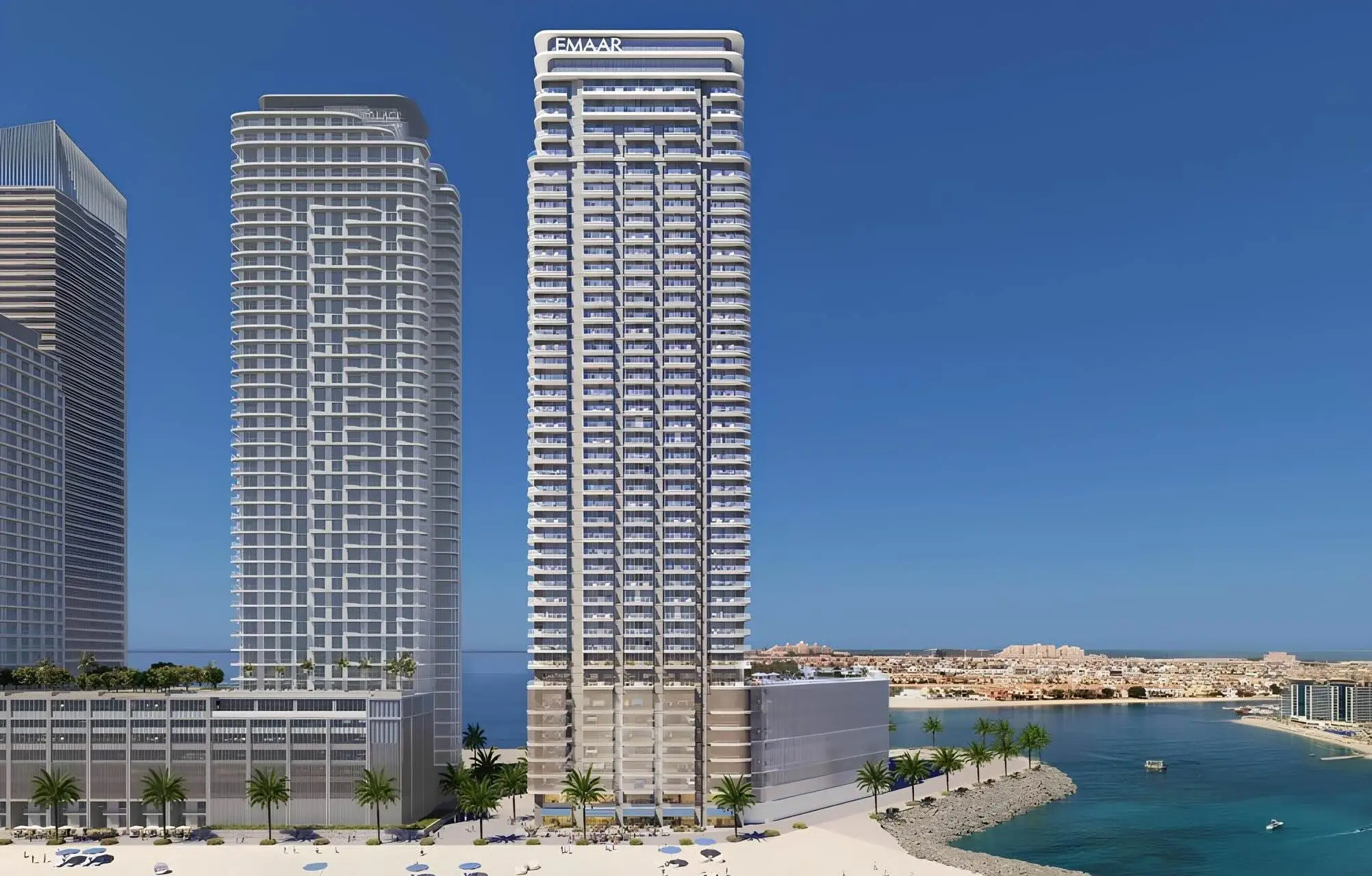
EMAAR "Beachgate By Address" catalogue marketing image, used as an illustration. Confirm the specific property's condition, specification, access and availability separately.
Establish the exact community, tower and unit
Emaar's official Emaar Beachfront community page identifies the development at Dubai Harbour and presents its beach setting. Treat that as community orientation, then record the actual tower, unit number, floor and stack for the purchase comparison. Keep developer materials distinct from another coastal project whose advertisement also uses beachfront language. A similar phrase in a listing does not place every property within the same master community or provide the same documents.
Request a current unit plan and the relevant transaction information through the authorised parties. Reconcile identifiers across the quotation, plan, viewing appointment and proposed purchase documents. For a resale home, establish the actual occupancy and inspection access. For an off-plan proposal, identify the project and document version. This creates a reliable foundation for the rest of the investigation and prevents an attractive community image from quietly replacing evidence about the exact home and commitments under discussion.
Define what beachfront living means to your household
Describe the activities you want the location to support. A buyer may plan frequent beach visits, remote work with an open outlook, occasional family stays or a rental arrangement for a particular resident. Each brief gives different importance to access, storage, privacy, transport and upkeep. Rank the essentials before comparing towers, so that the desire for a coastal address does not override a practical requirement such as a usable bedroom or sustainable ownership budget.
Consider the ordinary week rather than only a leisure visit. Include shopping, work, school where relevant, deliveries and the return journey home. A property can be enjoyable during a relaxed viewing while requiring a different routine on working days. Record which activities depend on a specific facility or route, and identify the evidence needed to confirm them. This helps an advisor shortlist exact homes whose features relate to your planned use instead of presenting a broad lifestyle promise.
Confirm beach access and applicable rules
Ask which beach access is associated with the exact building and what documents or resident information explain it. Clarify the route, entry arrangements, operating conditions and relevant guest rules through the responsible management contact. Do not infer all access rights from a community brochure or the fact that an apartment looks toward the water. The usable arrangement should be clear for the intended owner, resident and legitimate visitors before it carries significant weight in the decision.
Walk the actual route from the apartment entrance to the access point where possible. Include lifts, shared spaces, gates and the return journey with ordinary belongings. A family carrying equipment may evaluate that route differently from a person taking a short evening walk. Ask how access is managed during relevant maintenance or operational changes. Keep the present arrangement separate from any proposed future facility so that the buyer can explain what is available now and what remains an assumption.
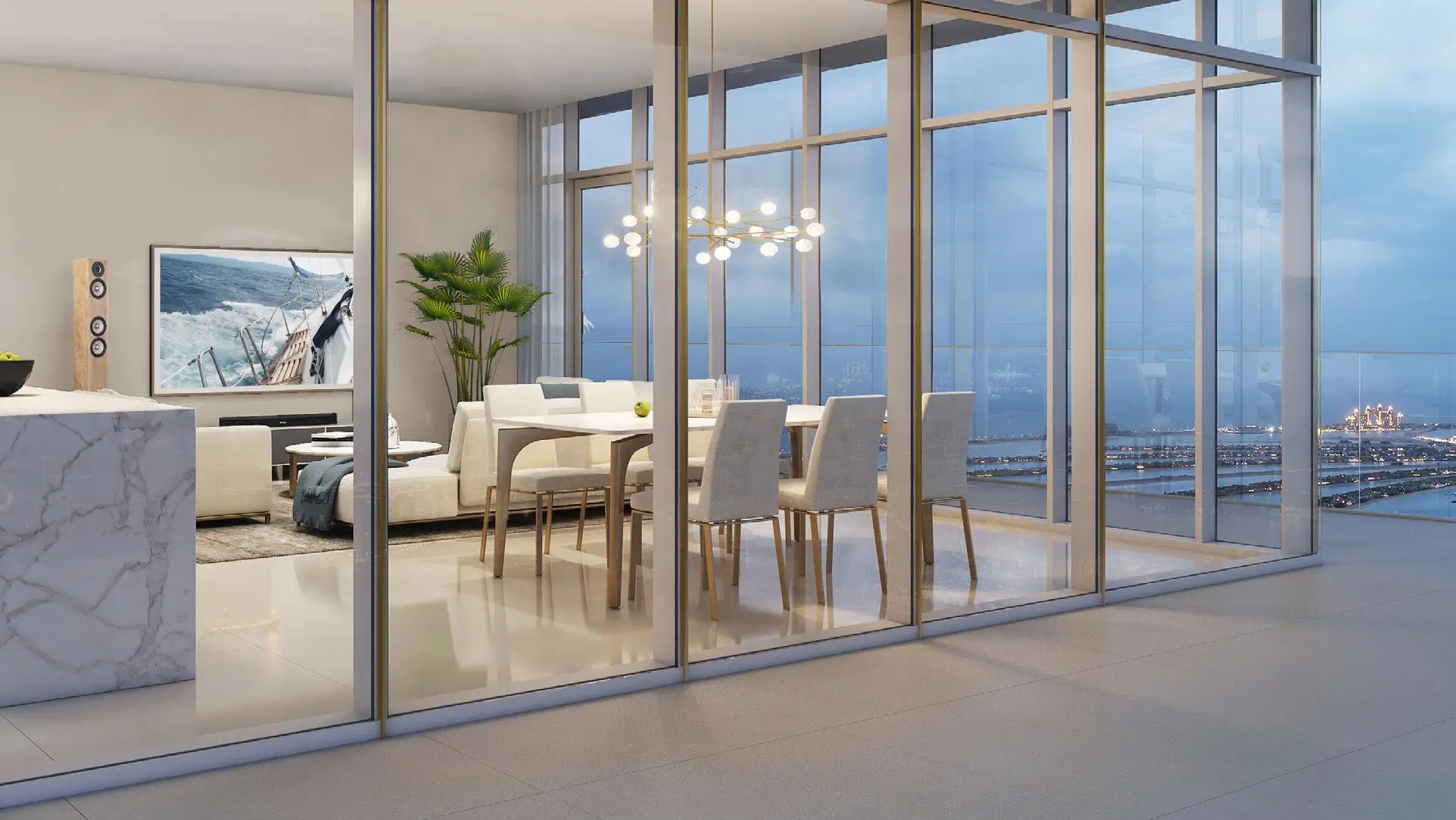
EMAAR "Beach Vista" catalogue marketing image, used as an illustration. Confirm the specific property's condition, specification, access and availability separately.
Inspect the view from realistic room positions
Check the outlook from the sofa, dining position, desk and bedroom rather than only from the balcony edge or a sales photograph. Record the exact orientation and visible obstructions. A broad sea-view description can cover different angles and room experiences, so compare the home as the intended resident would use it. A corner apartment may offer different outlooks in different rooms, and those distinctions deserve separate observations in the shortlist rather than one overall view label.
Investigate adjoining plots and future proposals through reliable current project information. Do not assume that open space or a rendering establishes a permanent view. If the purchase price is materially influenced by a particular outlook, identify the evidence and uncertainty attached to it. Keep the currently observed view and a future scenario separate in the comparison. An attractive premium is easier to assess when the buyer understands the actual room benefit and the assumption that supports its expected continuation.
Compare daylight, privacy and usable balconies
Evaluate the windows and balcony as a practical arrangement for the household. Check where furniture would fit, how doors open and whether the planned seating position has an acceptable relationship with neighbouring homes and shared areas. Record the conditions of the visit and arrange another viewing if a relevant time remains untested. Do not treat a sunset presentation as proof that the room will provide the preferred light, privacy or outdoor routine throughout the year.
Use the balcony and terrace comparison to separate advertised area from everyday usefulness. Clarify applicable rules and any maintenance arrangements before relying on proposed planting, equipment or alterations. A balcony can add meaningful space when the route, furniture plan and documented allocation work, but it should remain one part of the apartment assessment. Compare interior circulation and storage at the same time so that an appealing outside view does not conceal a compromised living arrangement.
Review layouts, storage and the move-in plan
Request dimensioned information and place realistic furniture for the proposed household or tenant. Check the positions of bedrooms, bathrooms, work space and storage. Include the belongings connected with your routine instead of evaluating only a staged interior. A waterfront setting does not remove the ordinary need for luggage, cleaning equipment and household storage. Identify where those items would go and whether their presence reduces the circulation or furniture position used to judge the apartment's outlook and comfort.
Clarify included items and furnishing needs for the actual purchase. A ready home may require setup or repairs, while an off-plan unit needs its written specification assessed separately from marketing images. The first-month move-in guide helps organise utility setup, delivery and practical occupation. Keep title transfer, possession and a usable home as different milestones in the plan rather than assuming that the household can settle comfortably as soon as the transaction is completed.

EMAAR "Seapoint" catalogue marketing image, used as an illustration. Confirm the specific property's condition, specification, access and availability separately.
Investigate tower operations and service arrangements
Ask about resident entrances, lifts, parking, deliveries, contractor access and management communication. Where a development uses a hospitality or service brand, request the actual arrangements applying to the unit. A brand name does not independently establish that every service is included, available on the same terms or suitable for the intended use. Keep the written scope, relevant charges and operating rules together before giving a branded feature value in the comparison with another residential tower.
Inspect shared areas and request available information about maintenance and reported issues through the appropriate channels. Clarify the building classification and permitted use where they matter to the proposed rental or occupation plan. The building amenities guide helps evaluate practical facilities, while your tower investigation records the specific arrangements that determine everyday access. A polished lobby or long amenities list supports a viewing impression, but it does not replace the current operational information for the property being acquired.
Check parking and journeys outside the community
Confirm the exact parking allocation in the relevant documents and inspect the bay and approach. Ask how visitors, deliveries and service providers are handled. Test normal destinations at useful times, beginning at the resident entrance or parking position. A broad location statement should not be converted into a guaranteed commute. The buyer needs an actual route that fits the household's work and service destinations, with the return journey and local approach included in the comparison.
Compare the coastal option with a nearby alternative when travel or operating arrangements are important. The Dubai Marina apartment buyer guide can help frame a practical alternative without assuming the two communities provide identical access or ownership responsibilities. Identify which benefit justifies choosing one home over another. This keeps the decision grounded in exact routes, usable rooms and costs rather than treating every waterfront location as an interchangeable lifestyle or rental proposition.
Separate coastal upkeep questions from assumptions
Ask a qualified professional to inspect material condition concerns and explain the maintenance requirements of the installed finishes, glazing and equipment. A coastal location should prompt appropriate questions rather than an improvised diagnosis of every mark or a blanket claim about future deterioration. Request available maintenance records for the exact home and distinguish visible observations from the technical cause, remedy and expected cost that require professional assessment before they influence an offer.
Clarify which responsibilities belong to the owner and which are handled through building management. Obtain suitable quotations for important private work and ask about access and approval procedures. Keep foreseeable upkeep in the budget instead of assuming that a new-looking marketing image eliminates it. Conversely, do not assign a universal coastal maintenance surcharge without evidence. The useful purchase comparison shows actual condition, documented operating arrangements and realistic spending assumptions for the specific homes being shortlisted.

EMAAR "Palace Beach Residences" catalogue marketing image, used as an illustration. Confirm the specific property's condition, specification, access and availability separately.
Compare ready and off-plan evidence carefully
For a ready apartment, establish current occupancy, inspection access and proposed possession through the authorised transaction process. Record visible condition, included items and any inspection limitation. A completed building can still contain a tenanted unit or require practical setup before use. Keep those questions separate from construction status. The home should be evaluated through its actual documents and availability, not through an assumption that every property in a delivered tower can be occupied immediately after purchase.
For an off-plan proposal, review project-specific documents, specification, payment stages and communication arrangements with the appropriate professionals. Separate contractual commitments from illustrative images and future community features. The ready versus off-plan timing guide supports that comparison. Match the full commitment to your available funds and required use date, with contingency for a different timing outcome, rather than choosing solely because a booking amount appears manageable or a beach rendering is attractive.
Build a tower-specific ownership budget
Request current recurring charges, inclusions, relevant balances and available information about significant common-area work. Clarify the periods covered and the source of each figure. Add setup, utilities, cooling, insurance where relevant, private maintenance, management and financing. Keep confirmed amounts, quotations and estimates clearly labelled. An apartment with a similar asking price to another coastal home can create a different cash commitment when service arrangements, furnishing and maintenance obligations are considered together.
Use the Dubai ownership-cost guide to maintain a consistent comparison and preserve a workable reserve after purchase. Do not allow a community-wide estimate to become the final budget for a particular branded or differently managed tower. The buyer should be able to explain what is included, what remains separately payable and which important costs still need confirmation before discussing an offer that depends on the expected operating result or personal-use affordability.
Evaluate rental appeal using matched evidence
Define the intended resident before estimating income. Beach access, room arrangement, transport, furnishings and tower rules may matter in different combinations. Seek current comparisons that match the building or a justified alternative, unit type, actual outlook, condition and operating arrangement. Separate asking advertisements from evidence of agreements and explain significant differences. A beach setting is a feature to evaluate, rather than proof of a universal rental premium or uninterrupted occupancy for every apartment offered in the community.
Model the operating result after vacancy, charges, setup, private maintenance, management and finance where applicable. Confirm permitted use and relevant approvals before assuming any particular rental model. Test a less favourable timing or cost scenario using your own plan. This makes the comparison informative without claiming a guaranteed return. A buyer can value the property's coastal appeal while still requiring the documents, matched evidence and sustainable reserve that support responsible ownership when the most optimistic assumption is not achieved.
Frequently asked questions about Emaar Beachfront homes
Does every beachfront advertisement refer to Emaar Beachfront? Verify the actual community, project and unit identity. Similar descriptive language can appear in different coastal developments. Use the exact address and documents before applying community information, access expectations or cost assumptions to the property being offered for purchase.
Does a sea-view apartment automatically provide the beach access I expect? Request the arrangements applying to the particular building and resident, including the route and relevant rules. Inspect the practical journey where possible. The outlook and documented access are different questions, and both need to support the intended use before influencing the final comparison.
Can I assume a branded tower includes every service? Ask for the actual written scope, charges, operating rules and permitted use of the unit. A name should lead to specific information rather than a broad inclusion assumption. Compare those responsibilities with another tower using current evidence and the features your household or intended tenant will realistically use.
Will a beach location guarantee strong rent? Use matched current evidence, confirmed operating arrangements and a complete cash-flow model. A desirable setting does not independently establish income, occupancy or a universal premium. Keep costs and uncertainty visible so that the home can remain manageable when receipts or timing differ from the favourable sales assumption.
Your practical action plan
1. Identify the Emaar Beachfront tower, unit and current stage.
2. Confirm beach arrangements and walk the actual access route.
3. Inspect room views, privacy, balconies and usable layout.
4. Review tower rules, condition, possession and property-specific costs.
5. Compare the coastal benefit with matched alternatives and realistic cash plans.
Choose the coastal benefit you can actually use
Keep the exact unit, observed outlook, beach route, tower rules, layout, journeys and ownership budget together. Arrange further inspection around the question that could change the decision and document the compromise you would accept. A strong Emaar Beachfront shortlist explains how the coastal setting supports the intended resident, with the relevant rights, costs and uncertainties understood before an appealing view becomes the main reason for a purchase commitment.
Contact Property Gulf with your Emaar Beachfront requirements, budget, intended use and timeframe. Ask for exact-unit information and a comparison of current options that reconfirms access, condition, possession and operating costs. The next useful step is a focused viewing and document programme, allowing you to choose a coastal home through practical evidence rather than a general promise attached to the community name.