


Project marketing image from the supplied EMAAR "Avelia" catalogue; shown for illustration and not as proof of current unit availability or delivered condition.
Avelia at The Valley — Emaar-branded architectural render supplied to PGI. Landscaping and visible features are illustrative; confirm the selected unit specification.
The Valley by Emaar is a master-planned residential community in Dubai with townhouse and villa collections along Dubai–Al Ain Road. Choosing a home here means choosing more than a bedroom count: the exact collection, plot, payment schedule and surrounding amenities will shape both everyday life and the purchase budget. This guide brings those decisions together, with dedicated attention to Avelia, Ovelle and the questions surrounding newer townhouse releases.
A family moving out of an apartment may be looking for a garden, a quieter bedroom arrangement and space to host relatives. An investor may be comparing entry cost, future tenant demand and the cash required before handover. Those buyers can consider the same community and reach different conclusions. The useful question is not whether The Valley is universally “the best” development. It is which home, at which price, fits the way you intend to live or invest.
This guide separates documented project information from general buying analysis and provisional launch publicity. Commercial information was researched on 7 September 2026; public pages may contain cached or older marketing figures. Images supplied to PGI show Emaar-branded architectural renders of Avelia and Ovelle, not photographs of completed homes. For current inventory and a written unit quotation, request a documented Valley shortlist from PGI.
The Valley by Emaar at a glance
What is The Valley? An Emaar master community containing multiple residential collections, rather than one uniform villa project.
Where is it? Along Dubai–Al Ain Road in Dubai; compare routes from the specific cluster entrance.
What can buyers compare? Townhouses and villas, with layout, size and bedroom choices varying by collection.
What are Avelia and Ovelle? Separate four- and five-bedroom villa collections, not names for a three-bedroom fourplex release.
Is there one price or payment plan? No. Request the dated offer for the specific unit and purchaser.
Are all amenities already open? Do not assume so. Confirm completion, access and operation for each facility.
Emaar's official Valley community page establishes the location and the mix of residential collections. Use it to understand the community; use the relevant project documentation to judge an individual purchase. A community brochure, a unit offer and a signed contract serve different purposes. Keeping those documents separate prevents a broad lifestyle promise from becoming an unsupported assumption about your home.
The Valley new launch: identify the release before comparing offers
Searching for “Emaar new launch” can produce an original project announcement, a later inventory release, a resale listing or an agent's expression-of-interest campaign. These are not interchangeable. A project can be established while selected units are newly offered. A property can also be new to an agency's listings without being a new Emaar development.
Avelia, Ovelle and the Alva EOI reports
Emaar's official pages describe Avelia and Ovelle as four- and five-bedroom villa collections. Separately, an independent Alva marketing page reports three- and four-bedroom townhouses with EOIs of AED 100,000 and AED 150,000 respectively. That page explicitly labels its release information provisional and not confirmed by Emaar. These figures are therefore a lead to verify, not confirmed PGI payment instructions or proof that an EOI window is currently open.
This distinction matters because a villa photograph cannot establish the identity of a townhouse release. Nor does a message saying “today at 3 PM” establish a usable launch date once it has been forwarded. Buyers should request the full date, Dubai time, collection name, issuing party and current allocation process. If these fields are missing, ask for the original release notice before acting on the deadline.
What a reliable release update should contain
A useful update names the collection and product, identifies whether the offer is developer stock or resale, dates the information and states what the quoted amount represents. It should also distinguish an enquiry from a paid EOI, an EOI from an allocation, and an allocation from a completed sale. A buyer should be able to understand the next commitment without interpreting promotional shorthand.
For a new release, ask for a unit schedule with identifiers and layouts. For a premium inventory release, ask why each available position commands a premium. For a resale, ask what the seller has paid and what remains due. This approach turns launch excitement into a comparison that can survive beyond the first sales conversation.
The Valley location: what “strategic” should mean for your household
A strategic location is one that supports your actual routines. For The Valley, begin with its Dubai–Al Ain Road setting, then test the journeys you will make repeatedly. A convenient route for one employment district may be a less comfortable routine for a household travelling in a different direction. Community-level marketing cannot replace that personal route test.
Measure journeys from the home, not the map label
Choose the entrance serving the cluster you are considering. Add the drive from the house to that entrance, the road journey and the final parking or drop-off time. A route from a general map pin can omit several parts of the daily trip. Also check whether the route displayed on a current map uses an entrance that will actually be available when you move.
Test a weekday morning, a weekday return journey and a weekend shopping trip. If your work pattern changes during the week, record both the easier and harder days. Keep a simple table with departure time, arrival time, route and unusual conditions. Three relevant observations tell a buyer more than repeating a single optimistic minute count across every destination.
Build a two-person commute test
Many households optimise around the principal buyer's office and overlook another adult's work, school collection or regular appointments. Draw up both schedules. A location that saves one person twenty minutes but adds an hour to another person's day may not be the improvement it first appears. The right answer is a household decision, not just a road-access decision.
Consider the number of vehicles you will need, parking arrangements, ride-hailing alternatives and the plan when one car is unavailable. Do not budget around a future transport connection unless its route, operating date and access arrangements are officially confirmed. A proposed connection can be an upside; it should not be the only way your daily routine works.
Include the destinations that make a house liveable
Your recurring routes may include a school, nursery, supermarket, clinic, sports club and airport. Rank them by frequency rather than prestige. A frequent grocery trip can have a greater effect on daily convenience than occasional access to a major attraction. For families, the morning school route and afternoon collection route deserve separate attention.
A useful location decision has a written limit: the maximum commute you are prepared to accept, the services that must be available at move-in and the alternatives you will use temporarily. If a particular Valley unit meets those limits and offers the space you want, its position may be strategically strong for you. That conclusion is more meaningful than an unsupported promise of universal connectivity.
Reading The Valley masterplan without confusing the phases
A masterplan explains relationships: homes to parks, streets to entrances, and residential clusters to shared facilities. A collection plan explains a smaller neighbourhood. A plot plan identifies the individual parcel. A floor plan describes the building. Buyers benefit from all four, because each answers questions the others cannot.
Start with the widest view. Find the cluster and mark the surrounding land uses. Then zoom in until you can identify the actual plot, neighbouring properties, road edges, pedestrian paths and service areas. A beautiful landscape illustration may show the intended atmosphere while omitting the detail needed to judge noise, access or overlooking.
Trace the route to the amenity you value
If a park is central to your decision, locate its entrance and trace the walking route. A straight line across a diagram might cross another plot, a landscaped buffer or a road without a convenient crossing. The useful measurement is the route residents can use, not the shortest line a designer can draw.
Do the same for a pool, play area or retail destination. Check whether access is intended for the wider master community, a particular phase or only residents of the collection. Being physically nearby does not automatically establish membership, unrestricted entry or inclusion in your service charges.
Ask for the drawing date and revision reference. If two sales materials show different surroundings, do not silently choose the more attractive version. Ask which plan governs the offer and whether the differences affect your selected unit. Preserve the answer with the rest of your purchase documents so the comparison remains traceable later.
For buyers evaluating several Emaar communities, PGI's Emaar properties available through PGI provide a starting point. Narrow that broad search with your budget, move-in horizon and required property type before comparing individual masterplans.
Townhouse, fourplex, twin villa or independent villa?
Property labels describe different things. “Townhouse” usually communicates an attached residential form, while “independent villa” suggests a detached home. “Fourplex” can describe a building or grouping containing four dwellings, but the exact arrangement needs a plan. “Twin villa” may describe paired homes. Marketing usage varies, so the label should begin your questions rather than end them.
Ask what is physically shared
Confirm the party walls, plot boundaries, access arrangements, parking and roof relationships. Two homes can have separate front doors and gardens while sharing a wall. A detached-looking elevation can also conceal another connection outside the camera angle. The approved plans and contract description are stronger evidence than a cropped image.
A three-bedroom townhouse may suit a household seeking manageable space and a garden. A larger villa may offer more room for entertaining, working at home or accommodating relatives. Neither is automatically better. Your decision should account for the extra purchase cost, furnishing, outdoor upkeep and the way the floor plan distributes usable space.
Separate the building from the plot
A large plot does not necessarily mean large bedrooms, and a large stated total area does not necessarily mean more enclosed living space. Some schedules include covered parking, terraces or balconies within a total. Ask for the breakdown rather than comparing unlike area labels. The most useful measures are the ones that relate to how your family will use the home.
Also ask what flexibility is genuinely permitted. A spare bedroom may become a study without structural changes, but extending the building, enclosing a terrace or installing a pool may require approvals. Do not pay for hypothetical improvements as though permission were already included in the sale.
The Valley should therefore be approached as a choice of collections and dwelling types. It is inaccurate to describe every home across the community as a fourplex. A buyer considering Avelia or Ovelle should assess the relevant villa layouts, while a buyer considering a townhouse release should obtain that release's own plans and specifications.
Do fourplex homes automatically offer more privacy?
No building label guarantees privacy. A smaller group of attached homes may reduce the number of immediate neighbours compared with a long terrace, but privacy depends on the exact arrangement. Windows, terraces, gardens, shared walls and pedestrian routes can matter more than the number of homes in the group.
Review privacy in three dimensions
First examine the ground level. Where can people walk, park or pause beside the home? Which rooms face the public route? Where will visitors stand while waiting at the door? A generous garden can still feel exposed if a busy walkway overlooks the main seating area.
Next examine the upper levels. Trace sightlines from neighbouring bedrooms, balconies and roof terraces towards your garden and principal rooms. A boundary wall can screen pedestrians without blocking views from an upper floor. Look at the elevations as well as the site plan; a plan alone does not show the height relationship.
Finally consider sound. Ask about the party-wall specification where homes are attached, the position of mechanical equipment and the relationship between neighbouring entertaining areas. A visual sense of openness and acoustic privacy are different qualities. Neither should be inferred solely from landscaped marketing renders.
Compare positions within the same collection
An end position can have fewer attached neighbours but more exposure to a road or public path. An internal position may have more adjoining homes but less passing traffic. A park-facing home may offer an attractive outlook while receiving more activity at certain hours. These are trade-offs, not universal rankings.
For each candidate, identify your private zone: the room or outdoor area where you most want seclusion. Test that particular space against the surrounding plans. Someone who spends evenings on a terrace may value a different orientation from a household that primarily wants quiet bedrooms and a secure play area.
A practical privacy scorecard can use five headings: shared boundaries, overlooking, pedestrian exposure, road activity and outdoor screening. Rate each candidate using the same evidence and note unknowns explicitly. An unknown should remain a question, not become a perfect score because the brochure does not show a problem.
Where landscaping contributes to the privacy story, ask about planting at handover, maintenance responsibility and expected growth. Mature trees shown in a render may represent a later appearance. The purchase should still make sense if the planting is smaller when you receive the home. Good privacy analysis tests the opening-day condition as well as the intended mature landscape.
Avelia at The Valley: how to assess the villa collection
Avelia is positioned by Emaar around four- and five-bedroom villas with nature-oriented design. The developer page reviewed for this guide displayed a marketing starting price of AED 7.25 million. That is a reference from the page, not confirmation that a home at that price remains available. Obtain a current unit offer before using it in a purchase budget. Source: Emaar Avelia project page.
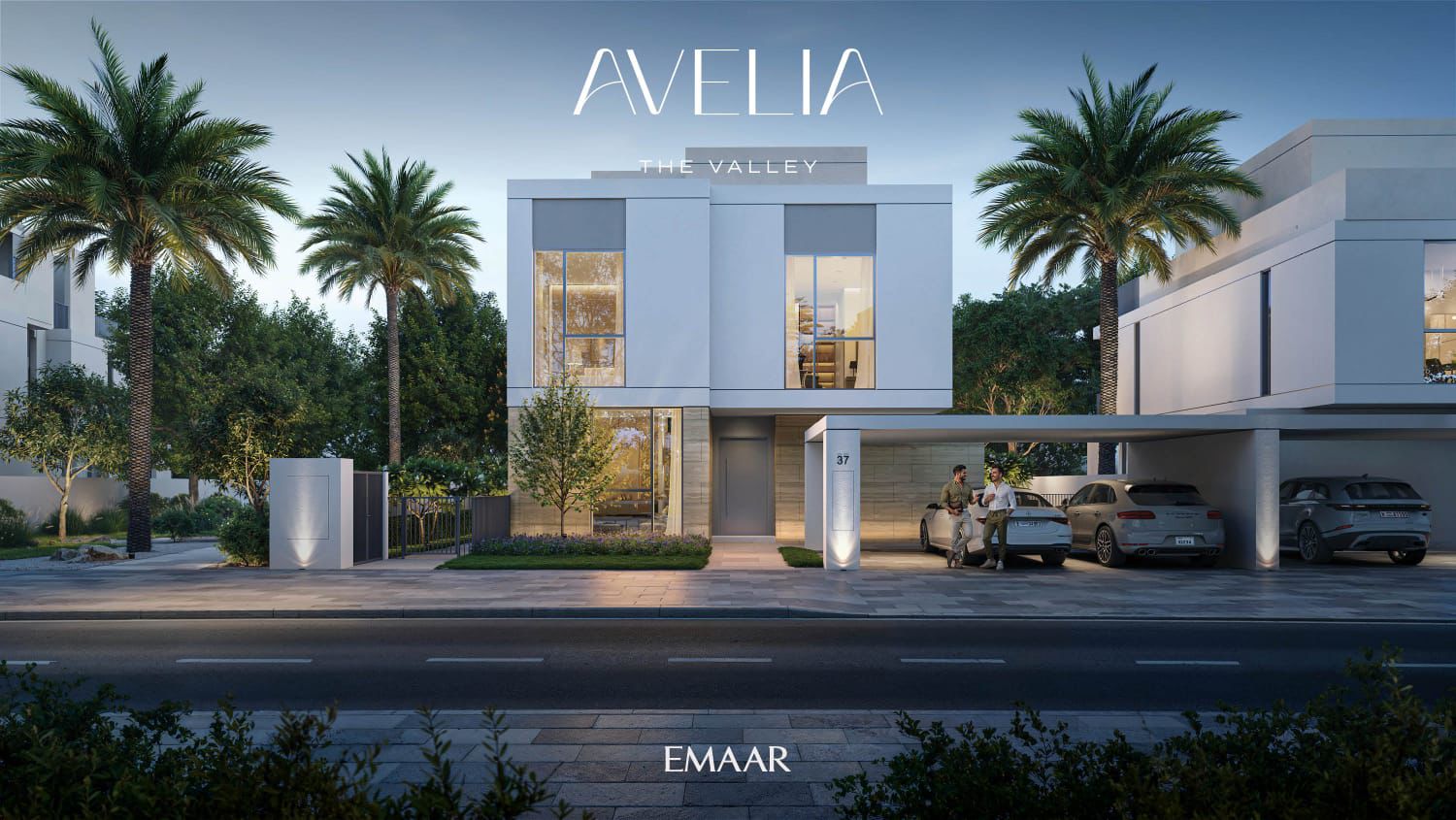
Avelia at The Valley: supplied architectural render of a street elevation. Appearance, landscaping and inclusions are illustrative.
Start with the room arrangement
For a family villa, the practical question is how the rooms work together. Can guests enter without walking through the most private family space? Is there a comfortable work area away from the television? Does the dining space accommodate your normal household and occasional visitors? A larger bedroom count is helpful only when the arrangement solves the right problems.
Check the relationship between the kitchen, dining room and garden. If you entertain outdoors, identify the route for food, dishes and guests. If you prefer a quieter family routine, assess whether outdoor activity can happen without disturbing a study or bedroom. These observations help distinguish layouts that appear similar in a basic unit schedule.
Use the render as a question prompt
The supplied Avelia images show different elevations and outdoor settings. They are useful for discussing the architectural language, but they do not identify which pictured elements belong to a particular purchase. Ask whether terraces, pools, fitted appliances, landscape work and other visible features are included, optional or illustrative.
Then match the selected unit to its named layout and elevation. Do not combine the garden of one illustration, the facade of another and the floor plan of a third into an imagined home that is not actually offered. A complete selection pack should make the matching process straightforward.
PGI's Avelia villas at The Valley page is the relevant internal starting point for enquiries. Ask for a shortlist containing the unit identifier, plot plan, floor-plan version, price, payment dates and anticipated handover terms. The most helpful comparison is between documented units, not a collection's most attractive image and its lowest historic price.
Ovelle at The Valley: space, setting and unit selection
Emaar also describes Ovelle as a four- and five-bedroom villa collection. Its page references Terrace Trails and Central Park and lists amenities including landscaped areas, a pool deck, fitness space, a multipurpose room, children's play and a pet park. These are developer-described features, not a verification of current operating status or unit-specific access. Source: Emaar Ovelle project page.
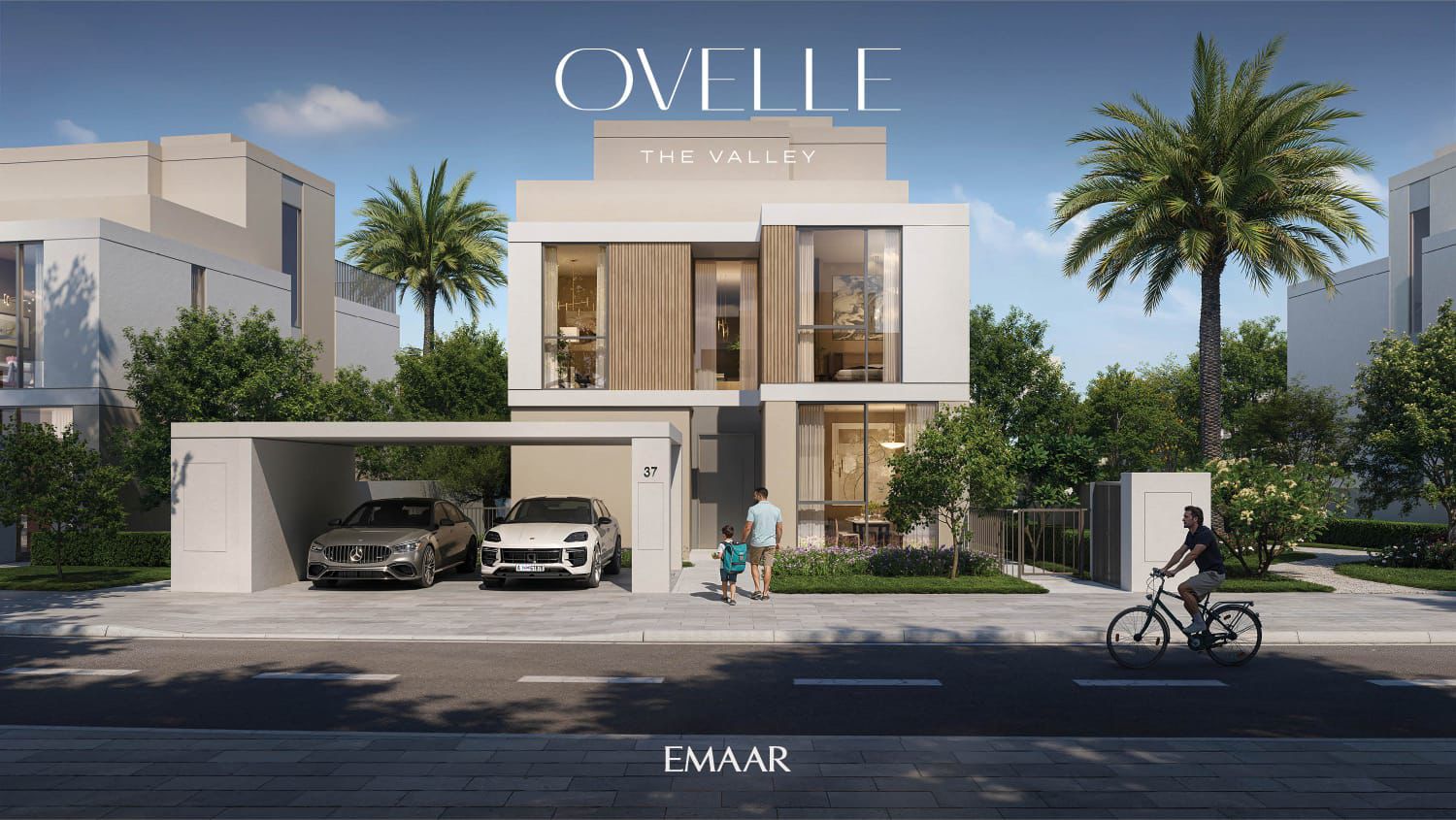
Ovelle street scene from the supplied Emaar-branded renders. This is not a photograph of a completed street.
Read different price displays carefully
The Ovelle page reviewed contained a headline starting figure of AED 7.09 million and a separate available-unit display at a higher level. Those displays should not be treated as the same offer. They may reflect different inventory or publication contexts; this guide cannot confirm the commercial reason. Request a dated quotation identifying the unit behind any advertised number.
Evaluate the relationship to outdoor space
If the outdoor setting is the main attraction, ask how the house opens towards the garden, where shade can be provided and how furniture would fit. A visually large outdoor space can be less usable if narrow circulation paths, equipment areas or changes in level restrict the places where people actually sit and play.
Consider storage for garden equipment, bicycles and family sports items. Think about the route from the parking area to the kitchen and the place where wet shoes or outdoor equipment will go. These details rarely dominate launch advertising, but they can have a substantial effect on everyday comfort.
Use PGI's Ovelle villas at The Valley page to start a unit enquiry. For a meaningful comparison with Avelia, request equivalent information and compare homes within a realistic total budget. The collection name alone cannot establish which property offers the better layout, outlook or value for your household.
Avelia versus Ovelle: a comparison that helps you choose
Buyers comparing Avelia and Ovelle should resist deciding from a starting-price headline alone. Different layouts, plot sizes and available positions can make the apparent price gap misleading. A four-bedroom entry reference in one collection should not be compared with a larger five-bedroom available unit in another as though they were equivalent homes.
Home type and layout Exact unit, bedroom arrangement, elevation and plan revision.
Space Enclosed living area, total stated area, plot area and usable garden.
Position Neighbouring plots, street exposure, walking routes and orientation.
Commercial terms Dated price, fees, booking amount and full instalment calendar.
Delivery and specification Contract timing, included finishes, outdoor works and handover requirements.
Give the comparison your own weights
A household planning to occupy the villa for many years may place the greatest weight on layout, privacy and daily convenience. An investor may give more weight to total acquisition cost, likely tenant preferences and the competing homes that could be available at completion. Both should consider affordability and the cost of an unexpected delay.
Write down the maximum premium you would pay for each meaningful improvement. For example, decide what a more useful guest arrangement, a preferred garden position or an easier walking route is worth to you before seeing the final prices. This prevents an appealing sales description from changing the importance of each feature after the fact.
Include an alternative rather than forcing a winner
A comparison should allow the possibility that neither current unit is right. Include a third option: another documented villa, a townhouse that meets your needs at a lower total commitment, or waiting for better information. A forced choice between two imperfect options can make a weak offer appear stronger than it is.
Once the shortlist is small, ask PGI to explain the practical reason for each recommendation in plain language. “Larger garden with less direct overlooking” is testable against a plan. “Best investment” is not a useful conclusion without assumptions, comparable evidence and a clear account of the risks.
How to compare three-, four- and five-bedroom floor plans
Bedroom count is a search filter, not a complete description of a home. Three well-proportioned bedrooms and a flexible study may be more suitable than four bedrooms with awkward circulation. Conversely, a household expecting frequent guests may need a separate bedroom even if the overall home is smaller than another option.
Draw your furniture before judging the room
Place your likely bed, wardrobes, dining table and sofa on the plan at their actual dimensions. Allow space for doors to open, chairs to move and people to pass. A room can technically fit the furniture while still feeling uncomfortable in daily use. Pay particular attention to the clear route around beds and between dining chairs and walls.
Check whether the floor plan shows built-in storage or merely a furniture suggestion. Look for linen storage, general cupboards and space for luggage. A larger home without convenient storage can be less practical than a smaller one with thoughtful service areas. Ask where household equipment will live once the styled brochure furniture is removed.
Test the ground-floor bedroom, if one is offered
A ground-floor room can be valuable for guests, multigenerational living or working from home, but its usefulness depends on bathroom access, privacy and dimensions. Verify the arrangement in the selected layout rather than assuming that every four-bedroom home includes the same feature.
If accessibility matters, check steps from parking to entrance, bathroom thresholds, door widths and movement between essential rooms. Do not equate a ground-floor bedroom with an accessible home. A qualified professional can assess specific needs against the plans and any permitted alterations.
Consider how the home changes with the household
Think beyond your current furniture. A nursery may become a school-age bedroom; a guest room may become an office; older relatives may stay for longer periods. Identify which rooms can change function without expensive work. Flexibility is often more valuable than a rarely used formal room.
Finally, calculate the extra commitment required for the larger option. Include purchase price, fees, furnishing and ongoing upkeep, not only the difference in a booking payment. If the extra room solves a genuine need and the larger commitment remains comfortable, it can be worthwhile. If it is mainly an emotional response to a higher bedroom count, reconsider before stretching the budget.
Plot selection: corner, single row, park-facing and road-facing homes
Position can materially change the experience of otherwise similar homes. Begin by defining the terms used in the offer. “Single row” should be explained with the actual surrounding plan. “Park-facing” should identify the park, direction of the view and intervening features. “Corner” describes a position; it does not automatically establish a quiet or oversized plot.
Look beyond the attractive boundary
A plot has several edges. The garden may face greenery while the side boundary faces a road, utility space or pedestrian connection. Ask for the full surroundings rather than a cropped drawing showing only the premium outlook. Then identify which rooms and outdoor areas are most affected by each edge.
For a corner plot, examine road geometry, pedestrian crossings, headlights and the visibility of outdoor seating from passing traffic. For an internal plot, inspect rear-facing relationships and the width of the garden. For a home near a facility, think about opening hours, deliveries and the times when people are likely to gather.
Translate premiums into useful benefits
If one position costs more, ask what you receive for the difference. Is the garden wider, the outlook more open, the walk to a facility shorter or the home less overlooked? More than one advantage may apply, but each should be supported by the plans. A premium is a price decision, not a quality certificate.
Calculate the premium as both an amount and a percentage of the alternative property's price. Then consider the effect on your total cash requirement. A difference that sounds small as a percentage can still be enough to fund furnishing, landscaping and a substantial reserve.
Also consider how future buyers or tenants might assess the same position. A feature valuable to you may appeal to a narrow audience, which is acceptable for a long-term home but should be acknowledged in an investment case. Good plot selection combines personal usefulness with a realistic view of broader demand.
Parks, recreation and community amenities: focus on access and delivery
The Valley's outdoor proposition is an important part of its appeal. Emaar's community material identifies Golden Beach, Kids Dale, Sports Village, Town Centre and pocket parks. The published figures include 47,000 square metres for Golden Beach, 13,000 for Kids Dale, 25,000 for Sports Village and 32,000 for Town Centre. These are developer-described components, not a measure of the entire community or evidence that every facility is operational. Source: Emaar's Valley community information.
Amenity size is only one part of usefulness
A substantial park can be attractive, but the facilities you will use most may be the ones closest to your home. Shade, seating, toilets, accessible routes and safe crossings can influence everyday usefulness more than a large headline area. Ask how the amenity functions for your household rather than treating its size as a complete benefit.
If outdoor activity is important, map a realistic routine. Where would you walk after work? Where would a child cycle under supervision? Where could a visitor sit comfortably? Identify the route, the likely time of day and the season. This turns an attractive lifestyle concept into something you can assess.
Check the operating details
For pools, fitness areas and sports spaces, ask about access rules, opening hours, booking arrangements, supervision and any separate charges. For pet-related spaces, check the permitted uses and practical route from your property. If a facility is planned, request the latest delivery information and keep a temporary alternative in your move-in plan.
Claims that a release sits beside “the largest parks Emaar has ever built” need a defined comparison and authoritative measurement. Without that evidence, the meaningful questions remain straightforward: which parks, how far away, how accessible and when usable? The answers can support a strong property decision without relying on a superlative.
Similarly, a garden or pool shown beside a villa should not be confused with a shared amenity or a contractual inclusion. Ask what you own, what you may use and what you must maintain. Each can have a different cost and a different set of conditions.
Schools, hospital and mall: distinguish planned facilities from open services
For many families, education, healthcare and shopping determine whether a community works as a home. A masterplan reference to a school, hospital or mall is useful, but it does not answer whether the facility is open, accepting users or scheduled to serve your household when you move. This guide does not independently confirm the advertised combination of an operational hospital, mall and two schools serving every new release.
School planning needs more than a count
Ask for each school's name, operator, curriculum, year groups, admissions status and intended opening date. A planned school may not offer the year group your child needs at its initial opening. A nearby school may have a waiting list, and a convenient location does not establish that transport or admission is available.
Build the education plan around a confirmed option and treat future provision as potential improvement. Contact the school directly about admissions and transport. Test both drop-off and collection arrangements, especially if different children attend different schools or finish at different times.
Include nursery or after-school needs where relevant. A household's practical routine can depend on activities outside standard school hours. The best property location for your family is one that accommodates those real commitments, not simply one with several school icons on a masterplan.
Healthcare requires a service-level check
A clinic, hospital and emergency department are different facilities. Ask which services are actually available, their operating hours and whether your insurance arrangements are accepted. If someone in your household needs regular specialist treatment, evaluate that specific provider and journey rather than a generic “healthcare nearby” claim.
Keep an emergency plan independent of future construction. Identify the appropriate currently operating service and a practical route. A home purchase should not depend on an unverified healthcare opening date where an essential household need is involved.
Retail: separate daily convenience from destination shopping
A supermarket, neighbourhood retail centre and major shopping mall solve different needs. For daily living, confirm grocery access, pharmacy provision and the services you use frequently. For leisure, compare the destinations you actually visit and the time required to reach them.
Where retail is planned, ask about the expected tenants and trading date, but recognise that a planning intention is not a lease commitment or opening guarantee. Estimate the practical cost of using alternatives during the early period. This is especially important for buyers relocating directly after handover.
The Valley prices: how to read starting prices and compare value
There is no single price for “a home in The Valley.” The community contains different collections, property forms, sizes and positions. Asking prices can also refer to different transaction types. A developer release, an off-plan resale and a completed property listing may each require a different amount of cash at the start.
Label the price before using it
Write down whether the number is an original launch reference, a marketing starting figure, a current available-unit quotation or a seller's asking price. Include the date and the unit where possible. If the number lacks those details, treat it as a broad discovery reference rather than the basis of a purchase decision.
The same discipline applies to discounts and premiums. “Below original price” does not show the complete economics without the original contract, amounts already paid, charges and remaining obligations. A discounted asking price may still be less suitable than another home once transaction costs and the payment timetable are included.
Use comparable area definitions
Price per square foot can help when the denominator is consistent. It becomes misleading when one listing uses plot area, another uses total built-up area and another uses enclosed internal space. Ask for the measurement definition before ranking options. Keep separate columns if more than one measure is useful.
For illustration only, a hypothetical AED 4,500,000 home divided by 3,000 square feet produces AED 1,500 per square foot. If that 3,000 includes substantial exterior components, the result does not describe the cost of each square foot of indoor accommodation. The calculation is correct, but the interpretation may still be wrong.
Compare complete alternatives
Create a shortlist of homes that meet the same essential requirements. Compare bedroom use, enclosed space, plot, outlook, delivery horizon and total cash commitment. Remove options that fail a non-negotiable need before spending time on fine price differences. A cheap unsuitable home is not a useful benchmark for the home you actually need.
Buyers wanting a broader reference set can compare PGI's off-plan villas in Dubai. Use those listings to identify alternatives, then request current documentation. A property portal is a discovery tool; a documented quotation is the basis for a meaningful commercial comparison.
Price discipline does not mean choosing the cheapest option. It means understanding what you are paying for, what alternatives cost and how the purchase fits your financial capacity. That creates a better foundation for negotiation and a clearer explanation of why the chosen home is worth its price to you.
The Valley payment plans: compare dates, not just percentages
A payment plan is a calendar of obligations. A phrase such as “80/20” can be a useful shorthand, but it does not reveal the dates, construction conditions, initial fees or consequences of missing a payment. Obtain the complete schedule for the specific unit and the date on which you intend to buy.
Check whether the schedule has already started
PGI's Avelia and Ovelle project pages reviewed for this guide showed schedules containing a July 2026 instalment. That date precedes this guide's research date. A buyer entering later should ask whether earlier amounts become immediately due, whether an amended offer applies and how the remaining schedule is calculated. Do not copy a historic calendar into a new purchase budget without clarification. PGI Avelia details and PGI Ovelle details.
Translate every percentage into cash
Consider an entirely hypothetical property priced at AED 4,500,000. Ten per cent is AED 450,000; twenty per cent is AED 900,000. A schedule with ten per cent at booking and seventy per cent across construction would require AED 3,600,000 before the final twenty per cent at handover. This illustrates an 80/20 structure; it is not an offer for any Valley collection.
The calendar matters as much as the total. Two AED 450,000 instalments close together can create a different challenge from the same amount spread over a year. Map payments against reliable available funds, not only expected future income or a hoped-for sale of another asset.
Keep the handover balance visible
A deferred final payment can feel distant during launch discussions. It becomes urgent when construction is close to completion. Identify how you intend to fund it and what alternative remains if borrowing is smaller, slower or more expensive than expected. Do not assume that a lender will automatically fund the contractual balance.
Ask about the precise trigger for each payment and how notices are issued. Distinguish calendar-based instalments from construction-linked milestones. Request written clarification of any ambiguity before signing, particularly where an agent's summary differs from the contract.
Finally, keep a reserve outside the instalment schedule. Fees, furnishings, temporary accommodation and ownership costs are not necessarily covered by a developer plan. A comfortable payment structure is one you can complete while retaining enough flexibility for normal life and plausible setbacks.
Financing at handover: allow for a valuation gap
If you intend to borrow at handover, distinguish the developer's outstanding balance from the amount a lender may offer. They are determined through different processes. Your purchase agreement specifies what you owe, while a lender assesses the borrower, property and proposed loan under the conditions applying when it considers the application.
A hypothetical funding-gap example
Suppose an imaginary buyer expects to borrow sixty per cent of a hypothetical AED 4,500,000 property value. That assumption would produce a loan of AED 2,700,000. If the lender instead used a value of AED 4,000,000 and the same hypothetical percentage, the result would be AED 2,400,000. The difference is AED 300,000 that the buyer would need to address through another acceptable funding source.
This example does not state an applicable lending limit or predict a bank's valuation. The percentage and amounts are chosen only to demonstrate the arithmetic. Eligibility, permitted borrowing, valuations, charges and terms need to be checked with a licensed lender or appropriately qualified adviser for the actual borrower and property.
Test timing as well as the amount
A funding plan can be sufficient in total and still fail to match the contractual deadline. Ask when the lender needs documents, how it assesses the property and what conditions must be satisfied before funds can be released. Coordinate that information with the developer's payment notice rather than assuming the processes will automatically align.
Keep track of the validity and conditions of any preliminary lending indication. Changes in employment, existing liabilities, residency or the property can affect the eventual assessment. Treat an initial conversation as preparation, not an unconditional promise covering a purchase several years later.
Decide what the reserve is protecting
A reserve can address a smaller loan, transaction charges or a temporary delay, but the same money cannot cover every contingency simultaneously. List the possible calls on that reserve and identify which could occur together. For example, a funding shortfall and move-in spending may arrive in the same month.
Also examine the ongoing household position after borrowing. Compare the proposed payments with dependable income and other obligations, and consider how a change in financing cost would affect comfort. A home should remain manageable after completion, not merely fundable on the day the final payment is due.
If the financing plan remains uncertain, adjust the property budget or obtain further advice before accepting commitments that depend on it. Keeping the purchase within a resilient funding range gives you more freedom to choose the right home and reduces the pressure to sell another asset or accept unsuitable borrowing later.
EOI, reservation and booking: understand the commitment before paying
An expression of interest is part of a sales process, but its meaning depends on the written terms. It may collect preferences, involve a payment or precede an allocation. It should never be assumed to guarantee a particular home, price or refund simply because another release used similar terminology.
Separate four stages
An enquiry asks for information. A paid EOI may record interest under specified conditions. An allocation identifies an offered property, potentially subject to deadlines. A reservation or sale agreement can create further commitments. Ask the issuing party to explain where you are in that sequence and what changes when you move to the next stage.
Before any payment, obtain the collection name, the legal entity receiving funds, the written purpose of the payment and the official instructions. Confirm those instructions independently through a trusted developer channel. Do not rely on an account number that appears only in a forwarded message, and do not assume that a public broker page is an official payment notice.
Ask the refund questions explicitly
What happens if no suitable unit is offered? What happens if a unit is offered but does not meet the preferences you submitted? What deadline applies to accepting it? Is the payment transferable, credited towards the purchase or subject to deductions? How is any permitted refund requested and processed?
These questions do not have one universal answer. The relevant document and applicable rules determine the position. Where the amount or terms are material to you, seek independent professional review rather than relying on a general article or an informal assurance.
Keep the purchase budget separate
An EOI amount is not the home's price and is not necessarily the complete initial cash requirement. A later booking payment, registration charges and instalments may follow. If the EOI is credited towards a purchase, include that credit once rather than counting it as both an additional cost and part of the deposit.
Keep copies of the form, terms, receipt, correspondence and official acknowledgement. Record the date and the options selected. Good records help avoid confusion when releases move quickly or several similar project names are being discussed at once.
The real budget: purchase costs, furnishing and annual ownership
A house can be affordable at the advertised price and still stretch the household once the full cost is recognised. Build three budgets: acquisition, move-in and annual ownership. Each answers a different question, and keeping them separate helps prevent an attractive payment plan from hiding a later cash requirement.
Acquisition budget
Start with the agreed price and the timing of the purchase payments. Add the registration, administrative, brokerage, legal and financing charges that apply to the transaction. Ask for a written cost sheet identifying which charges are confirmed, estimated or conditional. Verify the applicable official fees and contractual allocation rather than assuming that every transaction follows an identical cost structure.
For arithmetic illustration, a four per cent allowance on a hypothetical AED 4,500,000 price equals AED 180,000. This is a budgeting assumption, not a personalised fee quotation. If you add a hypothetical AED 45,000 for other acquisition costs, the illustrative acquisition total becomes AED 4,725,000. Replace both allowances with the actual approved cost sheet.
Move-in budget
Allow separately for furniture, curtains, appliances not included in the specification, utility deposits, moving services and any permitted outdoor work. Larger windows or unusual room dimensions can change furnishing costs. A villa that appears nearly complete in a render may still require substantial spending before it suits your household.
Do not treat a visualised pool or garden as an included finished item unless the specification confirms it. Where additions are permitted, obtain separate quotations and understand the approval process. Keep the original budget viable even if you defer optional improvements for a year.
Annual ownership budget
Consider service charges where applicable, maintenance, insurance, utilities, garden care, equipment servicing and replacement reserves. If the property will be rented, include management, vacancy and leasing costs as relevant. Ask for current supporting figures rather than assuming a rate from a different collection applies.
Distinguish predictable bills from reserves for irregular work. You may not replace an appliance every year, but setting aside an annual allowance helps avoid treating an eventual replacement as an unexpected crisis. For a larger home, review several categories of equipment rather than using one vague maintenance figure.
A complete budget ends with an affordability test: can you meet the purchase obligations, fund the move and carry the home under a less favourable scenario? If the answer depends on every assumption working perfectly, the price or timing may need adjustment before you proceed.
Is The Valley by Emaar a good investment?
The investment case depends on the entry price, property, holding period and future demand. A recognisable developer and a compelling community concept can attract attention, but neither guarantees rent, capital growth or a quick resale. Judge the actual unit using evidence and a range of outcomes.
Define the likely occupier
For a family-sized home, identify the type of household most likely to choose it and why. Consider bedroom arrangement, commute, school routine, outdoor space and affordability. The tenant profile should be specific enough to test against competing homes; “everyone wants villas” is not a useful demand model.
Then compare alternatives that household could select at the same rent or purchase budget. A larger home farther from its daily destinations may compete with a smaller home in a more convenient setting. Your property does not operate in isolation simply because it belongs to a recognised master community.
Use a clearly labelled rental scenario
Suppose a hypothetical property costs AED 4,500,000, has total acquisition costs of AED 225,000 and produces AED 240,000 in annual rent. If operating costs and vacancy allowances total AED 55,000, its annual net operating income would be AED 185,000. Dividing that by AED 4,725,000 gives an illustrative unlevered net yield of about 3.92 per cent.
These figures are invented to demonstrate the calculation. They are not a valuation, forecast or observed rent for Avelia, Ovelle or another Valley collection. Replace them with verified comparables and property-specific costs. A numerical example should clarify the method, not disguise an unsupported market claim.
Test a weaker outcome
If the assumed annual rent falls by ten per cent to AED 216,000 while the same AED 55,000 cost allowance is retained, net operating income becomes AED 161,000. On the same acquisition cost, the illustrative yield falls to approximately 3.41 per cent. Financing, tax and major exceptional works are excluded from both examples.
Model borrowing separately because interest and repayments change the cash available to the owner. Also separate capital appreciation from rental performance. A property can produce a modest operating yield and appreciate, or generate rent while falling in value. Combining both into an unexplained “ROI” figure can obscure the risk.
For the wider decision framework, read PGI's Dubai property investment guide. Use current professional advice where the purchase has significant financial, legal or tax implications for your circumstances.
Limited supply: what buyers should actually measure
Scarcity needs a defined boundary. A small number of units in one release does not establish limited supply across The Valley, and a small number of advertised listings does not reveal all developer stock or future resale competition. Ask what the number measures and when it was verified.
Separate three kinds of supply
The first is immediately available stock: homes genuinely open for reservation or sale. The second is comparable future supply: properties that may be delivered around the time you plan to occupy, lease or sell. The third is replacement choice: other homes outside the immediate collection that satisfy a similar buyer's needs.
A particular layout or plot position can be uncommon even in a large community. That can be valuable, but the premium still needs to be tested against demand. A scarce feature is not automatically a desired feature, and an attractive feature is not worth an unlimited premium.
Ask for evidence behind urgency
If a salesperson says only a few homes remain, request the dated inventory or a current confirmation for the options under discussion. Clarify whether the figure covers one bedroom type, a premium subset or the whole release. An inventory counter on a public page can change and should not substitute for a unit acknowledgement.
For an investor, extend the review to the likely completion period. Several similar homes becoming available together could affect marketing time or achievable rent. A prudent plan includes a reserve and a realistic leasing period rather than assuming that low launch availability guarantees an easy exit years later.
New release versus resale: compare the full cash requirement
A new developer release and a resale can both provide access to The Valley, but their cash-flow patterns may differ. With a resale, the buyer may need to reimburse amounts already paid, settle an agreed premium or discount, cover transaction expenses and assume future obligations. The details depend on the property and transfer arrangements.
Request a clean reconciliation
The comparison should show the agreed selling price, the amount paid to the developer, any outstanding balance, relevant charges and what must be paid at each stage. Ask a qualified transaction professional to explain the flow of funds and the conditions for transfer. Do not infer that a seller's small advertised premium represents the entire upfront requirement.
Verify the seller's authority and the property documents. Where a sale involves an existing tenancy, financing or other obligations, obtain appropriate advice on their effect. A listing description is not enough to establish vacant possession, transferable terms or the absence of liabilities.
Compare the alternatives on the same date
A resale may offer a position no longer available from the developer, while a new release may offer a different schedule or specification. Compare both with current information. An old launch price and today's resale asking price reflect different dates and circumstances; they cannot alone demonstrate the return a future buyer should expect.
For an owner-occupier, completion status and certainty of access can be especially important. For an investor, examine how quickly the property could be rented and what work may be required. The stronger option is the one whose total economics and practical timing fit the objective, not necessarily the one carrying the more exciting sales label.
Handover: plan for the home you receive, not only the date advertised
An anticipated handover date is a planning reference, while the contract sets out the relevant obligations and provisions. PGI's Avelia and Ovelle pages reviewed for this guide displayed December 2029. Buyers should verify the current contractual position for the chosen unit and avoid treating a public listing date as a guarantee. Avelia listing; Ovelle listing.
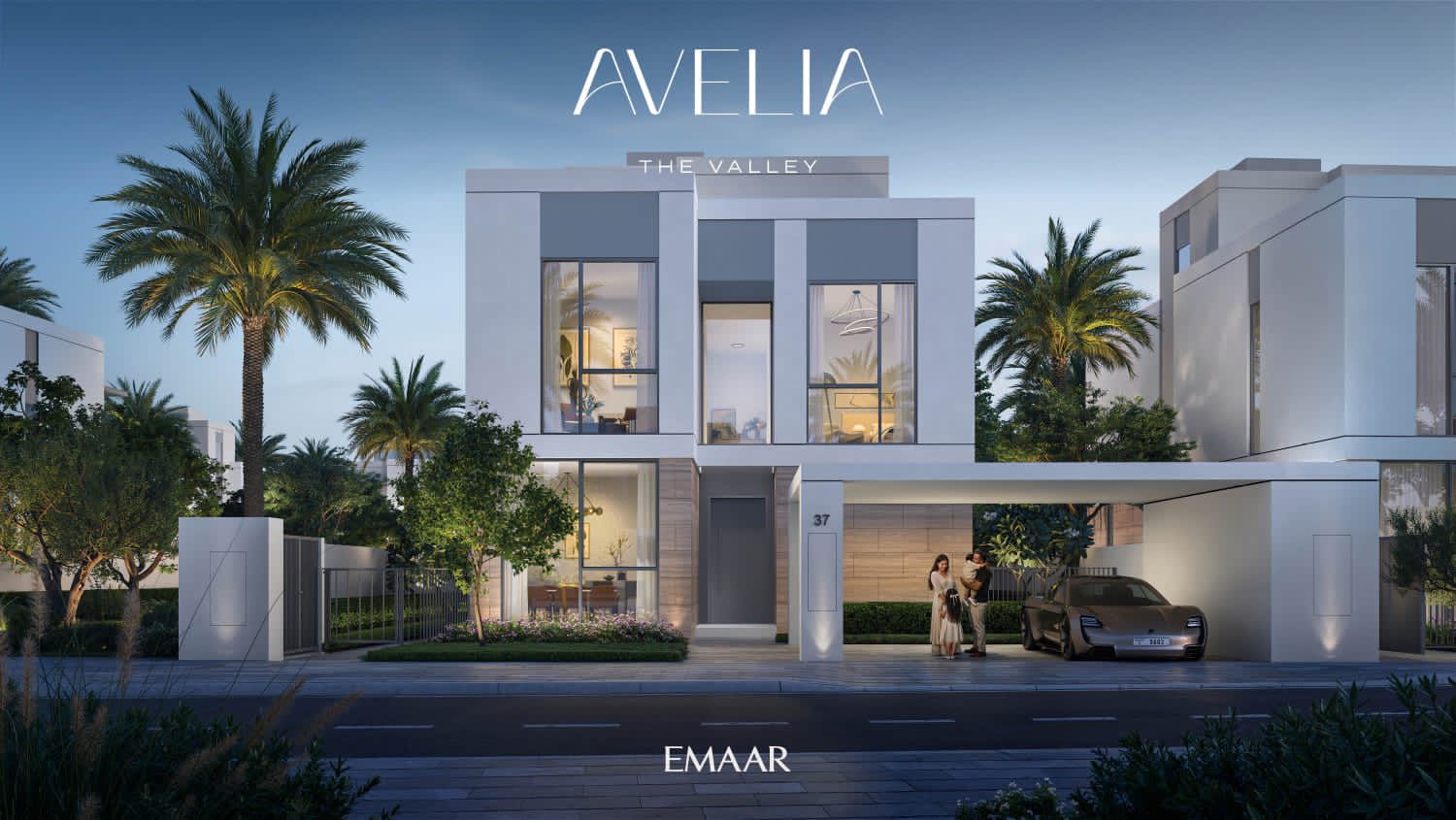
Supplied Avelia facade render. Match the selected unit to its own approved elevation and specification.
Build a transition budget
If the home is intended for occupation, consider what happens if your existing lease ends before the property is ready. Include a temporary housing option and a plan for furniture storage, school arrangements and travel. A flexible transition can reduce pressure to make rushed decisions near completion.
If the property is intended for rent, allow time for inspection, remedial work, utilities, furnishing where appropriate and marketing. Do not assume rent begins on the same day as a handover notice. The interval between completion and a paying tenant belongs in the financial model.
Prepare an inspection list
Check the property against the agreed specification and documents. A professional inspection can help assess finishes, doors, windows, electrical points, plumbing and other accessible elements. Record issues clearly with locations and photographs, and understand the process for reporting and following up on them.
Ask what documentation accompanies handover, including equipment information, warranties where applicable and community contacts. Understand the procedure for reporting later defects and the limits of any coverage. Keep the property records in an organised folder rather than relying on a chain of informal messages.
Finally, verify the condition of the surrounding access and essential services. The house, the street and the wider community may reach different stages at different times. Your move-in plan should reflect the facilities you can actually use when you receive the keys.
Due diligence: verify the project, documents and payment channel
Careful buying combines commercial review with independent checks. Dubai Land Department provides a Project Status Enquiry service that allows users to search using project or land information and review available project details. Use the exact registered identifiers where possible; a marketing collection name may not be sufficient to identify the relevant record.
Keep project checks and unit checks separate
A project record does not replace the unit's purchase documents. Match the unit number, property type, area description, plot and price across the offer, reservation material and agreement. Ask for discrepancies to be resolved in writing before signing. Small naming differences can cause confusion when several releases have similar branding.
Dubai Land Department's official frequently asked questions explain project escrow requirements and the use of project-status information. Verify the applicable payment arrangements through official channels. This article has not checked the escrow record or registration of a specific Valley unit and is not a substitute for that transaction-level review.
Read the parts that matter when plans change
Review payment obligations, default provisions, delivery terms, permitted variations, transfer conditions and dispute provisions with appropriate professional assistance. Understand what happens if your own circumstances change, not only what happens if the developer changes something. A contract should be assessed for its less convenient scenarios as well as its expected course.
Ask whether a promise appears in a binding document or only in marketing material. If the promise is central to your decision, seek a clear written explanation of its status. Do not assume that a confident verbal description changes the agreement you are asked to sign.
Retain the version of each document you relied on, the date received and the issuing contact. This record is useful even when a purchase proceeds smoothly: it helps you answer future questions about specifications, costs and the commitments made at selection.
Buying from overseas: organise the decision before travelling
Overseas buyers can make the process more efficient by preparing a precise brief before arranging calls or visits. State the intended use, total budget, available funds, preferred payment profile and acceptable completion window. Explain which decisions you can make remotely and which require seeing the location or obtaining professional advice.
Ask for one consistent comparison pack
Request the same fields for every candidate. A presentation containing a detailed floor plan for one home and only a lifestyle image for another does not support a fair comparison. Include the unit identifier, complete plans, surrounding plot information, specification, price, charges and current schedule.
For video viewings or location updates, distinguish current footage from renders and earlier recordings. Ask when the footage was captured and what it actually shows. A video of another collection may illustrate a general setting but cannot verify the construction or views of the home under consideration.
Plan documentation and funding carefully
Ask the relevant professionals which identification, ownership and transaction documents are required for your circumstances. Use secure, verified channels for sensitive information. Never assume that a familiar logo in an email proves the sender's authority or that an altered payment instruction is legitimate.
If funds are held in another currency or depend on selling an asset, consider timing, conversion costs and contingency. Do not wait until a payment deadline to discover the bank's processing requirements. Obtain financial and tax advice relevant to your country of residence where appropriate.
If residency is part of the motivation, verify current eligibility with the competent authority and a qualified adviser before relying on it. A property purchase and an immigration approval are separate decisions. The purchase should remain understandable on its own merits, with residency assumptions assessed explicitly rather than treated as automatic.
The Valley versus other Dubai villa communities: compare your priorities
A useful community comparison begins with the household, not a winner's podium. Buyers may compare The Valley with other Emaar locations or with villa and townhouse communities from other developers. Different settings can offer different combinations of space, access, maturity and price, and the most suitable answer can change with a buyer's stage of life.
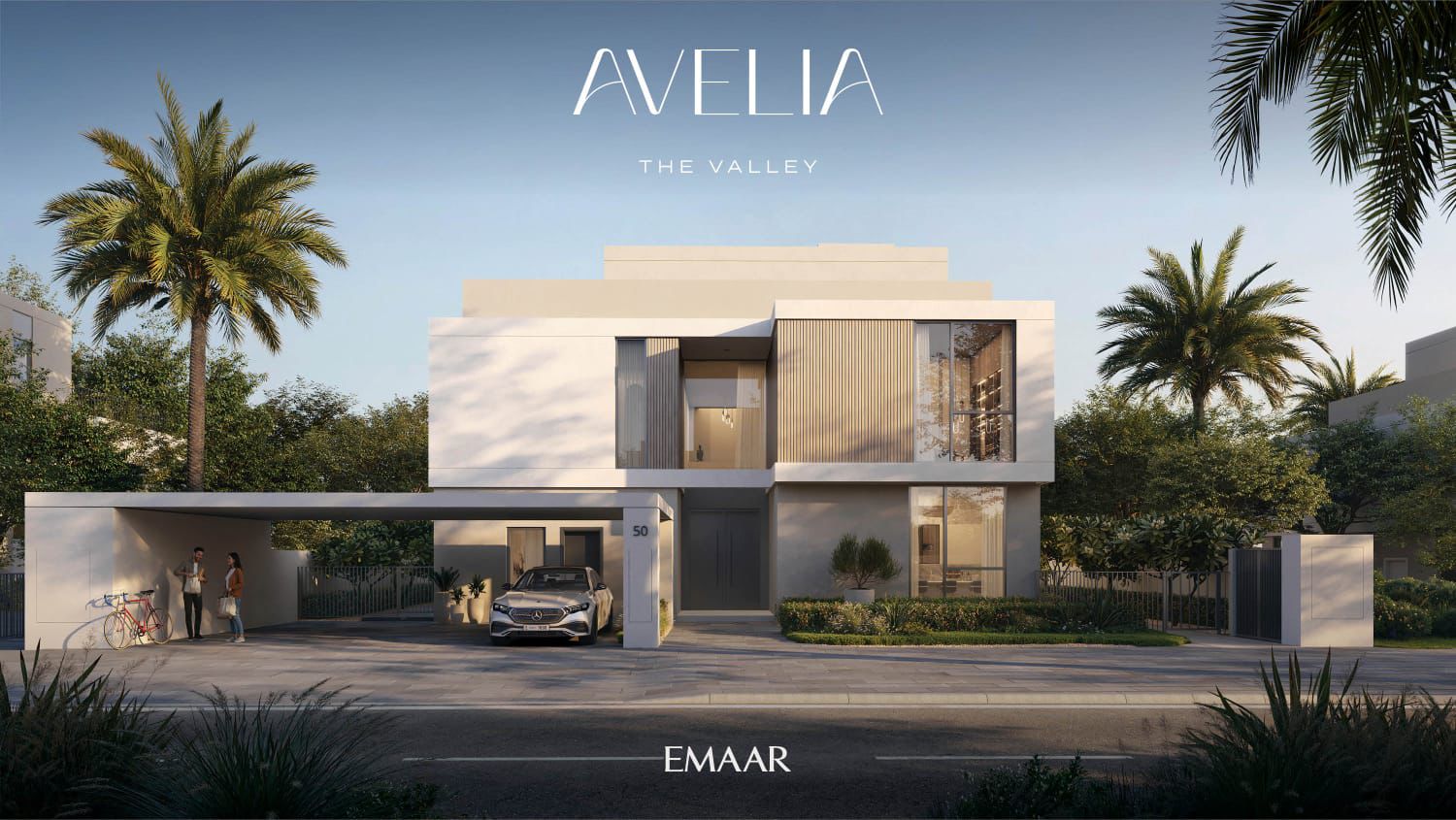
Avelia architectural visual supplied to PGI. Use current plans, rather than the render alone, to compare usable space.
Compare equal commitments
Set an all-in budget and compare what it buys in each shortlisted location. Then compare the annual ownership cost and the timing of payments. A larger off-plan property and a smaller completed home may have very different short-term cash requirements, even when their purchase prices are similar.
Separate current advantages from expected future improvements. An operating facility and a planned facility are not equivalent today. A buyer comfortable waiting for an evolving community may accept that difference, while a household needing an immediate school and work routine may prefer greater certainty.
Use a practical scorecard
Score commute, essential services, layout, privacy, outdoor space, total cost and timing. Give each category a weight reflecting your needs. Record the evidence beside the score. This creates a transparent comparison and makes it easier for partners or family members to discuss why they favour different options.
Do not let a single striking feature dominate the entire decision. A beautiful garden will not eliminate an unaffordable payment schedule; a convenient commute will not solve an unsuitable layout. The goal is a balanced choice with understood trade-offs.
Three household scenarios: how the same community can serve different needs
The apartment-to-townhouse move
Consider a household whose main priorities are a garden, separate children's bedrooms and more practical storage. The move may work best when the new home improves daily routines without creating an uncomfortable financial commitment. Compare how often the outdoor space will be used, the additional travel required and the real cost of maintaining more space.
For this household, a thoughtfully arranged townhouse can be a serious alternative to a larger villa. The right comparison is not prestige; it is whether the home provides the desired improvements at a sustainable cost. A comfortable reserve may be worth more than a room that rarely serves a purpose.
The multigenerational villa household
A household hosting relatives for extended periods may place more value on bedroom separation, bathroom access and several places to sit together or apart. Test privacy inside the home as carefully as privacy from neighbours. A guest should be able to keep a different routine without making the entire household reorganise its day.
In this case, the selected Avelia or Ovelle layout should be assessed against specific routines rather than bedroom count alone. Check essential ground-floor use where needed and obtain specialist accessibility advice if relevant. The most impressive facade may not be the most suitable internal arrangement.
The long-term rental investor
An investor should identify a realistic tenant profile and evaluate the property through that household's eyes. Consider durable finishes, manageable upkeep, practical room sizes and the surrounding routine. A feature that photographs well but increases maintenance may not improve net performance.
Compare at least one weaker financial outcome and keep sufficient funds for the period before rent begins. A disciplined investor can appreciate the community's appeal while refusing to depend on guaranteed appreciation or instant occupancy.
A practical Valley buying checklist, from first enquiry to reservation
Use this sequence to keep the decision organised. It is a preparation framework, not a substitute for the contractual process or professional advice.
Write the objective. Decide whether the property is primarily a home, a future home, a rental asset or a longer-term holding. Choose a realistic time horizon.
Set three budgets. Record acquisition cost, move-in cost and annual ownership cost. Keep the contingency reserve visible and separate.
Identify the exact collection. Confirm the name, product type, release date and whether the offer is developer stock or resale.
Obtain comparable documents. Request unit plans, plot information, specifications, price and the full payment schedule for each shortlisted home.
Test the location. Review routes for work, school, healthcare and daily shopping from the relevant entrance, at meaningful times.
Check privacy and usability. Examine shared boundaries, upper-floor overlooking, furniture fit, storage and the usable garden.
Verify important amenities. Distinguish planned, under-construction, completed and operating facilities. Confirm access arrangements.
Review purchase evidence. Check relevant project information and documents, and use appropriate professionals for legal, financial and transaction questions.
Confirm the payment stage. Understand EOI, allocation and reservation terms, including deadlines and any refund or transfer conditions.
Keep a final decision record. Save the chosen unit, quotation, reasons for selection, unresolved conditions and official acknowledgements.
Before reserving, summarise the decision in one paragraph. Explain why this home fits your needs, why its price is acceptable, how you will fund it and which risks remain. If you cannot explain one of those points clearly, identify the missing information rather than relying on launch urgency to fill the gap.
This discipline also makes the broker relationship more useful. A clear buyer brief allows PGI to focus on suitable documented options rather than sending an endless stream of attractive but incomparable listings.
The one-page decision sheet to keep beside your shortlist
Before the final call, create a compact decision sheet for each serious option. Put the unit identifier and quotation date at the top so the sheet cannot be confused with an earlier offer. Underneath, record the total price, amount required immediately, remaining payment dates and your funding source for each obligation.
Next record three reasons the property suits you and three compromises you are accepting. Be specific: a separate guest area is a reason; “luxury” is too broad. A longer school run is a compromise; “location could be better” is too vague. Concrete statements make it easier to check whether another unit genuinely improves the decision.
Add an evidence column. Link the layout benefit to the floor plan, the position benefit to the plot drawing and the commercial terms to the dated offer. Where an answer is based only on conversation, mark it for written confirmation. This prevents a polished sales presentation from giving uncertain information the same weight as documented facts.
Finish with a walk-away condition. It might be an unaffordable revised schedule, an essential room arrangement that is unavailable or a key service that cannot support your move-in timetable. Deciding this in advance helps you stay consistent when an allocation deadline approaches. The sheet is not designed to eliminate emotion from choosing a home; it ensures the practical foundation is strong enough to support that emotional choice.
Frequently asked questions about The Valley by Emaar
Where is The Valley by Emaar?
The Valley is along Dubai–Al Ain Road in Dubai. For a buying decision, use the exact collection and entrance rather than a general community map pin. Test your own recurring journeys at relevant times, including the internal drive and parking or school drop-off. A marketing travel time is not a promise of your daily commute.
Are Avelia and Ovelle the same project?
No. They are separate villa collections within The Valley. Buyers should request the plans, specification and available-unit offer for each rather than combining images or prices across them. Their shared master-community setting does not make every layout, plot, payment calendar or available position identical.
Are all homes in The Valley fourplexes?
No such community-wide conclusion is supported by the material reviewed. The Valley includes different property forms. If a particular release is described as fourplex townhouses, inspect its own site plan and shared-wall arrangement. Do not apply that description to independent villas or assume the label alone guarantees enhanced privacy.
Does a four-bedroom home always mean an independent villa?
No. Bedroom count and building type describe different characteristics. A four-bedroom home may be attached or detached depending on the collection. Confirm the contractual property description, plot boundaries and physical connections. The right choice depends on layout, privacy, maintenance and budget as well as the number of bedrooms.
What is the latest Emaar launch at The Valley?
“Latest” is time-sensitive and may refer to a new collection or another release of existing stock. This guide's launch section separates official villa information from provisional townhouse publicity. Request the current dated developer notice before treating any message as proof of a new project, an open EOI window or available inventory.
Can I use the quoted EOI as my purchase budget?
No. An EOI is not a property price and may not cover the full initial commitment. Ask what follows if a unit is offered, whether the payment is credited and what other amounts become due. Keep the purchase price, registration costs, instalments and move-in spending in a separate complete budget.
Is an EOI refundable?
That depends on the written terms and relevant circumstances. Ask what happens if there is no allocation, if the offered unit is unsuitable or if you decline after allocation. Obtain the procedure and deadlines in writing. Do not infer refund rights from another project or a general statement about how EOIs usually work.
Are schools, a hospital and a mall already open?
This guide does not verify that specific combination as currently operational and accessible to every new collection. Ask for named operators, opening dates and direct confirmation. For a planned facility, arrange a workable current alternative so that an essential household need does not depend on an uncertain delivery date.
Is a park-facing unit always the better purchase?
Not necessarily. It may offer an attractive outlook, but the practical experience depends on the route, planting, activity levels and how the home faces the space. Compare the premium with the benefits you will actually use. Also check other boundaries, including roads and pedestrian paths, rather than assessing only the park-facing edge.
Do the villa renders show everything included in the sale?
No. Renders communicate intended appearance and atmosphere. They do not by themselves confirm pools, furniture, appliances, mature landscaping or a particular view as contractual inclusions. Match the selected unit to its specification and approved plans, and ask for any important inclusion to be clarified in writing.
How should I compare payment plans?
Convert each percentage into cash and place it on a dated calendar. Include fees and confirm whether any earlier instalments become due when purchasing later in a release. Check the handover balance and its funding source. Two plans described with the same headline ratio can still create different cash-flow demands.
Can rental income cover the instalments before completion?
An uncompleted home should not be assumed to generate rent. Plan the pre-handover obligations using funds you can reliably access. After handover, allow time for inspection, preparation and finding a tenant. Any forecast should include costs and a less favourable scenario rather than assuming full rent begins immediately.
Is appreciation guaranteed because the developer is Emaar?
No. A developer's reputation is one consideration, not a guarantee of investment performance. Entry price, competing supply, property characteristics, market conditions and your holding period all matter. Separate rental calculations from resale assumptions, and do not make the purchase depend on a quick profitable exit.
What should I ask PGI for first?
Request a documented shortlist based on your intended use, total budget and timing. Each option should include a unit identifier, plans, plot information, current price and complete payment schedule. Add your non-negotiable requirements, such as a particular room arrangement or maximum commute, so unsuitable homes can be excluded early.
Should I buy a new release or an existing resale?
Compare the total price, immediate cash requirement, remaining obligations, property condition and timing. A resale might offer a specific position, while a new release might offer a different schedule or specification. Neither route is automatically superior. Verify the documents and use the same buyer requirements to assess both.
What if a quotation changes while I am deciding?
Ask for the revised offer and identify exactly what changed: unit, price, fees, specification or schedule. Recalculate the budget rather than assuming the earlier conclusion still applies. A purchase decision should follow the terms you are actually accepting, not a previous version that is no longer available.
Build your Valley shortlist with PGI
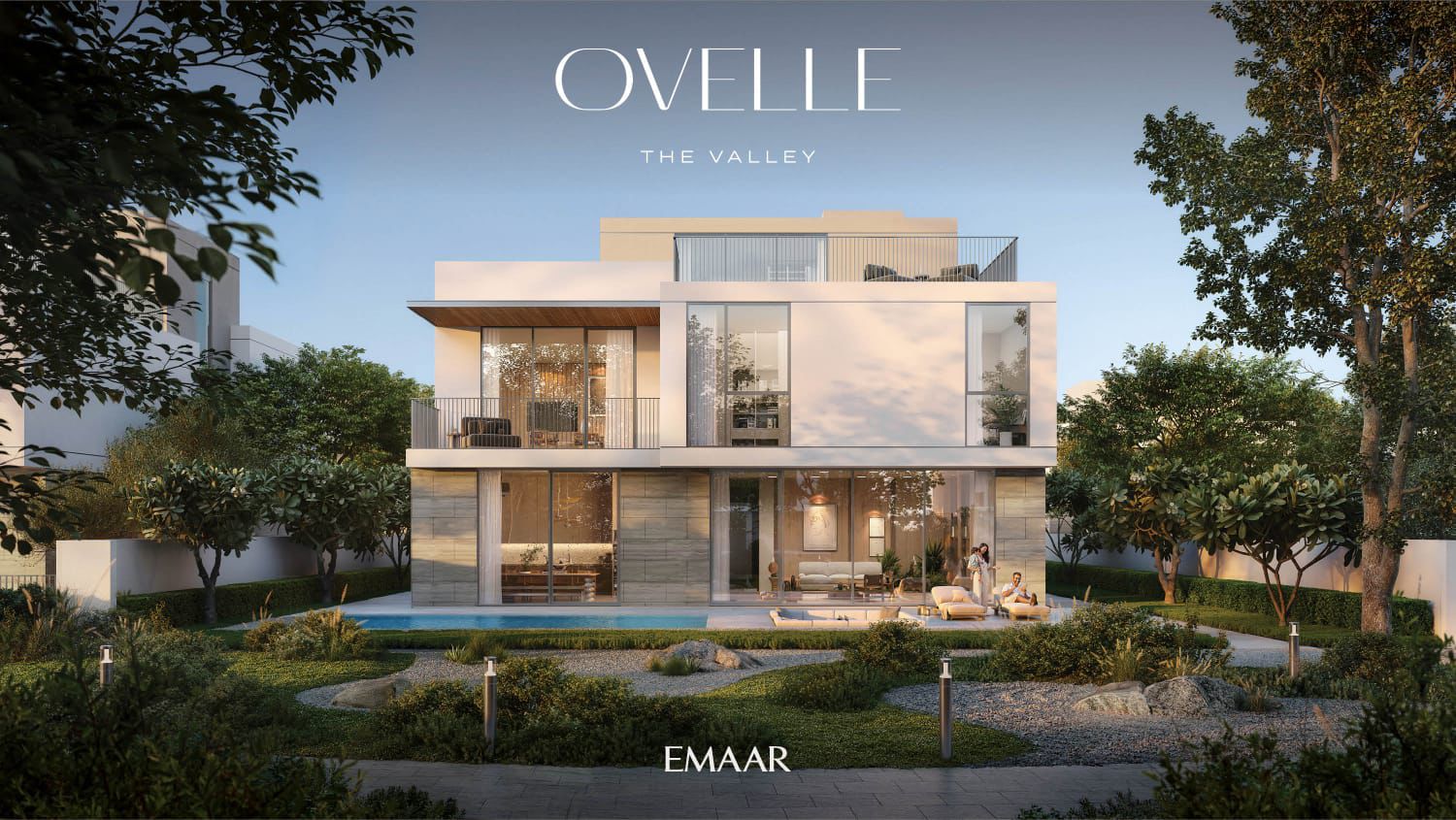
Ovelle garden-side architectural render. A depicted pool or landscape is not evidence of an included specification.
The Valley is best approached as a series of specific choices: the collection, home type, layout, plot and commercial terms that match your needs. Its villa and townhouse options deserve a careful comparison that goes beyond launch headlines and appealing imagery.
Start with PGI's Avelia project details or Ovelle project details, or ask for a wider townhouse and villa shortlist. Share your intended use, total budget, preferred payment profile and move-in horizon. PGI is a real estate brokerage, not the developer; developer confirmations and transaction documents remain essential.
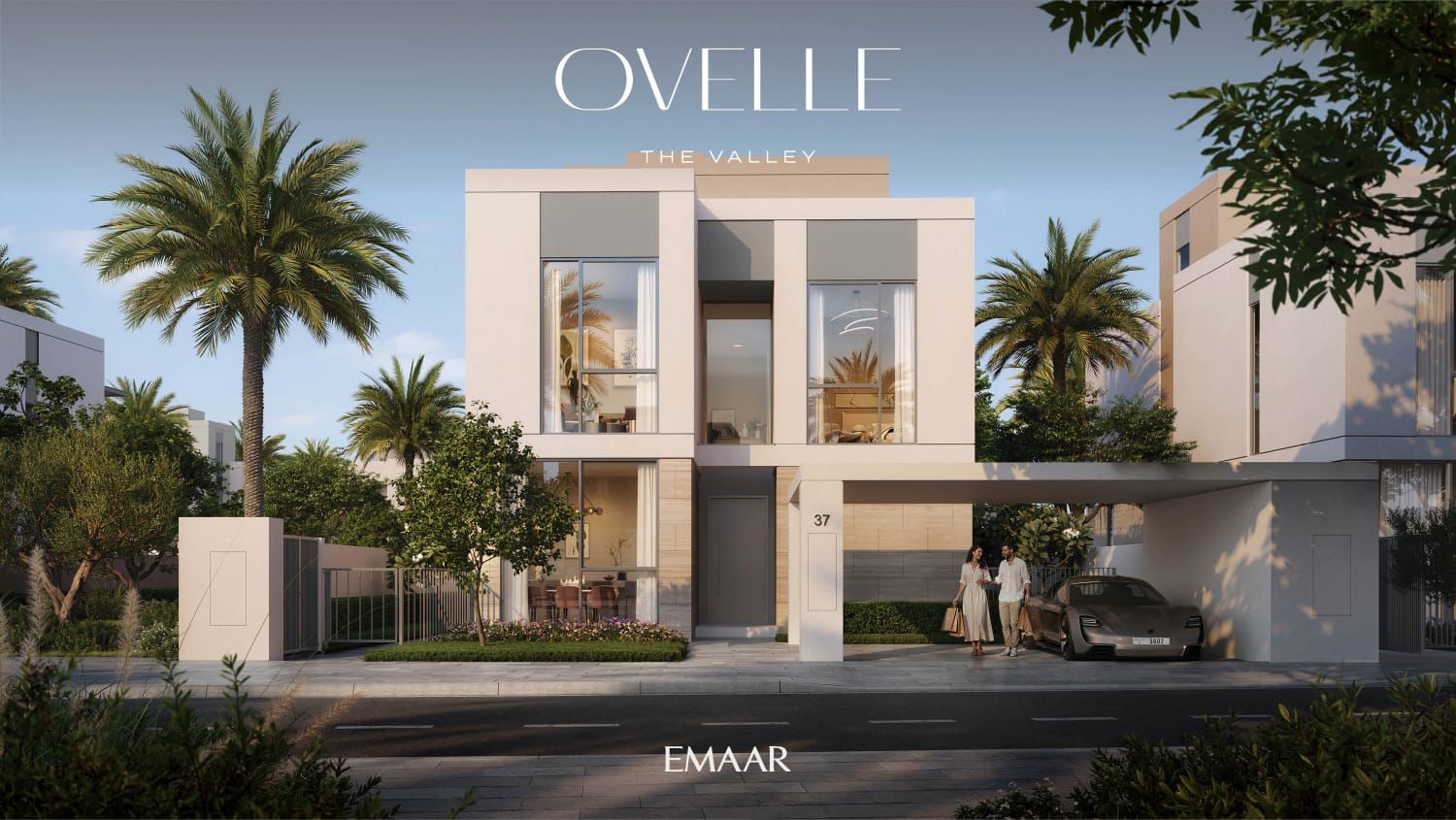
Additional Ovelle facade visual supplied to PGI, shown as an architectural render rather than a completed property photograph.
Contact PGI to compare current Valley options and request the relevant plans, dated quotation and release documentation. The strongest next step is a clear, evidence-based shortlist that you can understand and afford, with the unresolved questions identified before any commitment.
This guide is general educational and marketing information, not individual legal, tax, financial or investment advice. Availability, pricing, terms, specifications and dates can change. Hypothetical examples are not market forecasts. Verify the selected property and obtain appropriate independent advice before signing or transferring funds.