

Dubai waterfront property can offer an appealing outlook and access to water-related surroundings, but the label does not describe the complete home. A unit may face water directly, look toward it between buildings, or sit in a wider district associated with a waterfront. The practical comparison begins with the exact apartment, its documented position, and the lifestyle benefit you actually want.
Define whether your priority is an outlook from the living room, outdoor seating, a walking route, or proximity to particular activities. Then inspect the property and current surroundings against that brief. This guide explains how to assess views, privacy, access, activity, condition, and costs without promising a permanent view or a category-wide investment return.
What this guide covers
• Define what waterfront means in the offer
• Inspect the outlook from normal room positions
• Keep current surroundings separate from future expectations
• Assess privacy alongside the view
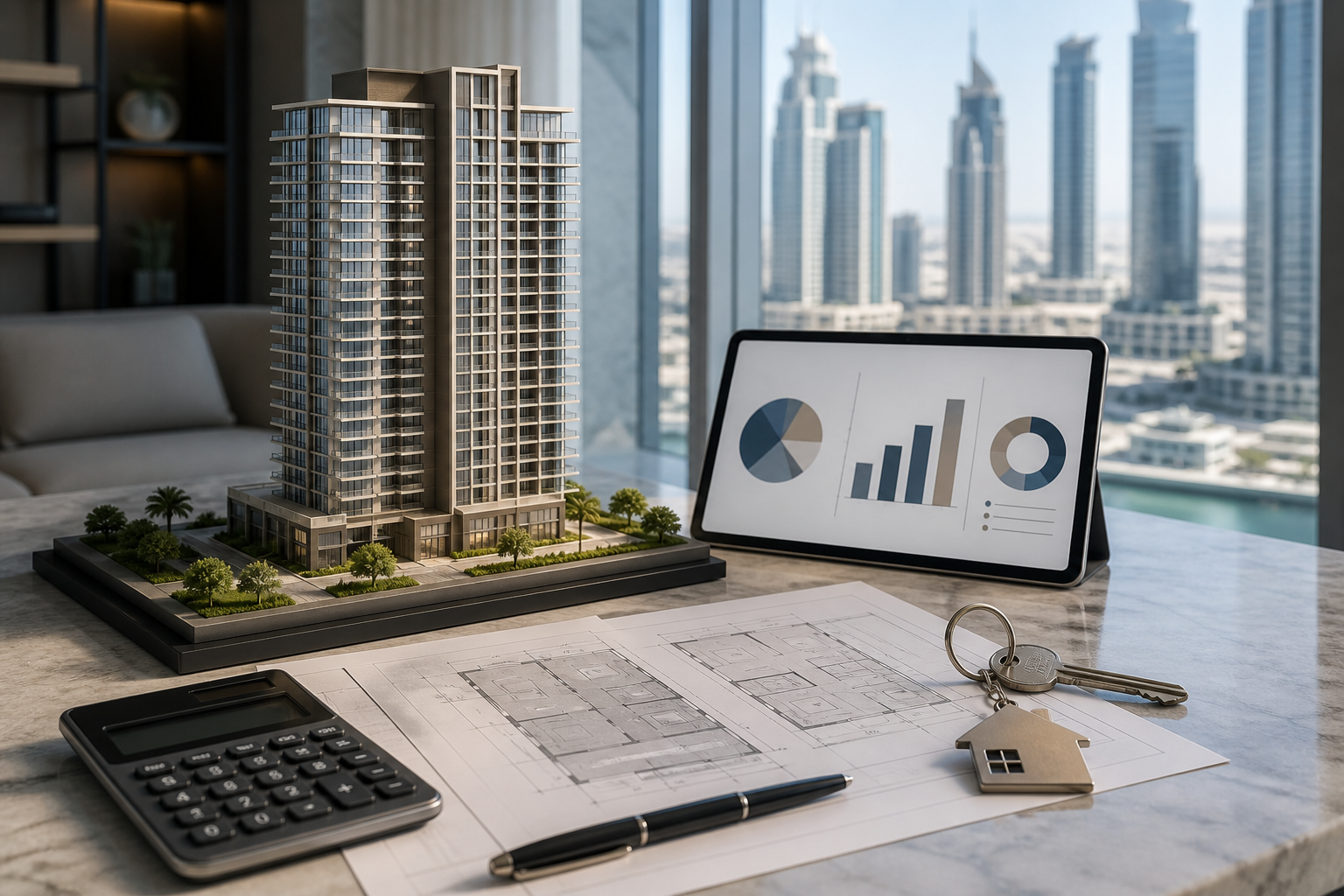
Illustrative buyer-comparison scene from the Property Gulf media library.
Define what waterfront means in the offer
Ask the advisor to identify the exact water-related feature and the unit's relationship to it. Is the view visible from the apartment, a balcony, a communal terrace, or only part of the surrounding district? Request a unit-specific plan and current images or a viewing. A broad location description should not silently become a direct-view claim.
Distinguish actual photographs from architectural visualizations and general lifestyle images. A render can communicate a proposed design, while the contract, plans, and project evidence establish the documented product. Ask which image represents the offered unit and what remains illustrative. The listing-image guide provides a structured review.
Record the precise benefit in your comparison. Write that water is visible from a seated position in the living room, or that a particular walking route is currently accessible. Those observations are easier to verify than broad words such as panoramic or premium. Keep each statement connected to evidence and the date it was checked.
Inspect the outlook from normal room positions
Stand or sit where the household expects to use the room. Look through the actual glazing and note the visible surroundings. A photograph taken close to a window or with a narrow frame can differ from the experience of sitting on the sofa. Ask for additional angles when an in-person visit is not possible.
Check the view alongside furniture placement. A room may provide an attractive outlook while offering limited wall space or a difficult television and storage arrangement. Your layout should support both ordinary use and the feature you value. The floor-plan guide helps assess that balance.
Observe at relevant times if light, glare, or evening atmosphere matters. Record the visit time and conditions rather than treating one image as an all-day experience. A water-facing room can feel different under changing light and surrounding activity. The appropriate follow-up should address the conditions important to your household.
Keep current surroundings separate from future expectations
Identify neighbouring buildings, access roads, open land, and current works visible from the unit. Ask for reliable current information where proposed changes influence the choice. Do not rely on an unsupported statement that an outlook will remain permanent or that a future facility will be available by a particular date.
For an unfinished project, compare documented unit position, orientation, and specification with the marketing illustrations. Seek appropriate professional advice on the actual contract where a particular feature is central to your decision. A project presentation cannot establish every future surrounding condition.
The ready versus off-plan guide explains why evidence differs between purchase types. A completed home lets you inspect the present outlook, while a proposed home requires a different review. Neither category guarantees that the wider district remains unchanged throughout ownership.
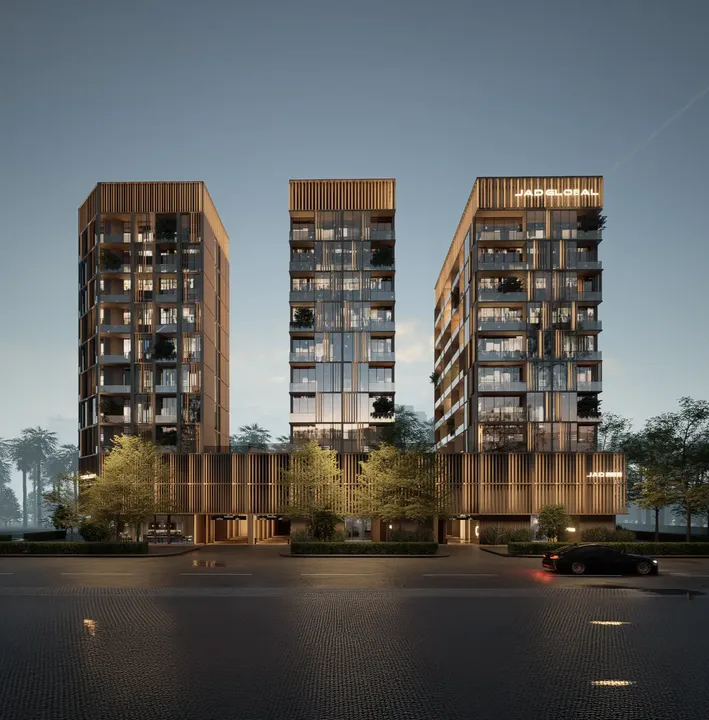
JAD 288 architectural visualization from the existing Property Gulf library. Shown as an example of project marketing imagery, not proof of delivered condition or availability.
Assess privacy alongside the view
Look at nearby balconies, windows, communal terraces, and public routes from the positions you intend to use. An open outlook can coexist with sight lines into the apartment. Observe the relationship with curtains or blinds and consider how you would use the room after dark.
Respect other residents' privacy during inspection. Record sight-line observations rather than photographing people or their possessions. If screening or a furnishing change is proposed, confirm the relevant permissions and practical effect. A privacy solution may alter the light or outlook that made the property attractive in the first place.
For outdoor space, inspect seated privacy as well as the standing view. The balcony and terrace guide helps compare useful dimensions, shade, access, and upkeep. A dramatic photograph should not conceal a space that is difficult to use comfortably.
Listen to activity at the relevant hours
Pause conversation and listen from bedrooms, living space, and outdoor areas with doors and windows in normal positions. Notice roads, facilities, mechanical equipment, and surrounding activity. A waterfront setting does not establish a particular sound environment. The actual position and your intended hours matter.
Ask about ordinary events or operations nearby and seek current information through the relevant entities where necessary. If evening activity could affect rest or work, arrange a suitable follow-up. A quiet daytime inspection is useful while remaining a limited observation of the full routine.
Keep personal tolerance separate from technical sound-performance claims. Some residents enjoy an active setting; others need quieter conditions. Where technical insulation or another system is crucial, seek appropriate professional assessment. A broad lifestyle description cannot settle that question.
Test practical access to the surroundings
Walk the current route from the home to the water-related amenity or path you intend to use. Identify doors, level changes, road crossings, gates, and any access controls. A short straight-line distance does not necessarily describe a convenient daily journey.
Confirm which areas are public, resident-only, separately managed, or subject to particular rules. Ask the responsible entity rather than assuming all attractive surrounding spaces belong to the building's occupants. Keep current permitted access separate from a hoped-for informal route.
Consider your wider journeys as well. A preferred walking setting may create a different work or school route. Use current information and relevant visits. The RTA journey planner can support applicable public-transport enquiries while your exact building access remains a separate practical check.
Review condition and maintenance through evidence
Inspect the actual unit and available building records with appropriate professional support where needed. Observe visible issues and ask for their assessment. Do not infer technical condition from the location label or assume a new-looking facade eliminates maintenance questions.
Ask about relevant equipment, glazing, doors, outdoor finishes, and known repair history. A specialist should determine the appropriate inspection scope for the actual property. Keep decorative preferences distinct from issues that require technical evaluation. If a system could not be tested, record that limitation.
Review the service and follow-up process. A property manager or building contact should identify who receives a concern and how repair completion is checked. The handover guide helps organize observations, documentation, and unresolved items without turning a casual viewing into an assumed survey.
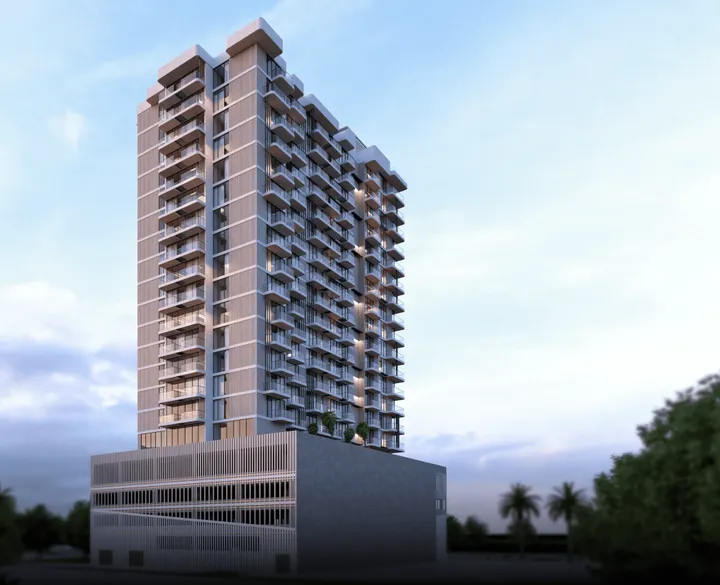
TETR1S Tower architectural visualization from the existing Property Gulf library. The actual unit, specification and current project status require separate verification.
Compare building costs and optional services
Obtain the relevant shared-charge information and clarify its covered services. The DLD Service Charge Index supports enquiries about applicable approved charges. Match the exact project and year rather than using a broad district estimate for every waterfront building.
Keep unit maintenance, utilities, optional services, furnishing, insurance, and management separate where applicable. A high purchase price does not explain the continuing cost structure. Ask for confirmed and estimated items so the complete commitment remains visible.
Review initial setup and ongoing operation independently. A buyer may want different curtains, outdoor furniture, or a particular room arrangement to enjoy the outlook. Those choices need a real budget and relevant permissions. They should not be treated as already included benefits of the advertised property.
Evaluate any claimed price premium carefully
Ask the advisor which relevant comparisons support the proposed price. Compare unit size, layout, condition, floor, occupancy, view, and terms. A price difference between two properties may reflect several characteristics, so avoid attributing the full difference to the water-related feature alone.
Use current documented evidence and keep asking prices separate from verified transaction information. The official DLD real-estate data service can support relevant enquiries, while the advisor should explain the limits of the comparisons. Records do not reveal every circumstance of an individual property.
For a personal home, acknowledge lifestyle value as a personal preference. You may reasonably prefer a particular outlook without presenting it as a guaranteed financial premium. For an investment, examine relevant rent and net costs separately. A feature that appeals to you may have a different value for the intended tenant.
Keep rental and resale assumptions separate
Identify the intended resident and the evidence for comparable rent. Do not assume waterfront units always produce better net income. Service charges, preparation, vacancy, management, finance, and the purchase price all affect the result. Use the cash-flow guide to keep the calculation transparent.
Review holding capacity if leasing or resale takes longer than planned. Relevant inventory and transaction context can inform the discussion without guaranteeing a buyer or future appreciation. A property should not be described as liquid solely because the view photographs attract attention.
Keep exit assumptions in your portfolio review if you own other properties. Several attractive units may share demand, location, or funding dependencies. The portfolio concentration guide helps connect the individual choice with the wider commitment.
A hypothetical view-versus-layout decision
Imagine two apartments that meet a buyer's broad location and budget requirements. Apartment A has a more open water outlook but a living-room arrangement that limits storage. Apartment B has a partial outlook and a more practical layout for the household's daily work and dining. Both are marketed within a waterfront district.
The buyer visits the actual units, measures furniture positions, checks privacy, and requests current cost information. The decision record separates the stronger view from the stronger routine. Neither unit is described as universally better, and neither receives an invented percentage premium simply because its photograph is more dramatic.
If the buyer prioritizes the view and can comfortably manage the storage and costs, Apartment A may remain preferred. If daily space is essential, Apartment B may fit better. The useful outcome is an explainable trade-off supported by evidence rather than a category label that decides the purchase before the home is assessed.
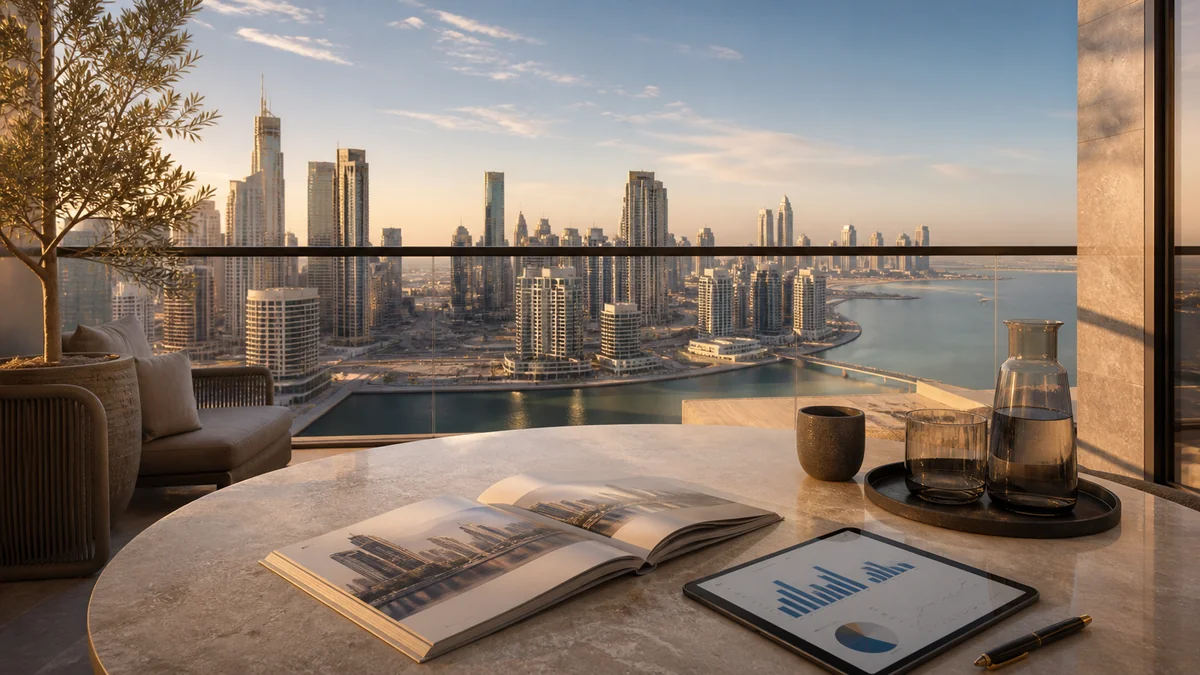
Illustrative property-planning scene from the Property Gulf media library; not a photograph of a unit offered for sale.
Prepare a focused follow-up visit
Return to the strongest options with the unresolved questions clearly listed. One property may need an evening activity check; another may need confirmation of access or a professional inspection. A second tour should resolve a decision point rather than repeat the same attractive view from the same position.
Record the updated evidence and its source. If a question remains unanswered, keep it visible in the final comparison. Do not convert uncertainty into a favourable assumption because the preferred unit feels emotionally appealing. A well-organized shortlist can preserve interest while still requiring the facts needed for an informed commitment.
Plan the water-related activity you genuinely value
If the attraction is a walking route, record its current access, the journey from the unit, and the times when you would use it. If the attraction is the outlook, record the actual room positions and privacy trade-offs. These are different benefits and may favour different units within the same district. A clear activity brief prevents the waterfront label from combining several unverified advantages into one impression.
Ask the relevant responsible entity about rules affecting a proposed activity or access arrangement. Keep publicly available space, resident facilities and separately operated services distinct. An attractive surrounding photograph should not establish exclusive use or continuing availability without evidence. Where a service has a separate charge, obtain current terms and include them in the practical budget.
After a visit, write which benefit was actually observed and which remains expected. If your preferred activity can be supported more easily by another property with a different outlook, retain that option in the shortlist. A purchase should balance the feature you value with the complete home, daily routes and operating commitment rather than make every other criterion disappear behind the view.
Frequently asked questions about waterfront homes
Does waterfront mean a direct water view?
Not necessarily. Ask for the exact unit position and evidence of the outlook from normal room locations. A wider district label, communal view, or illustrative image should remain distinct from the apartment's actual view.
Can I assume the view will remain unchanged?
No. Review current surroundings and documented information about proposed changes, with appropriate professional advice where relevant. A present photograph does not guarantee the future condition of neighbouring land or buildings.
Is a stronger view always worth a higher price?
Compare relevant evidence and the complete home. Layout, costs, condition, privacy, and personal preference all matter. Avoid attributing every price difference to one feature or treating personal lifestyle value as a guaranteed investment result.
Will the property always be easy to rent or sell?
No feature guarantees a transaction. Review relevant demand evidence, total costs, holding capacity, and the intended resident. Keep rental income and future resale assumptions separate and clearly labelled.
Your practical action plan
1. Define the water-related lifestyle benefit you actually want.
2. Inspect the exact outlook from normal room positions.
3. Test access routes, privacy, noise and surrounding activity.
4. Review building condition and documented operating costs.
5. Compare unit evidence and uncertainty before paying a premium.
Choose the exact home behind the waterfront label
Use the viewing checklist, then request a waterfront-property shortlist. Share the specific outlook or access benefit you want, your indoor requirements, and your operating budget so each recommendation can explain the actual unit.