

Dubai property listing photos can help you decide what to investigate, but they are only one kind of evidence. Images may show the actual unit, another apartment with a similar layout, a show home, an architectural visualization, or an illustrative scene. Identifying the image type is the first step toward using it well. The next step is connecting what you see with the exact property and written specification.
A useful image review produces questions for the advisor rather than certainty about everything outside the frame. This guide explains how to examine scale, room connections, outlook, condition, and inclusions while recognizing the limits of photography. It also shows how to request a complete image set or focused virtual viewing without relying on a dramatic picture as proof of a suitable home.
What this guide covers
• Ask what each image actually represents
• Match the image set to the floor plan
• Use dimensions to check apparent scale
• Read the outlook from normal living positions
Illustrative buyer-comparison scene from the Property Gulf media library.
Ask what each image actually represents
Confirm whether the images were taken in the unit offered and when they were produced. Ask for the unit identifier and whether significant work has occurred since the photographs. A dated set can still be useful, but its age should remain visible. An image of a similar apartment may explain a layout without showing your unit's finish, condition, floor, or view.
For a new development, ask which pictures are architectural visualizations and which are actual photographs. A render communicates a design concept, while the contractual plans and specifications establish the documented product. Do not treat furnished illustrations as evidence that every depicted item is included. Obtain the unit-specific inclusion list and relevant agreement.
Distinguish an illustrative lifestyle photograph from project evidence. A skyline scene, furnished terrace, or investor-planning image can make an article attractive without identifying an available home. Property Gulf's editorial illustrations are labelled accordingly. Apply the same clarity when assessing a listing: an appealing atmosphere is useful context but does not establish the property being sold.
Match the image set to the floor plan
Place the floor plan beside the photographs and identify the likely camera position for each image. Connect the entrance, living room, kitchen, bedrooms, bathrooms, and balcony. If a room cannot be matched confidently, ask for clarification. This prevents a large collection of close-up photographs from creating the impression that the whole layout has been shown.
Check whether important spaces are missing. A bedroom photograph without a view of the wardrobe, an attractive kitchen without appliance positions, or a balcony without its access door can leave practical questions unanswered. Request the missing angle rather than assuming it looks similar to another room. The floor-plan guide helps connect the images with actual circulation and furniture needs.
Ask about mirrored or alternative layouts. Two apartments with the same bedroom count can differ in orientation, window position, corridor arrangement, and storage. A plan associated with the project as a whole may not correspond to the exact unit. Keep the unit number visible on the plan and the image enquiry.
Use dimensions to check apparent scale
A wide-angle photograph can make a room look more expansive than it feels when furnished. You do not need to diagnose the camera lens to respond usefully. Ask for room dimensions and place your own bed, sofa, table, or desk on the plan. The dimensions and clearances matter more than whether the photograph feels spacious.
Look for ordinary reference objects, but do not calculate precise measurements from them unless reliable dimensioned evidence supports the result. Furniture can be unusually small, partially obscured, or placed for photography. A chair in an image does not prove that your larger dining arrangement will fit without blocking a cupboard or entrance.
Record scale questions in practical terms. Ask whether a particular bed size leaves access to the wardrobe, whether a desk fits near a usable socket, or whether the sofa permits a clear route to the balcony. These questions help the advisor arrange a meaningful measurement or demonstration rather than simply sending more attractive pictures.
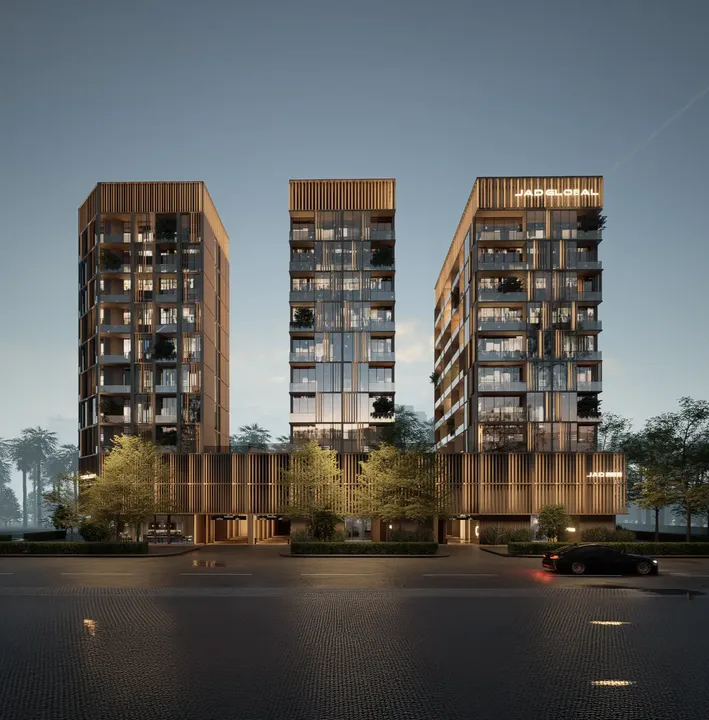
JAD 288 architectural visualization from the existing Property Gulf library. Shown as an example of project marketing imagery, not proof of delivered condition or availability.
Read the outlook from normal living positions
Ask whether the view photograph was taken from the apartment, its balcony, a communal terrace, or another floor. A building-level outlook does not establish the view from every unit. Request an image from the position where you would normally sit or stand, together with confirmation of the room and floor.
Check what surrounds the selected view. A tightly framed water or skyline image may omit nearby windows, an access road, or a construction site. Ask for a wider view or a slow video movement from the same position. This is an enquiry about context, not an accusation that the photograph is misleading.
Keep current surroundings separate from proposed future changes. If a sales description refers to an expected open view or planned facility, request the relevant documented information and identify uncertainty. A photograph establishes what was visible when it was taken; it cannot guarantee that neighbouring land or buildings will remain unchanged.
Separate attractive staging from included inventory
Photographed furniture, artwork, curtains, lighting, and appliances may be included, optional, or present only for staging. Request a written inventory for the specific offer. Mark each important item and check whether the supplied model or standard matches the one shown. A room's styling should not silently become part of your expected purchase package.
Look at functionality as well as appearance. An elegant dining arrangement may use only two chairs where your household needs more. A decorative workstation may lack practical equipment space. A neat kitchen surface may hide limited storage. Ask how the home works with the possessions and activities you actually expect.
If you are comparing furnished and unfurnished units, estimate setup and replacement commitments separately. The furnishing comparison guide explains why the complete inventory matters. Do not infer a rental premium from a stylish photograph without relevant evidence for comparable units and the intended resident.
Look for condition questions without diagnosing defects
Photographs can reveal visible damage, uneven finishes, staining, or an item that needs explanation. They can also make an ordinary reflection or shadow look concerning. Record the observation and request a clearer image or inspection. Avoid declaring a technical defect based on a single ambiguous photograph.
Ask for close-ups of relevant surfaces and a wider image that identifies their location. A close-up without context can be difficult to interpret or match to the property. Keep the date and room reference with the image. If work has since been completed, request suitable evidence of the result rather than relying only on the original image.
Technical concerns should be assessed by an appropriate professional when necessary. Photographs cannot establish the performance of concealed systems or the cause of moisture. The handover and inspection guide provides a way to record issues and understand what was not tested.
Request a focused virtual viewing
Prepare a short sequence for a live viewing: confirm the unit, show the entrance, walk through room connections, demonstrate agreed normal controls, and inspect the relevant outlook. Ask the presenter to pause at the details you need. A continuous tour can help establish context, although it still does not replace physical or specialist checks.
State the unanswered questions before the call. If your concern is storage, ask for cupboards to be opened with permission. If your concern is furniture fit, request a measurement. If privacy matters, ask for the outlook from the bedroom position. A targeted call is more useful than another fast tour that repeats the same images.
Record notes rather than assuming a recording is permitted. Respect occupants' privacy and obtain permission for any recording or photographs. Keep untested functions and inaccessible areas visible in the follow-up. A virtual viewing should improve your evidence file while preserving a clear distinction between observation and assurance.
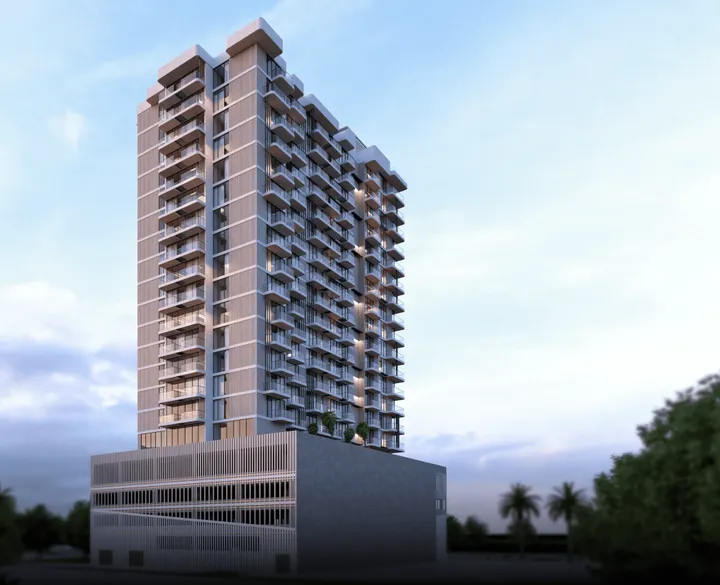
TETR1S Tower architectural visualization from the existing Property Gulf library. The actual unit, specification and current project status require separate verification.
Check listing details through appropriate official routes
Ask the responsible advisor how advertising permissions and practitioner verification apply to the listing. The DLD service directory provides access to relevant verification and advertising services. Use the applicable official process with the identifying information supplied by the professional.
Verification of an advertisement or professional does not establish every detail of the apartment's physical condition or commercial terms. Keep those checks separate. An official record can support identity or authorization while the unit-specific quotation, contract, and inspection establish other parts of your decision.
If the listing description and supplied documents differ, request reconciliation before relying on the disputed detail. Identify the exact difference, such as parking, furnishing, floor, area, or availability. A clear question is easier to resolve than a broad statement that the pictures do not feel accurate.
Build an image evidence sheet
Create a simple sheet with image reference, represented space, date if known, source, and unresolved question. Label actual photographs, show-home photographs, renders, and illustrations distinctly. The sheet should help you compare properties without requiring you to memorize which image belonged to which apartment.
Keep current written availability and pricing separate from the images. A property can remain visible in an old photograph after the particular offer changes. Ask for the exact unit's current quotation and last-checked date. Do not infer that a property is available simply because the image set can still be opened.
Use the sheet to decide whether an in-person visit is worthwhile. If essential questions remain unanswerable, discuss that uncertainty with your advisor. A smaller shortlist supported by clear evidence is usually more practical than a large collection of visually appealing properties whose basic details cannot yet be confirmed.
A hypothetical example of an image review
Imagine an overseas buyer comparing two one-bedroom apartments. The first listing has bright wide-angle photographs and a close-up skyline view. The second has less polished photographs but a unit-specific plan, cupboard images, a parking reference, and a dated video. Neither set alone proves the better purchase. The useful question is which missing facts could change the buyer's decision.
The buyer needs a home office and substantial storage. For the first apartment, the advisor is asked to measure the desk wall, show the wardrobe interior, and identify where the skyline photograph was taken. For the second, the advisor is asked to provide a clearer daylight image and confirm the current condition of the kitchen. Each enquiry targets the actual decision rather than asking which listing looks more luxurious.
After the replies, the buyer records the evidence and uncertainty. If the desk wall in the first home cannot support the required equipment, the strong photograph does not overcome that problem. If the second home's condition needs professional assessment, the detailed documentation does not eliminate that requirement. The example shows how image review guides the next check without pretending to complete the entire purchase process.
Make a focused request for missing photographs
Organize your image enquiry by room and decision. Ask for the wardrobe interior because storage matters, the doorway because furniture delivery matters, or a wider outlook because privacy matters. This is more efficient than requesting every possible angle without explaining the purpose. The advisor can then arrange appropriate access and avoid recording unnecessary private possessions.
Keep the new images with their dates and the question they answer. If an image still does not establish the detail, request measurement, documentation or an appropriate inspection instead of repeatedly asking for more photographs. For example, a closer picture of an appliance can identify its model while leaving its performance untested. Clear evidence roles prevent an image file from becoming a substitute for the other checks the purchase requires.
Illustrative property-planning scene from the Property Gulf media library; not a photograph of a unit offered for sale.
Frequently asked questions about listing images
Are renders always a problem?
No. Clearly labelled renders can communicate a proposed design. Use them alongside the exact plans, specifications, contract, and project evidence. The problem arises when their role is unclear or when depicted furniture, views, or finishes are assumed to be guaranteed inclusions.
Can photographs prove room dimensions?
Ordinary listing images are not reliable dimensioned plans. Obtain measurements or documented dimensions and test furniture clearances. Photographs can help identify what to measure, but perspective and staging can affect apparent scale.
What should an overseas buyer request?
Request a complete unit-specific set, a matching plan, current written details, and a focused virtual viewing covering your important questions. Keep inaccessible areas and untested systems visible, and arrange suitable professional inspection where the decision requires it.
How do I assess an old image set?
Ask when it was produced and what has changed since then. Request current evidence for important details. An older set can explain the layout while still being insufficient to establish today's condition, availability, or agreed furnishing package.
Your practical action plan
1. Identify whether images show the actual unit, a show home or a render.
2. Request a complete dated image set and matching floor plan.
3. Compare room connections, scale and visible inclusions.
4. Ask for a live demonstration of important missing details.
5. Confirm condition and specification through appropriate evidence.
Use photographs to ask better questions
A strong image review connects visual impressions with verifiable property details. Read the viewing checklist, then request a unit-specific property shortlist with your budget and essential requirements. Ask that each option identify its actual images, relevant plans, current terms, and remaining checks.