

A Dubai off-plan construction percentage is useful when you can connect it to the correct project, the date of the underlying record and the question you need answered. Begin with Dubai Land Department's official Project Status Enquiry, retain the relevant project identifiers, and compare dated information with the developer's explanation. A percentage alone cannot tell you when your particular apartment will be ready to occupy or whether a payment demand matches your contract.
The practical outcome is a short evidence journal: what the official record shows, what the developer says has happened since that record, and what remains unresolved. This guide explains how to build that journal without converting a photograph into a technical assessment or turning a progress trend into a promised handover date. It supports the broader Dubai off-plan due-diligence guide, which covers registration, payment exposure and the purchase agreement.
Keep these four questions together
• Which project? Match the official number, building or phase and the documents for your proposed unit.
• Which date? Separate the date you obtained the information from the date to which it relates.
• Which evidence? Distinguish an official record, a developer update, a site photograph and a marketing illustration.
• Which decision? Identify whether you are comparing purchases, checking an instalment request or planning future occupation.
Find the official record before comparing numbers
Dubai Land Department describes Project Status Enquiry as a service for checking project details and completion percentages in Dubai. Its service instructions list project name, project number or land number as search identifiers, with access through the department's website or Dubai REST. Use the official entry point and follow the current interface. This is a Dubai service; the same process should not be assumed for another emirate.
Ask the seller or developer for the identifier that connects the offered apartment to the relevant record. A brochure's short project name can be a helpful starting point, but a similar name is not enough to establish a match. Compare the location and responsible entity as well. If a development contains several towers or phases, clarify which component the record describes before using its percentage in a purchase comparison.
Treat a failed search as an unresolved question. Check spelling, alternative documented names and the supplied number, then seek clarification through the appropriate official or developer channel. An empty result on your first attempt is not proof that the project is unregistered, cancelled or unsafe. Keep the question open until there is evidence that actually addresses its identity and status.
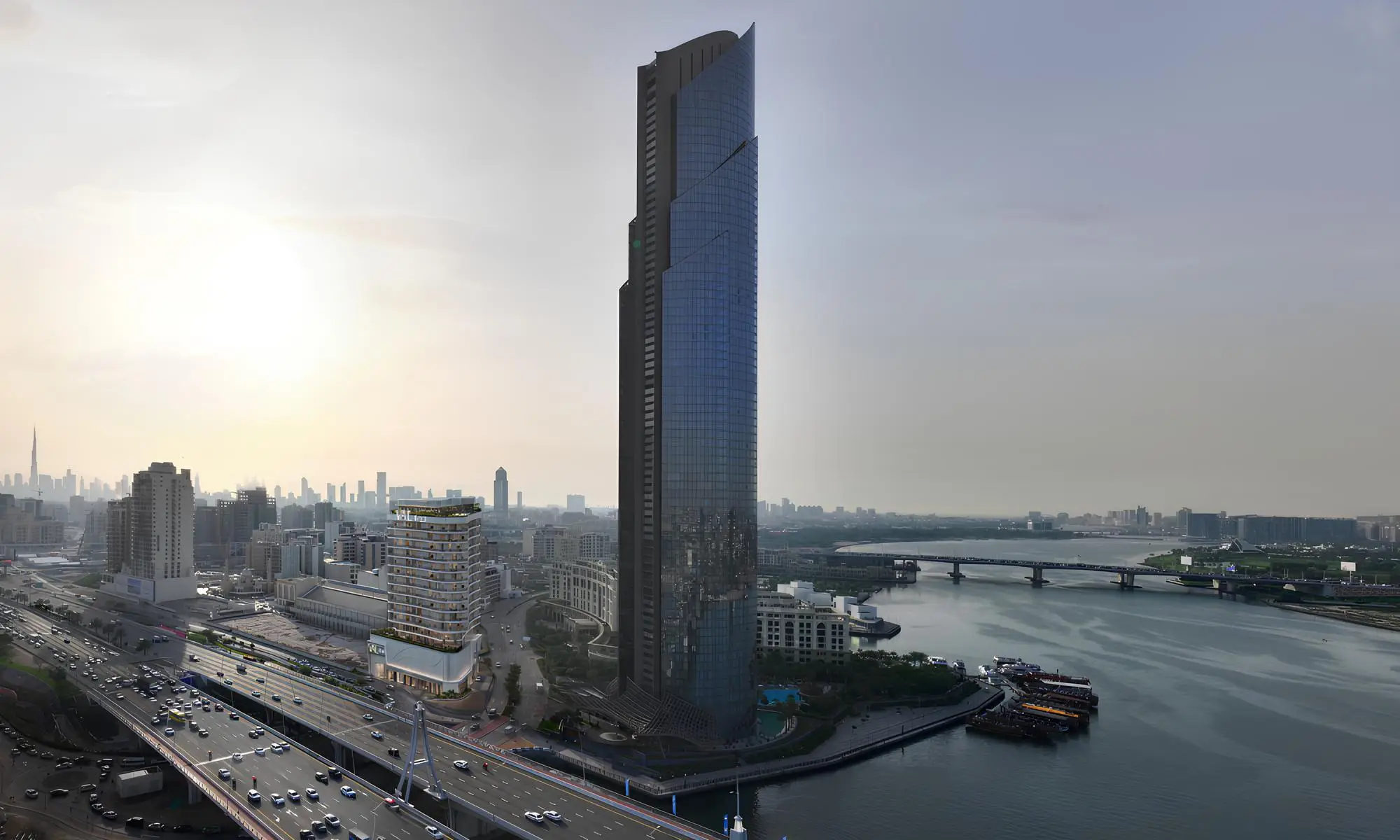
VAL by KASCO — rendered building and surroundings, used to distinguish design context from dated site evidence.
Separate the reading date from the evidence date
A screenshot made today can contain information referring to an earlier inspection or update. Preserve both dates where they are available. Your reading date explains when you consulted the source; the underlying date helps you understand what period the information describes. If the record does not expose a clear underlying date, write that limitation into the journal rather than supplying one yourself.
The official Project Status interface presents project information and sections labelled Inspection Details and Full Fact Sheet. Review the actual result for your project instead of treating labels on an empty interface as a completed assessment. Which fields are populated, and which dates are meaningful, must be established from the record you obtain. This guide does not report a current percentage for any named development.
Next to each entry, save a stable reference or a complete capture showing the project identity and relevant fields. A tightly cropped number is difficult to interpret later, especially when a salesperson forwards it without context. Keep the source and scope visible so that your advisor can distinguish an earlier record from an updated one without guessing which project the image concerned.
Understand the scope of the reported percentage
Ask what the quoted measure covers and who produced it. A number attributed to the overall registered project may not describe the work inside your apartment, a particular building entrance or every planned amenity. A separate developer update might concern a specific tower or construction package. Those figures can answer different questions even when both are presented as progress.
Do not average unmatched measures into a new figure. If one document concerns a phase and another concerns the whole development, the result is a scope mismatch that needs explanation. Request a clear description of the relevant component and the basis of the statement. Your own journal should preserve the original wording sufficiently to show that distinction, without claiming a technical calculation you have not performed.
Completion percentages should also remain separate from your personal readiness requirements. You may need a working entrance, access to the apartment, suitable utilities and a specific possession process before moving. Another buyer may be evaluating only a reservation today. State your question explicitly, because an overall construction reading does not automatically settle either buyer's practical decision.
Compare dated updates without forecasting the finish
When you obtain successive readings for the same project and the same measure, place them in date order. Record the reported percentage, underlying date where available, reading date and any explanatory notes. This lets you ask a focused question about what changed between records. It does not make you the project's construction consultant or give you a reliable formula for the remaining time.
Avoid dividing the unfinished percentage by a recent monthly change to announce a completion date. Construction tasks are not necessarily repeated in equal increments, and different work packages can progress at different times. Even a carefully calculated straight line would be an assumption about future execution. A useful buyer asks about remaining work and the programme supporting the proposed date rather than presenting a projection as a finding.
If a newer record has a lower or unchanged figure, first check whether the project identity, component and measurement basis are consistent. A changed label or corrected entry can make a simple comparison misleading. Seek an explanation before attributing the difference to stalled work. Equally, do not hide a genuine unanswered discrepancy because it conflicts with the purchase you hoped to make.

Nine Collective — pool terrace and balcony visualisation.
Use photographs for the questions they can answer
A dated site photograph may help you understand visible work at a particular place. Ask who took it, when it was taken and which tower or elevation it shows. A series taken from a consistent vantage point can make visible changes easier to follow. However, the photograph's usefulness depends on that context, and it should not be treated as an official calculation of completion.
An exterior image does not establish the condition of unseen rooms, building systems or every shared area. A finished-looking facade can coexist with work elsewhere, while a photograph of less visible external activity may omit important work inside. Ask for information relevant to your concern instead of deciding that the most impressive image is the most complete evidence.
A project render communicates a proposed design, not a dated construction observation. The illustrations in this article are catalogue visualisations selected to show the difference between a finished design and evidence of work. They do not show current construction at those projects. For general image interpretation, the property listing photographs guide provides a separate framework for requesting exact-unit evidence.
Build an evidence journal that another person can read
Use one row per source and observation. Start with the official project identifier and the building or phase scope, then add the source, reading date, underlying date, percentage or descriptive status, and the specific question it answers. Keep a final field for what it does not establish. A simple document with clear references is more useful than a large folder of unlabelled screenshots.
Keep original documents beside your notes. If you shorten a developer's explanation, retain the original message so that a qualification is not accidentally lost. Label your own interpretation separately from the supplied statement. This makes it easier to revise the conclusion after a new document arrives, without rewriting the history of what you knew at the time.
For an overseas buyer, nominate the person who will obtain clarifications and record responses. That person might be your advisor or another appropriately authorised representative. Agree which questions require your decision and which information can be collected routinely. A shared journal can reduce misunderstandings without giving anyone authority to accept terms or make payments beyond their actual role.
A worked example with conflicting dates
Consider a fictional purchase file, unrelated to any live project. The buyer reads an official record on 12 October; its underlying observation is dated 20 September and reports 68 percent completion. A developer message dated 10 October reports 74 percent for Tower B. The buyer has a unit in Tower B but has not yet established whether the official record covers that tower or a broader phase.
The useful conclusion is that there are two dated statements with an unresolved scope question. The October message is newer, but its later date does not by itself make it a replacement for the official measure. The figures should remain attributed to their respective sources. Ask the developer which work and component its figure describes, and seek a matching explanation of the official record's scope.
Suppose the developer then supplies photographs dated 9 October showing the tower's facade. These may add visible context, but they do not reconcile the measures or prove that every internal task is finished. Add them as a third entry, identify what is actually visible, and keep the original question open. The purchase decision becomes clearer when unresolved issues remain explicit rather than being absorbed into a confident average.
No completion month follows from this example. Its purpose is to demonstrate how an evidence journal handles different dates and scopes. A reader applying the method to a real purchase should use the actual documents and ask suitably qualified professionals about material technical or contractual implications. The fictional percentages are not market data, a construction benchmark or evidence about a developer.
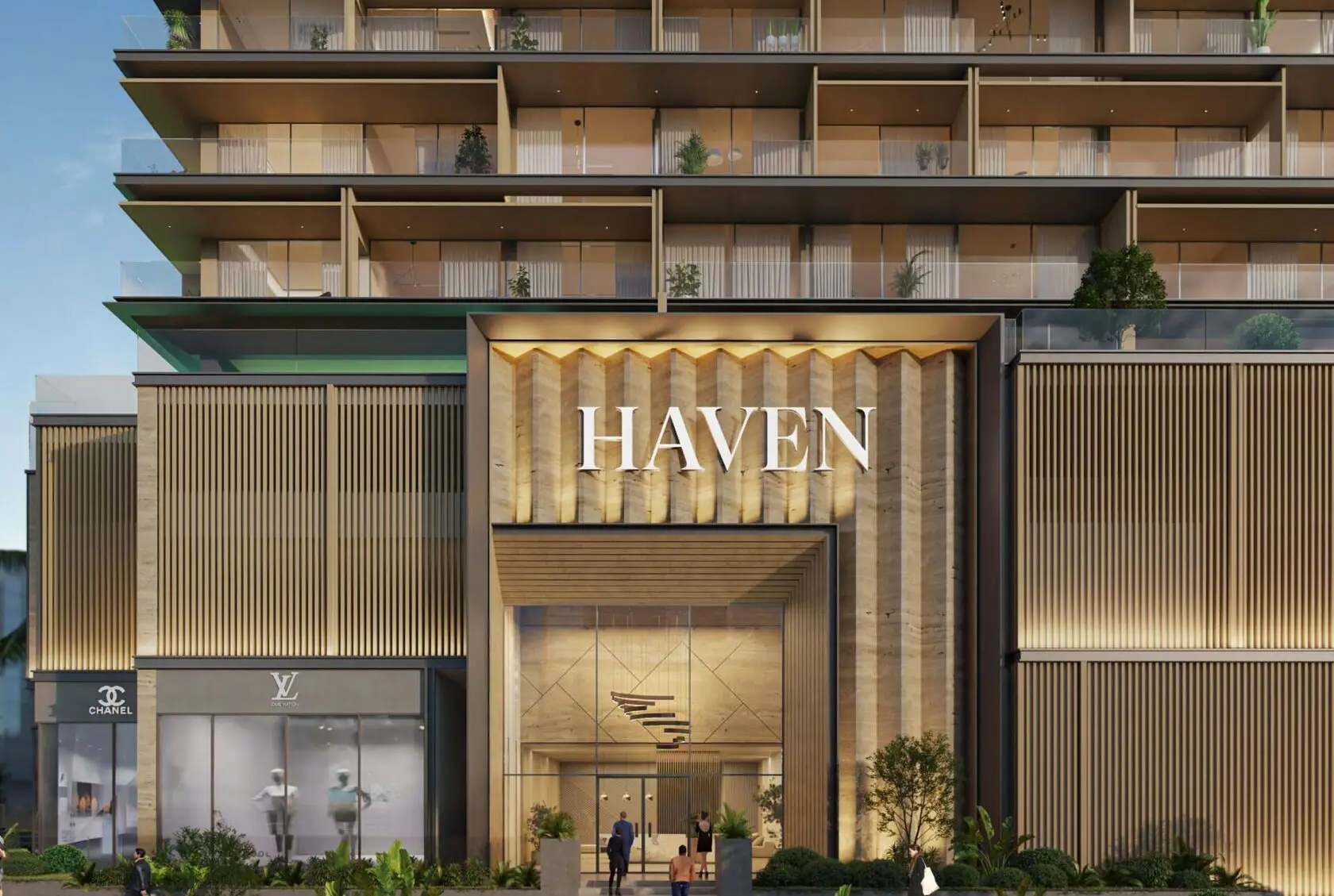
Haven Living — entrance design visualisation.
Keep construction evidence separate from payment obligations
When an instalment request arrives, identify the clause and schedule that explain why it is due. A payment linked to a calendar date creates a different verification question from a payment described as linked to construction. Read your own documents and obtain clarification where necessary. A general progress percentage should not be substituted for the precise trigger stated in a purchase agreement.
Save the demand, its reference and the supporting explanation with the journal. If a project-level reading and the demand appear inconsistent, ask which milestone, component and date the demand relies on. Keep the response in writing. This guide does not establish a right to withhold payment, vary a contract or disregard a notice; those decisions require appropriate advice on the actual circumstances.
A clearer evidence file also helps funding discussions. You can explain what is confirmed, what remains estimated and which commitments have fixed dates. The Dubai payment-plan guide addresses the cash commitment itself. Linking the two records supports planning while preserving the difference between construction information and your obligation to fund a purchase.
Distinguish completion, possession and a usable home
When a record or communication uses the word completed, ask what event it describes. Construction progress, a proposed handover date, an inspection appointment and permission to occupy your own unit are separate pieces of information. Do not create your moving calendar from a label alone. Request the relevant sequence and documents for the purchase and clarify what must happen before you can act.
Record the practical items that affect your intended use, such as the apartment inspection, access arrangements, confirmed inclusions and the process for addressing defects. A landlord also needs to consider preparation before offering the property to a tenant. Those tasks do not justify inventing a fixed delay after handover; they help you identify what needs evidence and responsibility.
If you are comparing developers, use this journal as project-specific evidence alongside the broader developer comparison guide. A company biography can explain background, while the current project's records answer a different question. Neither a well-known brand nor an attractive rendered entrance removes the need to understand the actual unit's next steps.
Five actions for a focused progress review
1. Match the project. Obtain the official number and confirm the building or phase associated with your unit.
2. Preserve the dates. Record when you read each source and the underlying inspection or update date where available.
3. Separate the measures. Keep official readings, developer statements, site photographs and renders in distinct attributed entries.
4. Ask about the discrepancy. Request a written explanation of differences in scope, timing or the meaning of a reported milestone.
5. Connect the result to your decision. Identify what still needs technical or contractual clarification before reservation, an instalment or a move.
Questions to ask when an answer remains incomplete
Send a short request that identifies the project and the exact unresolved point. Asking for everything about progress can produce a general sales response. Asking which component a quoted figure covers, or which date a photograph represents, makes the request more actionable. Attach the relevant reference and explain how it affects the decision you are trying to make.
Give the response a place in the journal and record any promised follow-up. If the answer does not address the question, restate the gap rather than repeatedly collecting new promotional material. A well-organised file may still contain unknowns. Its value is that you can see which unknowns matter and decide whether further professional review is needed.
Where a technical interpretation or a contractual consequence is material, involve the appropriate professional. An advisor can help organise project comparisons and coordinate questions, but that does not turn a buyer's spreadsheet into a survey, an engineering report or legal advice. Keep the roles clear so that your decision relies on the right kind of evidence.

Elaya — shared outdoor space visualisation.
Frequently asked questions about Dubai construction progress
Does a high percentage mean I can move in soon?
It does not establish your unit's occupation arrangements. Ask about the relevant completion event, inspection process, possession documents and practical access. A high overall reading can help frame a question about remaining work, but it should not replace the actual sequence provided for your purchase. Keep temporary accommodation and funding decisions tied to confirmed information where possible.
Why might a developer's figure differ from an official reading?
Different dates, components or measurement descriptions may be involved. Obtain the basis of each statement before deciding that one is inaccurate. A newer message can describe subsequent work without using the same scope as another record. Preserve the source attribution and request an explanation that connects the figures to the project and tower you are considering.
Can I judge construction progress from a video tour?
A video can show visible areas at a particular time, provided its date and location are clear. It cannot independently verify unseen systems or calculate overall completion. Ask which spaces are being shown and whether the footage is current site material, a show apartment or an illustration. Use it to identify questions, then obtain the evidence appropriate to those questions.
What should I do if the official search returns no matching project?
Check the supplied identifiers and documented name before drawing conclusions. Ask the seller or developer to clarify the match and use an appropriate official support route when needed. Do not infer a registration problem from a spelling mismatch or an incomplete search. Keep the purchase question unresolved until the correct record or a meaningful explanation has been established.
Bring the evidence into your shortlist discussion
When comparing Dubai off-plan property, bring the project identifiers, source dates and two or three unresolved questions alongside your budget and intended use. Ask the advisor to explain which points can be answered through documents and which need technical or contractual review. A focused meeting should leave you with clear actions rather than an unexplained confidence score.
Speak with a Property Gulf advisor to organise the project information for your shortlisted units. Request a comparison based on current sources, exact phase or tower details and the actual purchase documents. The aim is a decision you can explain: what the evidence supports, what remains uncertain and what must be clarified before the next commitment.