

An Arjan apartment search becomes more useful when it moves from general location marketing to a comparison of exact buildings and streets. A new interior, a long amenity list or a nearby attraction can create interest, but the buyer still needs to understand usable space, current surroundings, access and costs. Those details determine whether the home fits an ordinary week.
This Arjan buyer guide explains how to compare ready and off-plan apartments, investigate the street setting and build a realistic ownership budget. It is intended for owner-occupiers and landlords who want to make a clear property decision. Begin with the resident's needs and the date the home must be usable, then collect evidence for the particular unit rather than assuming every building in the district provides the same experience.
What this guide covers
• Start with the exact building and entrance
• Put nearby attractions in the right perspective
• Build a resident brief before browsing amenities
• Compare usable layouts rather than total area alone

AQUA DEVELOPMENTS "The Central Uptown" NEW LAUNCH catalogue image in Arjan. Project marketing illustration; confirm the exact home's condition, specification and availability separately.
Start with the exact building and entrance
Record the project name, building identifier and actual entrance before arranging viewings. Ask whether the map pin corresponds to the resident entrance, sales office or a general point in the area. A precise address makes it possible to compare routes and surrounding plots without relying on an attractive but overly broad location description.
Carry the same identifiers through the quotation, floor plan, specification and transaction documents. Similar project names or different phases can create confusion when advertisements are compared quickly. The buyer should know which apartment is being discussed and which building's operating arrangements and charges apply to it.
Walk the immediate street and look beyond the project's frontage. Observe pavements, crossings, deliveries and neighbouring activity. A building's entrance photograph may not explain how the home connects to the wider area. Document current conditions and note anything that would need another visit or confirmation from the responsible project contact.
Put nearby attractions in the right perspective
Arjan marketing often refers to the surrounding area's visitor destinations. The official Dubai Miracle Garden contact and visitor information identifies the venue in Al Barsha South 3 and provides planning information. Check the current season and operating arrangements directly before travelling; an attraction should not be assumed to operate continuously throughout the year.
For a home purchase, proximity to a visitor destination is different from access to everyday services. Consider where you would buy groceries, seek healthcare, exercise and meet friends. Those recurring activities may matter more than a destination you visit occasionally. Explore the route from the actual building instead of assuming a nearby landmark answers the lifestyle question.
If visitor activity could influence a particular street, inspect the setting at relevant times. Record what you observe without making unsupported claims about district-wide traffic or rental demand. The useful conclusion is how the immediate environment fits your own routine and whether an occasional change in activity would affect the household materially.
Build a resident brief before browsing amenities
For personal occupation, describe the weekly routine in concrete terms. Decide where work will happen, how often guests stay and how much storage the household needs. A comfortable home office, a usable kitchen and straightforward parking may be more important than a feature that looks distinctive in marketing but is seldom used.
For a landlord, define the intended resident and test the proposition through relevant rental evidence. A studio for one occupant and a larger apartment for a family involve different needs. The room count alone does not establish tenant demand. Ask why someone would choose the particular home and which competing practical options that resident might consider.
Separate essentials from preferences. A sustainable cash commitment and a layout that fits ordinary furniture can be essential, while a particular design style is optional. Keeping those categories visible helps the buyer reject an unsuitable apartment before time is spent comparing decorative features and payment-plan headlines.
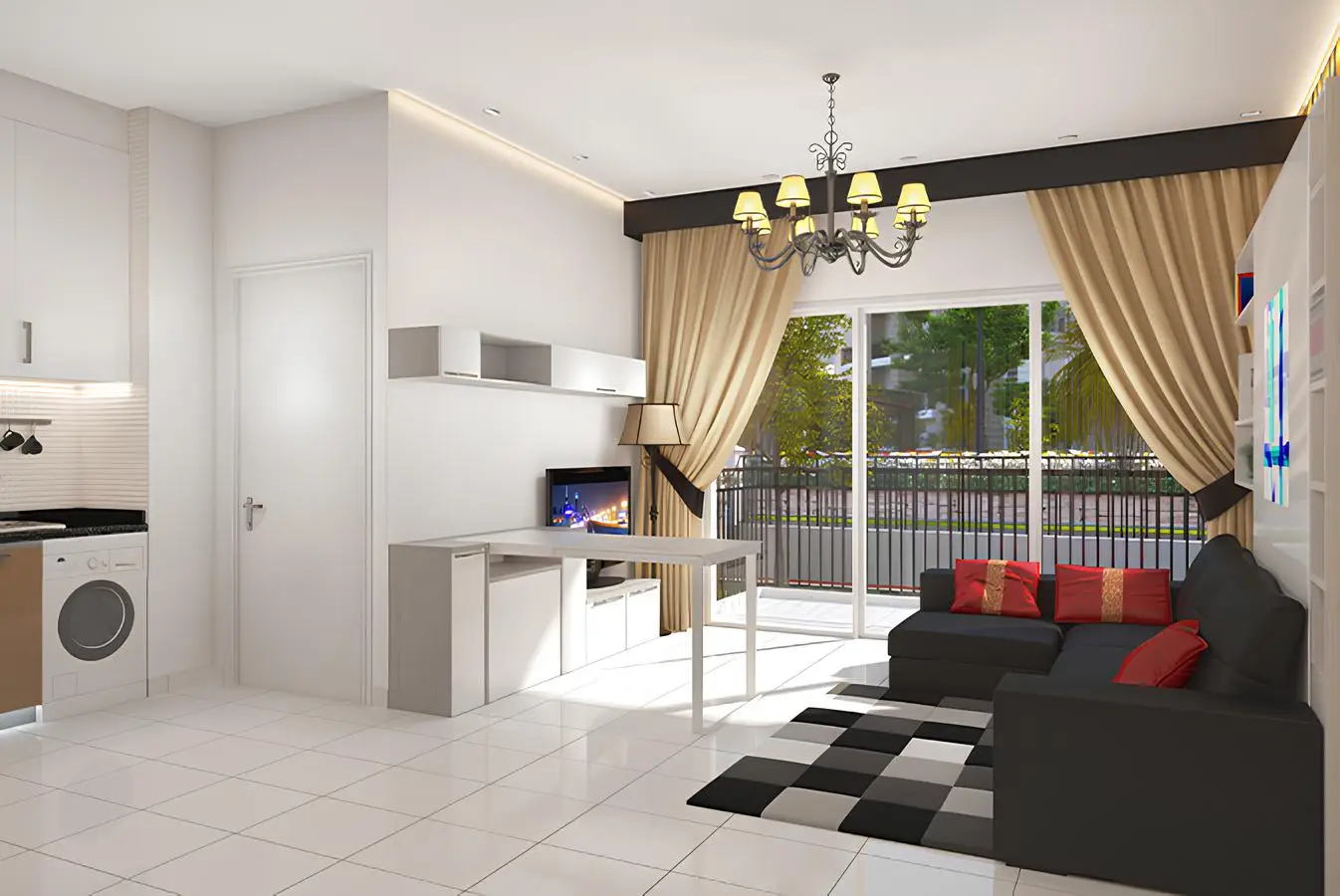
DANUBE "Resortz by Danube" catalogue image in Arjan. Project marketing illustration; confirm the exact home's condition, specification and availability separately.
Compare usable layouts rather than total area alone
Request a dimensioned plan and identify where the intended furniture would fit. Separate indoor space from the balcony and examine circulation. A large advertised total can include areas that add limited practical value for the resident, while a more efficient layout may support daily activities comfortably with less wasted movement.
In a studio, consider privacy around sleeping, work and cooking. In a one-bedroom apartment, check storage, dining space and whether the living area can accommodate a desk. For larger homes, review bedroom separation and how occupants would share bathrooms. The right plan should support the specific household rather than merely display a desirable label.
Use the Dubai apartment floor-plan guide to organise measurements. Bring the same furniture dimensions to every candidate and correct any illustration that relies on unusually small pieces. A consistent comparison is more useful than choosing the plan whose staging creates the strongest impression of space.
Inspect balconies, light and privacy
Assess the balcony from the living room and from the outdoor space itself. Check depth, shape and whether the intended furniture can fit without obstructing the door. A broad balcony area does not establish that it will be comfortable for the activity you have in mind. Consider how you would use it during an ordinary week.
Look at the relationship with adjoining buildings. Nearby windows, balconies and walls can affect privacy and daylight. Inspect rooms with lights off where possible, and visit at another time if orientation is an important reason for the purchase. An advertisement's bright interior photograph may not represent the room's everyday lighting.
Ask about adjacent plots through reliable project or management information. Do not interpret an open plot as a permanently unobstructed outlook. If privacy or a view is central to your choice, record what is known and what remains uncertain. This helps you judge any premium with a clear understanding of the limitations.
Evaluate amenities through current operation
Inspect the facilities available to the specific building. Check opening hours, booking rules and whether they are operational at the time of viewing. A show presentation may describe a future amenity package, while an occupied building can be assessed through actual access and condition. Keep those different evidence types separate.
Consider which facilities the resident will use regularly. Fitness equipment, children's space or a shared work area can have different value for different households. A private or shared pool should be reviewed through its actual allocation and upkeep responsibilities where relevant. The number of advertised amenities does not by itself establish value.
Ask who maintains the facilities and whether separate fees or access restrictions apply. Clarify visitor arrangements and planned maintenance closures where information is available. Use the building amenities buyer checklist to compare useful services rather than simply ranking developments by the length of their marketing lists.

ORO24 "Elano" catalogue image in Arjan. Project marketing illustration; confirm the exact home's condition, specification and availability separately.
Test the route to work and everyday services
List the destinations you reach most often and test the route from the actual building entrance or parking space. Include the return journey. A brochure can describe regional access without showing internal turns, garage waiting or the final route to a large workplace. Those details belong in the practical comparison.
For households considering public transport, consult the RTA S'hail journey-planning resource and verify the available connections for the exact address. Keep walking, waiting and transfers visible. Do not assume that a nearby destination's transport instructions describe the most convenient route for the apartment.
For school planning, establish curriculum, current places and fees directly with the institution before giving proximity significant weight. Test the route at the time it would be used and consider how it fits the adult's onward journey. A family search needs a workable routine, not merely a school icon on a location map.
Observe surrounding development without guessing its outcome
Visit nearby plots and roads, noting current activity and access arrangements. An apartment can be complete while its surroundings are changing. Inspect the home at relevant times and ask about any project-specific information available for adjoining work. Avoid assuming that one visit explains the entire future experience of the street.
Where a future facility or road improvement is presented as a benefit, request the dated source and distinguish a plan from an operational feature. Consider how the household would manage if the anticipated improvement arrives later. That contingency is particularly relevant when the feature is important to the proposed move-in routine.
Do not translate surrounding development into a guaranteed appreciation claim. The purchase should be assessed through the actual home, costs and resident needs. Future changes can be part of research, but their timing and effect remain questions to evaluate. Keeping uncertainty visible produces a more useful decision than repeating an optimistic growth narrative.
Review ready-home condition and possession
Ask whether the apartment is vacant, occupied or awaiting further handover steps. Confirm the proposed possession arrangement and obtain the relevant documentation through the transaction parties. A buyer expecting to live in the home soon should not rely on the word ready without understanding when practical use can begin.
Inspect the exact unit where access is available. Record visible defects and seek appropriate professional checks for technical concerns. Clarify which furniture, appliances and equipment belong to the sale, and whether any work is proposed before completion. A staged interior should not replace an inventory or a condition assessment.
Plan what must happen before the home is usable, including cleaning, utility setup, curtains and furniture. Obtain quotations for material work and include temporary housing where necessary. A lower purchase price can lose some of its apparent advantage if setup requires more time and cash than the initial comparison acknowledged.
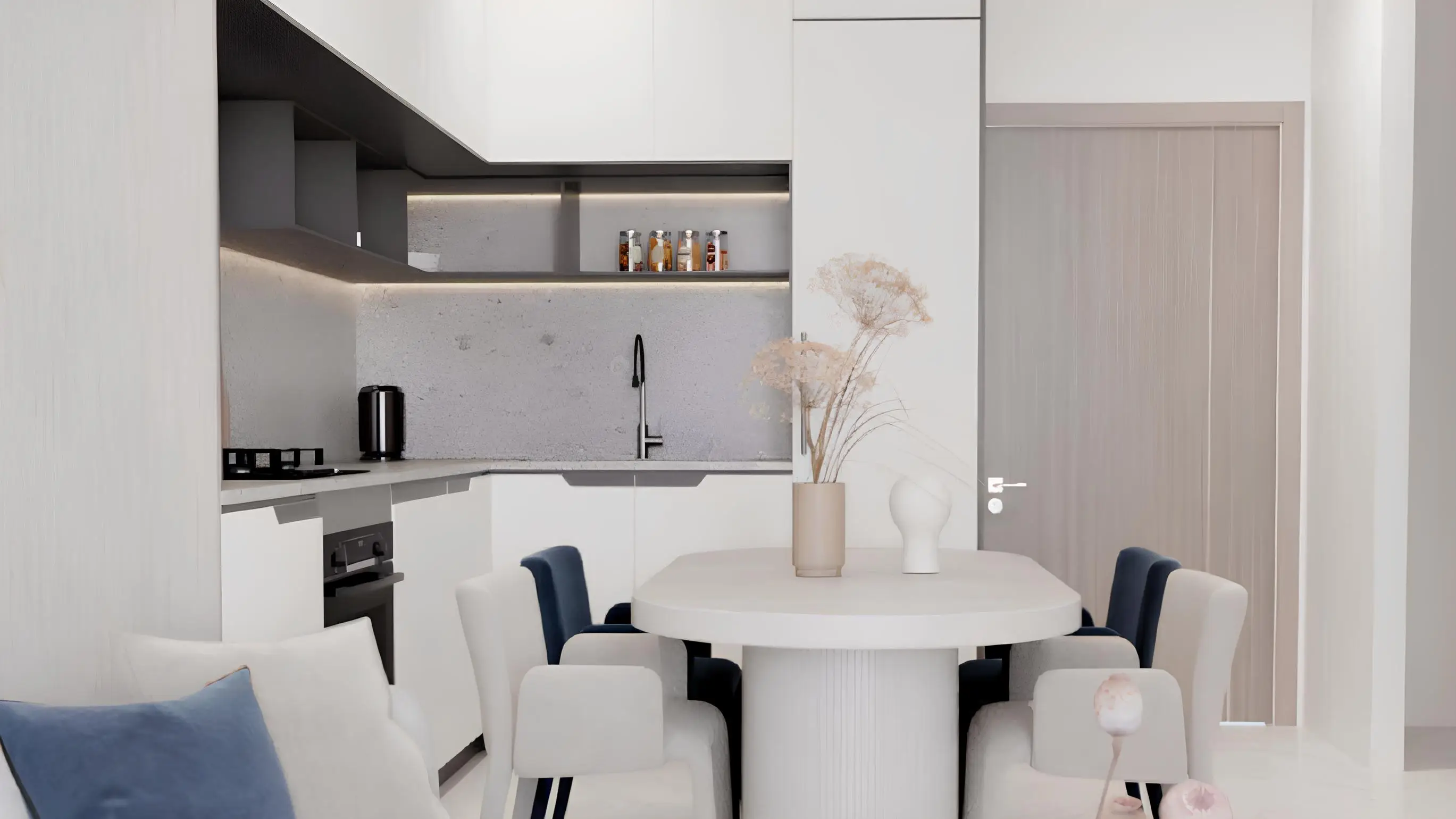
SAMANA "Mykonos Signature" catalogue image in Arjan. Project marketing illustration; confirm the exact home's condition, specification and availability separately.
Analyse an off-plan payment schedule fully
Request the specific project's documents, written specification and payment milestones. Identify standard inclusions and decorative features used only in marketing. Ask how updates and handover notices will be communicated. Keep important documents dated so that a later proposal can be reconciled against the version on which your decision was based.
Map the entire cash commitment, including the booking amount, later payments, completion spending and setup. Ask the relevant lender or adviser about finance conditions where applicable. A small initial payment can create an attractive starting point without answering how the remaining commitment will be met.
Use the payment-plan cash commitment guide to compare schedules consistently. Test a timing outcome different from the convenient case and a change in your own circumstances. This is a resilience check, not a prediction about the project, and it helps expose funding assumptions that need stronger evidence.
Establish property-specific running costs
Request the latest available service-charge information for the exact building and period. Ask which services are included, what area is used and whether any balances remain outstanding. A figure taken from another project in Arjan should remain a comparison point rather than becoming the confirmed cost of the apartment you are considering.
Add cooling, utilities, maintenance, insurance where relevant, management and financing. Include furnishing and replacement costs separately if the rental or household plan requires them. Label estimates and unknowns clearly. A spreadsheet is useful when it explains the evidence behind the numbers, not merely when it displays a polished total.
Preserve a reserve after completion. For a landlord, model vacancy and the cost of preparing the apartment between occupants. For an owner-occupier, include ordinary maintenance and any temporary accommodation required during work. The preferred home should remain manageable when spending or timing differs from the most favourable assumption.
Compare rental evidence and resident appeal
Seek current comparisons matching the apartment's building or setting, bedroom count, usable layout, condition and furnishings. Ask whether each example is an advertised asking figure or evidence of an agreement. Explain differences instead of collecting only high numbers that support an appealing forecast.
Assess why the intended resident would choose the home. A practical workspace, suitable storage, useful facilities and a manageable journey can support a more specific proposition than attraction-led marketing. Test these qualities through the unit and current evidence. The district name cannot independently establish the achieved rent of an individual apartment.
Calculate the operating result after recurring costs and a realistic vacancy assumption. Explore slower letting or additional setup work and decide whether the commitment remains sustainable. If the model depends on uninterrupted occupancy or an unverified rent premium, revisit the purchase case before an offer creates financial obligations.
Frequently asked questions about Arjan apartments
Is a nearby attraction a reason to buy? It may be a personal lifestyle benefit, but it should be weighed against daily services, routes, layout and costs. Check current operating arrangements directly. A tourist destination does not independently establish demand or guaranteed rental income for a particular apartment.
Should I choose the building with the most amenities? Inspect the facilities and identify which ones the resident would use. Check access, current operation and associated costs. A shorter list of useful services can fit a household better than an extensive package that adds little to ordinary living.
Can an open plot guarantee a lasting view? No current gap in development establishes a permanent outlook. Ask for reliable information about adjoining plots and retain uncertainty where the future setting is unclear. Evaluate the apartment's layout and other benefits without depending entirely on an unverified view assumption.
How do I compare a ready apartment with an off-plan one? Use condition and possession evidence for the ready home, and specification, construction information and payment documents for the off-plan proposal. Compare the full timeline and cash commitment, including setup and any temporary accommodation required by your plans.
Your practical action plan
1. Identify the exact Arjan building, entrance and nearby plots.
2. Test routine journeys and current services around the home.
3. Measure the layout and inspect facilities and parking.
4. Reconcile completion status, specification and running costs.
5. Resolve material unknowns before comparing an offer with alternatives.
Turn the shortlist into a purchase brief
Keep the exact building, street observations, layout, facility access, journeys and costs together. Request targeted answers for the questions that matter most, and arrange another viewing when an uncertainty cannot be resolved from documents. A strong comparison should explain why the home fits the intended resident and which trade-offs the buyer accepts.
Contact Property Gulf with your Arjan requirements, intended use, budget and timing. Ask for current unit-specific information and a shortlist that makes the remaining checks visible. The goal is to select an apartment whose everyday usefulness and ownership commitment are clear, so the decision remains sound after the first presentation has passed.