

Dubai Hills Estate can appeal to buyers looking for a home within a planned community, but the right purchase depends on the particular neighbourhood and property type. An apartment close to a useful walking route presents a different daily experience from a townhouse with a garden or a detached villa with more private maintenance. Start by deciding which experience your household needs.
This guide provides a practical way to compare Dubai Hills Estate apartments, townhouses and villas without assuming that the community name guarantees suitability or investment performance. Use it to prepare viewings, compare the complete ownership commitment and identify questions for the agent and community management. A clear shortlist should explain why each home fits your routine, what it will cost to operate and which facts still need confirmation.
What this guide covers
• What defines Dubai Hills Estate?
• Begin with the household's weekly routine
• When an apartment may be the stronger fit
• When to consider a townhouse

EMAAR "Parkside Views" catalogue image in Dubai Hills Estate. Project marketing illustration; confirm the exact home's condition, specification and availability separately.
What defines Dubai Hills Estate?
The official Emaar Community Management overview describes Dubai Hills Estate as a planned community alongside Al Khail Road, with Dubai Hills Park, a golf club and Dubai Hills Mall among its destinations. This gives buyers useful context for exploring the area. It does not establish the walking distance, outlook or facility access of an individual home.
Put each candidate on a map using its actual entrance. Identify whether the address belongs to an apartment building, townhouse neighbourhood or villa community. Record the route to the destinations you expect to use. A broad description such as near the park can hide meaningful differences in crossings, gates and the building's position.
Look for the exact project and phase in the sales documents. The master community, developer brand and individual development are different layers of information. Keep those layers separate when comparing construction status, service charges, specifications and management arrangements. Doing so makes it easier to ask the correct party for the correct evidence.
Begin with the household's weekly routine
Write down the journeys your household repeats, including work, school, shopping, exercise and visiting relatives. Decide which journeys deserve the most weight. A convenient weekend destination may be less valuable than a manageable school run twice every weekday, particularly when adults must then continue to different workplaces.
Consider how the home will function when everyone is present. Where will children study, where will an adult take a video call and how will guests use the living space? A bedroom count cannot answer these questions by itself. Review room relationships and available storage alongside the number of rooms.
Allow for changes you can reasonably anticipate. A buyer expecting to work from home more often may need a room with a door rather than a corner in the living room. Someone planning to travel extensively may prefer less private outdoor maintenance. Use those practical requirements to decide which property types deserve a viewing.
When an apartment may be the stronger fit
An apartment can suit a buyer who wants living space on one level and a building that manages shared areas. The appeal depends on the actual arrangement, including lift access, parking, storage and the distance between the apartment and useful community destinations. Do not assume that every building offers the same balance.
Compare internal space with balcony space separately. A large balcony can be attractive, but it does not replace a comfortable dining area or a room suitable for work. Check whether the plan allows furniture to fit without narrowing routes through the apartment. Consider bedroom privacy if guests or family members often stay.
Assess shared facilities as an operating service. Check opening hours, visitor rules, booking requirements and maintenance condition. A buyer who seldom uses a large amenity package should still understand its cost implications. The useful question is how the facilities support the intended routine and what evidence exists about their current operation.

ELLINGTON "House IV" catalogue image in Dubai Hills Estate. Project marketing illustration; confirm the exact home's condition, specification and availability separately.
When to consider a townhouse
A townhouse may offer a helpful separation between shared living space and bedrooms, but stairs become part of everyday life. Walk the full route with the intended occupants in mind. Think about carrying shopping, supervising younger children and accommodating a family member who may find repeated stairs difficult.
Inspect the outdoor area as usable space rather than simply counting it in the brochure. Consider privacy from neighbouring homes, shade, garden maintenance and the position of doors connecting indoors and outdoors. Ask which boundary structures, planting or outdoor modifications are allowed under the applicable community rules.
Parking and storage deserve particular attention. A garage or driveway may look generous until two vehicles, bicycles and household equipment need to share it. Check the actual dimensions and practical access. Use the Dubai villa and townhouse comparison to keep these functional differences visible when reviewing alternatives.
What changes with a detached villa?
A villa can provide more separation from neighbouring homes, but its appeal should be assessed through the actual plot and layout. Position, surrounding buildings, road exposure and garden shape can alter privacy significantly. Visit the boundaries instead of assuming that detached automatically means secluded.
Review the private maintenance commitment. Ask about cooling equipment, irrigation, outdoor lighting, waterproofing and any private pool or other equipment where present. A larger home may require a different reserve and contractor arrangement from an apartment. Obtain property-specific information before estimating how much work ownership will involve.
Consider whether you need every part of the proposed space. Extra rooms create options, but unused areas still require upkeep and may increase furnishing costs. A smaller, better arranged home can be more practical for some households. Judge the villa against your brief rather than treating the largest available property as the natural upgrade.
Evaluate park access and the outlook separately
Park access and a park view are different benefits. One home may offer an attractive outlook while requiring a longer route to a usable entrance. Another may have a less distinctive view but a more convenient path for a daily walk. Inspect both before assigning a premium to the description.
Look at the view from normal living positions. A window photograph taken from one corner may overstate what you see from the sofa, dining table or bed. Assess glare, privacy and the relationship with neighbouring balconies. Decide whether the outlook helps the way you use the room or mainly strengthens the advertisement.
Ask about adjoining plots and planned work through reliable project or management information. A current open view does not prove that it will remain unchanged. Avoid building the purchase decision around an unverified future skyline. If the outlook is central to your choice, identify the remaining uncertainty explicitly in the comparison.

NATIONAL PROPERTIES "399 Hills Park" catalogue image in Dubai Hills Estate. Project marketing illustration; confirm the exact home's condition, specification and availability separately.
Test schools and transport through current information
For families, establish school suitability and availability before treating a nearby school as part of the property's value. Curriculum, year group, fees and admissions matter alongside the route. The KHDA school directory provides official school information; contact shortlisted schools directly about current places and admissions requirements.
Travel the school route at the relevant time and include the handover process at the school gate. A journey measured outside the school run can give an incomplete picture. If two adults share the responsibility, test how the route fits both schedules and what happens when the normal driver is unavailable.
For work journeys, start at the actual parking space and finish at the destination entrance. Check both directions and more than one useful route. Do not convert a brochure's travel time into a fixed daily expectation. Keep observed timing and the date of the observation in your notes so that the comparison remains grounded.
Review ready and off-plan homes on different evidence
With a ready property, request access to inspect the actual home and ask about its occupancy and possession arrangements. Record visible defects and seek an appropriate inspection for technical concerns. A viewing can show the layout and condition, while documents help explain what is included and what must happen before occupation.
For off-plan homes, review the specific development's construction information, specification and payment schedule. Identify what is shown only in marketing material and what is a written contractual commitment. Ask how changes, completion notices and handover questions will be communicated. Keep dated versions of important documents rather than relying on an undated image circulated online.
Your deadline should shape the comparison. A household needing to move soon must plan temporary housing if a candidate cannot be occupied on time. A flexible buyer still needs to fund the remaining payments. Read the ready versus off-plan timeline guide before comparing options with different completion stages.
Budget for shared costs and private upkeep
Collect the latest available recurring charges for the exact property. Ask which costs relate to the building, neighbourhood or private equipment and whether any accounts have outstanding balances. Do not treat an apartment charge and a villa's operating budget as interchangeable simply because the properties are in the same master community.
Include realistic setup spending. Furnishing, curtains, outdoor furniture, landscaping work and minor repairs can affect the cash needed before the home becomes comfortable. Obtain quotations where the work is material. Keep estimated amounts labelled as estimates and explain which items can be postponed without interfering with the intended move-in.
Build a reserve for maintenance and ordinary surprises. The appropriate amount depends on the home and its equipment, so avoid copying a generic district percentage without investigation. For a rental purchase, include periods without rent and management costs separately. This shows whether ownership remains manageable even if the best-case income does not arrive.
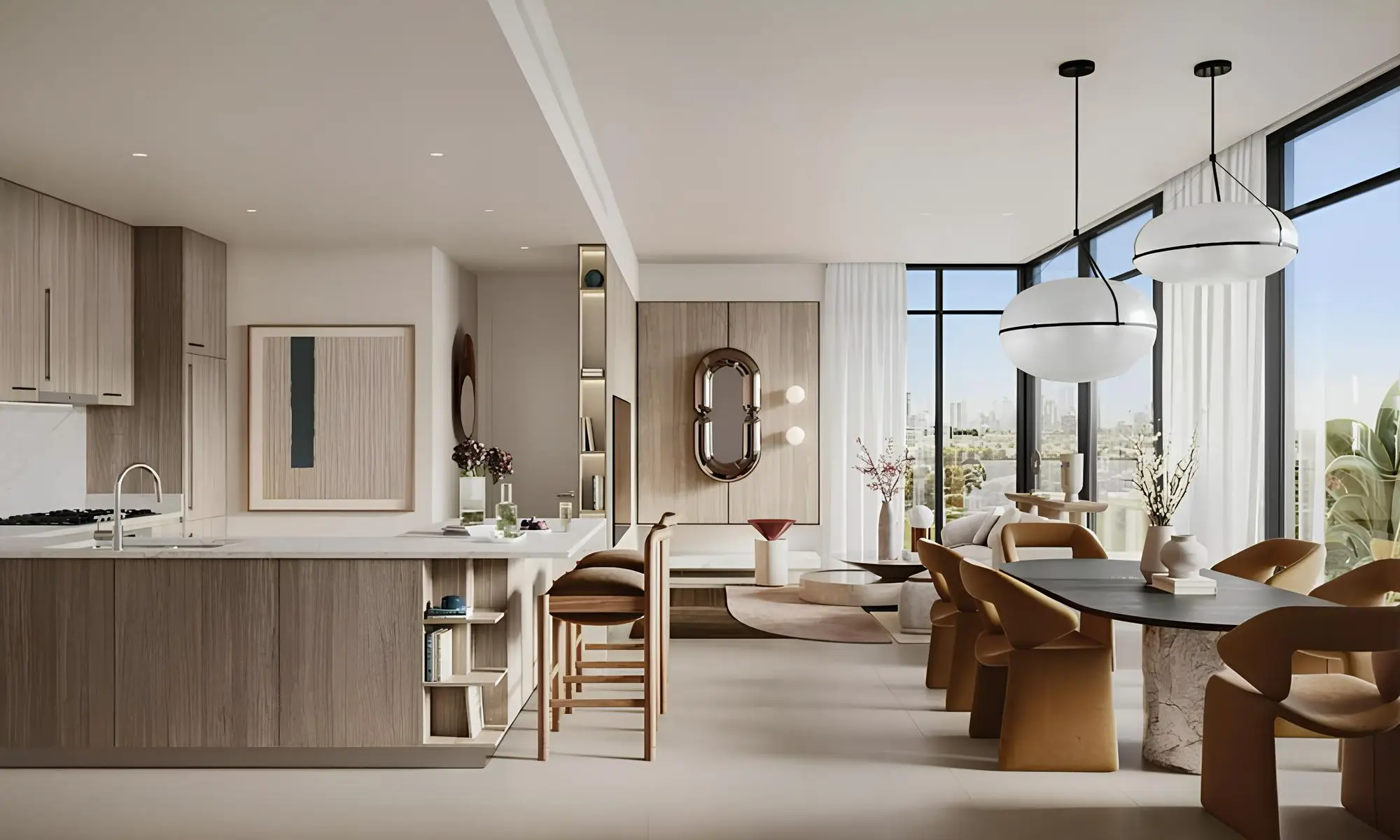
EMAAR "Parkside Hills" catalogue image in Dubai Hills Estate. Project marketing illustration; confirm the exact home's condition, specification and availability separately.
Inspect the relationship between home and community
Walk from the property to the facilities you actually expect to use. Observe entrances, crossings, shade and whether the route feels practical with shopping bags or a stroller. A home can be within a planned community while still requiring driving for much of its owner's routine. The decision should reflect that reality.
Ask about move-in procedures, contractor access, resident registration and rules for external alterations. These operational details affect how quickly the home can be set up and how future repairs are handled. Request the applicable guidance for the specific neighbourhood, because a broad community brochure may not contain the relevant building or villa requirements.
Consider pets, guests and regular activities before committing. Confirm any relevant restrictions rather than assuming that an outdoor setting or a family-oriented description resolves them. Keep written answers with the property comparison. An arrangement that matters every week deserves more attention than a feature you might use once a year.
Compare three homes with a weighted brief
Imagine a family comparing an apartment near a convenient park route, a townhouse with more storage and a villa with a larger garden. The apartment simplifies private maintenance but offers less separation for working from home. The townhouse provides separate levels but introduces stairs. The villa offers more flexibility while requiring a larger upkeep budget.
The family assigns its greatest weight to the school journey, work space and sustainable cash commitment. It then measures each home against those requirements using viewings and quotations. A garden remains desirable, but it cannot compensate for a budget that leaves too little reserve. This is a household decision, not a ranking of property types for everyone.
Use a short written rationale for your own selection. Explain the trade-offs you accept and the questions that must be answered before an offer. If a crucial cost or access point remains unclear, postpone the ranking. A weighted checklist becomes useful only when its scores reflect evidence rather than impressions from marketing photographs.
Frequently asked buyer questions
Is every Dubai Hills Estate property close to the park? The community contains different neighbourhoods and buildings. Verify the route from the exact address and distinguish a park-facing outlook from practical access. The facility's presence in the community does not establish the convenience of an individual home.
Is a villa always better for families? Families need different combinations of space, accessibility, routine and maintenance. Some prefer an apartment with useful shared facilities, while others need separate rooms and outdoor space. Compare how the actual layout supports the household rather than relying on a property-type label.
Can I estimate rental returns from the community name? A community name does not establish the rent or expenses of your chosen home. Seek current comparisons for the same property type, condition, layout and setting. Model a range after costs and avoid treating a projected return as guaranteed income.
Should I stretch my budget for a view? First identify how much you would actually use and enjoy the view. Then compare the additional cash commitment with your other priorities and reserve. If the premium removes financial flexibility or depends on an unverified future outlook, reassess its importance.
Your practical action plan
1. Rank the household's rooms, school route and upkeep preferences.
2. Choose which apartment, townhouse or villa types to compare.
3. Inspect park access, privacy, layout and private equipment.
4. Reconcile purchase spending with recurring and setup costs.
5. Request written answers to important uncertainties before an offer.
Prepare a shortlist worth viewing
Start with your intended use, property type and realistic ownership budget. Record the exact neighbourhood, layout, school route, facilities and unresolved costs for every candidate. Organise viewings to answer specific questions, including the ones that are difficult to settle from a plan or a video alone.
Speak with Property Gulf about your Dubai Hills Estate requirements and ask for a comparison built around your household or rental brief. Share the move-in timeframe, rooms you need, maintenance preferences and destinations you travel to regularly. The goal is a home whose daily usefulness and financial commitment remain clear after the excitement of the first viewing has passed.