

Choosing a Dubai apartment for comfortable daylight means checking the actual room, window orientation, shading and daily use together. A bright listing photo or a direction label does not establish the experience throughout the year. Start with the rooms where you will sleep, work and relax, then inspect how light, privacy, glare and the existing cooling arrangement interact in that exact apartment.
This guide helps buyers compare sunlight and orientation without inventing a universal best direction or predicting a utility bill from a compass alone. Use it alongside the apartment floor-plan guide. The aim is to turn the appealing idea of a bright home into a practical assessment of the place your furniture, screens and normal household routine will actually occupy.
What this guide covers
• Define a room-by-room daylight brief
• Confirm the actual unit orientation
• Inspect external shading and surrounding buildings
• Visit when the important room is in use

BINGHATTI "Burj Binghatti Jacob & Co Residences" catalogue marketing image, used as an illustration. Confirm the specific property's condition, specification, access and availability separately.
Define a room-by-room daylight brief
Describe the light you want for each activity. A workspace may need a comfortable screen position and manageable reflections. A bedroom may need darkness during a particular rest period. A living room may benefit from a welcoming outlook without making its most useful seating position uncomfortable. These requirements can differ within one household, so do not assume that the apartment with the brightest overall impression automatically wins the comparison.
Write down the hours when each room will be used most. Include daytime sleep, children's activities, visiting relatives and remote work where relevant. Consider the furniture you will keep rather than only the staged presentation. This brief gives the agent a reason to organise viewings at meaningful times and helps you distinguish a genuine essential from a feature that looks attractive in a photograph but will rarely affect daily living.
Confirm the actual unit orientation
Request the unit plan and confirm which windows face which direction. Identify the exact stack and floor; do not apply the orientation of a sales suite or a neighbouring apartment to the unit being considered. A building may have homes facing several sides. If the plan lacks a clear north reference, ask the appropriate project or building contact to explain it before using an orientation label in your comparison.
Keep orientation separate from the outlook description. A sea, park or skyline view identifies what is seen, while direction describes how the unit is positioned. Neither replaces the other. A corner home can have windows on different sides and rooms with different conditions. Record those differences rather than reducing the whole apartment to one label such as sunny, west-facing or open-view, particularly when the bedroom and workspace face different surroundings.
Inspect external shading and surrounding buildings
Look at balconies, overhangs, fins, nearby structures and the way the facade frames each window. Describe the shading you can see and the room conditions during the visit. Do not infer a complete annual sunlight pattern from one moment. A deep balcony may affect some windows differently from others, and an adjoining structure can influence the outlook as well as the available light from the same room.
Investigate surrounding plots through reliable current information. An open view today does not establish permanent openness, and a masterplan image does not independently guarantee future shade. If a proposed neighbouring building is important to the purchase, ask for project-specific evidence and identify what remains uncertain. Compare the apartment as it currently exists, then keep possible future changes in a separate scenario rather than quietly incorporating the most favourable assumption into your decision.
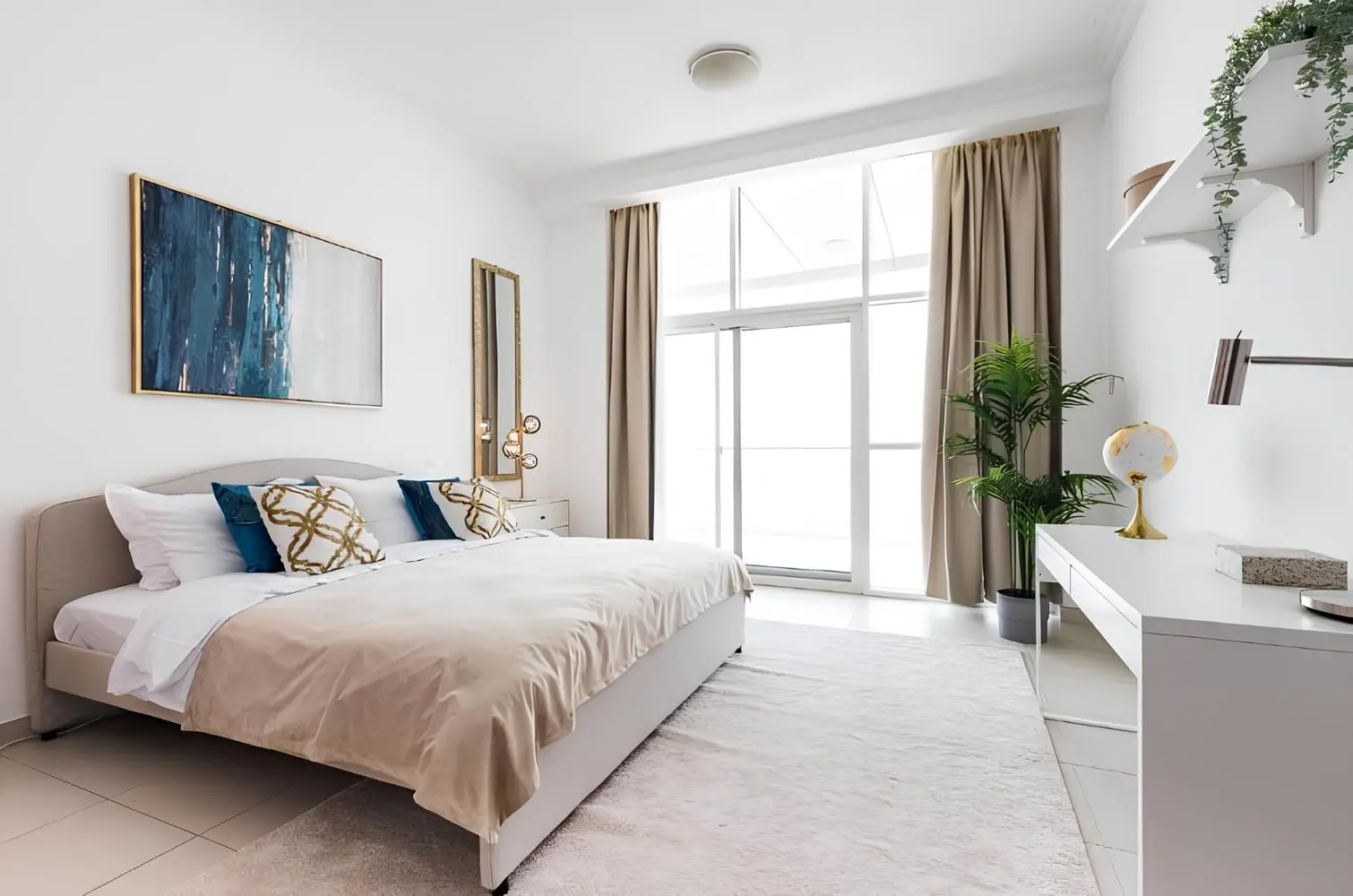
AL MADAR INVESTMENT "Al Madar Scala Tower" catalogue marketing image, used as an illustration. Confirm the specific property's condition, specification, access and availability separately.
Visit when the important room is in use
Arrange at least one viewing near the period that carries the most consequence for your routine. A workspace used during the afternoon should be evaluated then if access permits. A morning visit may still be useful for general inspection, but it leaves that afternoon question open. Record the approximate time, weather and condition of blinds or curtains so that your observation can be understood later rather than treated as an unexplained preference.
If repeat visits are unavailable, explain that limitation in the shortlist. Request current images or an authorised video of the exact room at a relevant time, while recognising that camera settings and screen display affect what you see. For an off-plan purchase, a rendered interior provides an illustration rather than a measurement of actual daylight. The uncertainty belongs in the comparison even when the developer's presentation is detailed and visually convincing.
Test realistic desk and television positions
Use the room plan to identify where the desk, monitor and television could fit without obstructing movement. Inspect the outlook and reflections from those practical positions, not only while standing near the centre of an empty room. The arrangement may need to serve more than one person. A position that works for one screen should not be assumed to meet every household member's needs without checking the remaining furniture and circulation.
Compare a possible adjustment with the cost it imposes elsewhere. Turning the desk might improve the working position while taking space intended for dining or storage. A curtain arrangement might reduce reflections while changing how often you enjoy the view. The working-from-home property guide helps organise those trade-offs. Evaluate the complete usable room rather than solving one light concern with a furniture arrangement that the household cannot realistically maintain.
Separate light, heat and cooling evidence
A visibly bright room is not a complete explanation of its thermal performance or utility costs. Request information about the actual glazing and cooling system through the appropriate documents and professionals. Check the installed equipment, maintenance condition and operating arrangement rather than assuming that an advertised sustainability label answers every unit-level question. Keep technical information, your comfort observation and the expected operating budget in distinct parts of the purchase record.
Dubai Municipality's Dubai Building Code resource provides official building-design material, including resources concerning glazing and cooling. It is a suitable reference for technical enquiries, but it does not give a personal comfort verdict on a listing. Ask a qualified building professional to evaluate a material performance concern. The cooling and utility budget guide supports the separate task of obtaining current property-specific cost information.
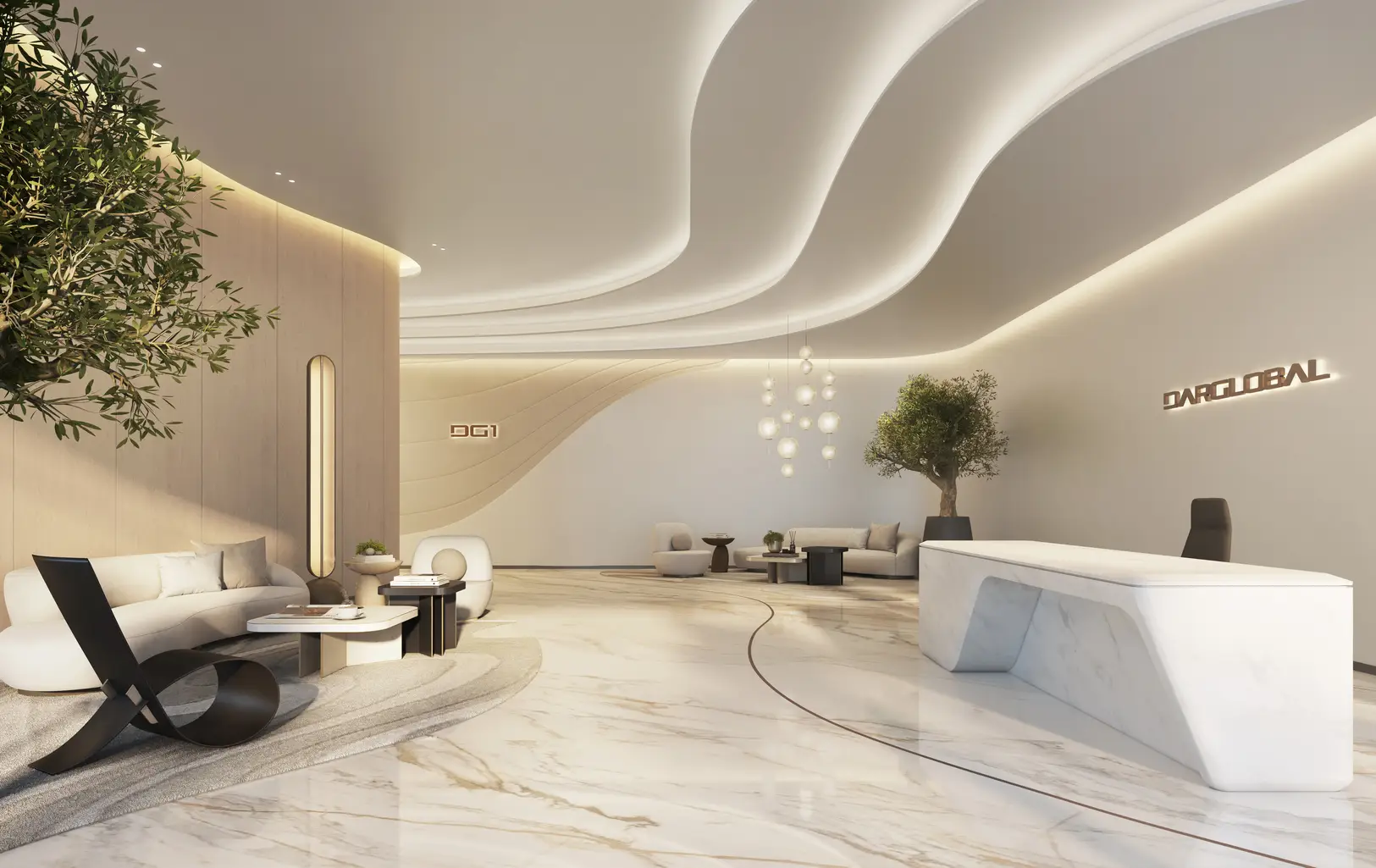
DARGLOBAL "DG1" catalogue marketing image, used as an illustration. Confirm the specific property's condition, specification, access and availability separately.
Review existing curtains and proposed changes
Inspect what is actually installed and clarify whether it is included in the purchase. Check the operation of tracks, blinds and controls where access is permitted. Record visible wear or gaps without assuming the reason for every defect. An empty apartment may require an immediate window-treatment budget, while a furnished home may have existing arrangements that do not match the household's preferred rest hours, privacy or working setup.
For a proposed alteration, establish feasibility, building requirements and a written quotation before relying on the result. A facade change, new glazing or an external shade arrangement should not be treated as an ordinary decorative purchase without suitable review. Even an internal solution needs realistic dimensions and installation planning. Compare the home in its current state and show the improvement as a separate commitment with its own cost, timing and unresolved questions.
Examine privacy alongside the available light
Look from the position of the bed, sofa or desk toward neighbouring windows, terraces and shared spaces. Assess whether the light arrangement you prefer also provides acceptable privacy when curtains are open. A buyer may enjoy an open daytime room while wanting a different arrangement later. The question is how those needs can coexist in the actual apartment, rather than whether a listing describes the home as private without explaining the relevant sight lines.
Consider the practical result of frequently closing a room to obtain privacy. You may be comfortable with that compromise, but it can change how you value a view or large glazing area. Compare another floor or stack if the conflict affects an essential room. Keep privacy observations respectful: inspect the property and its general setting without recording or investigating the personal activities of residents in adjoining homes or buildings.
Evaluate balconies as part of the room arrangement
A balcony can affect the interior through its position and the route between rooms, but its own usefulness also deserves investigation. Check where seating would fit, how the door opens and which household activities could occur there comfortably. Record the conditions of the viewing and the access rules that apply. A large advertised balcony area does not independently establish that it provides the sort of outdoor routine you expect from the home.
Use the balcony and terrace comparison to assess dimensions, privacy and usable furniture space. Keep a balcony's contribution to shading separate from a claim that it solves the apartment's performance. A comfortable interior and an appealing terrace may reinforce each other, but they should both be checked against the actual unit plan and relevant viewing conditions instead of being inferred from a staged sunset photograph.
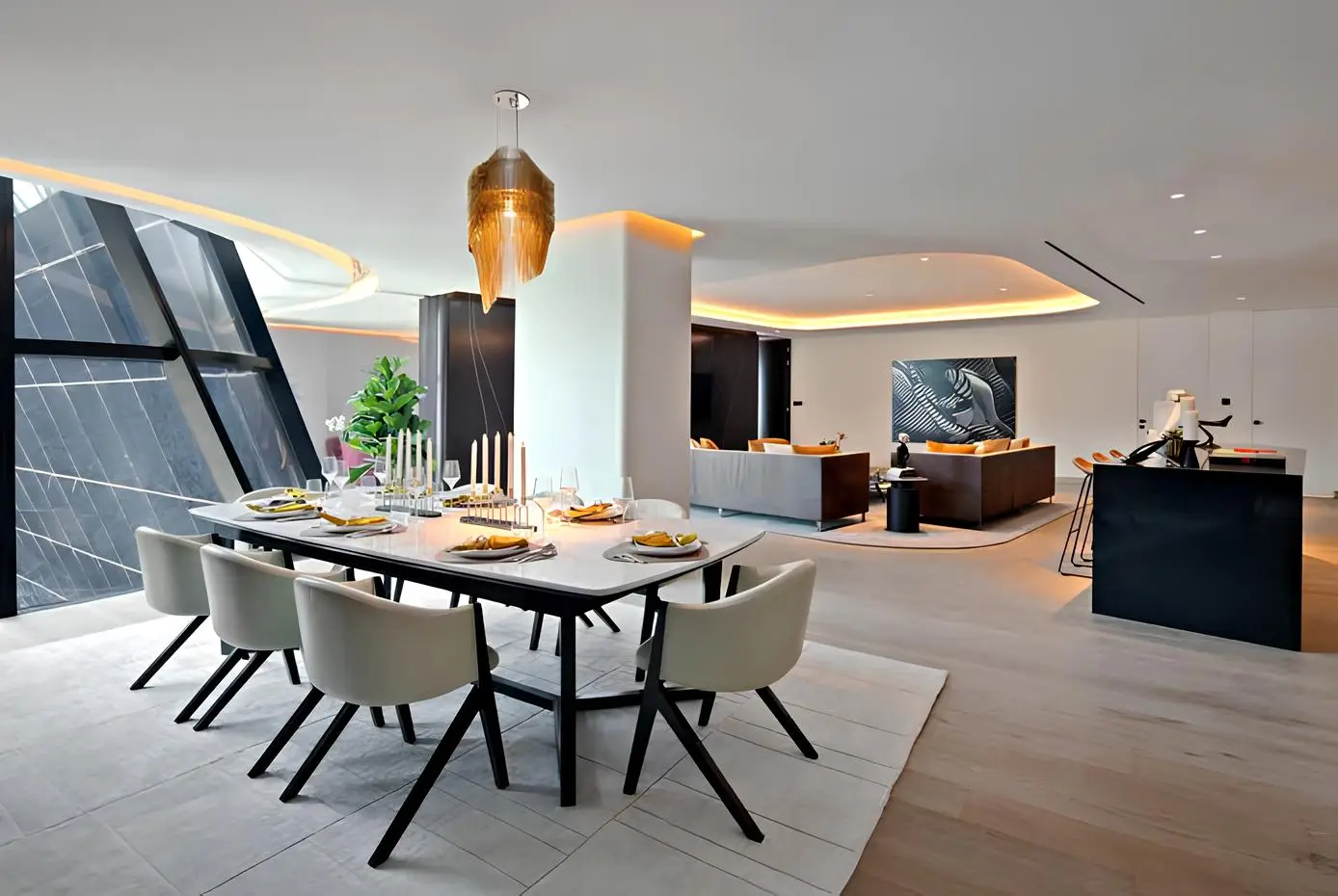
OMNIYAT "The Opus by Omniyat" catalogue marketing image, used as an illustration. Confirm the specific property's condition, specification, access and availability separately.
Treat show apartments and renders as supporting material
Ask which elements of a show presentation apply to the unit being offered. Orientation, floor, surrounding structures, window dimensions and furnishings can differ. Record the source and date of the plan or image used in the comparison. This makes it easier to reconcile later specifications and avoids relying on a visual whose attractive lighting was designed to communicate a concept rather than document the everyday conditions of your exact home.
For an off-plan apartment, request the relevant written specification and approved unit information through the project team. Seek appropriate technical explanation if a glazing or shading detail materially affects the purchase. Keep unconfirmed assumptions visible and compare alternatives that offer better evidence for the requirements you consider essential. A complete and attractive catalogue is useful for orientation, but it does not turn a future room into a home that has already been inspected.
Compare two homes without choosing by a single direction
Consider a hypothetical pair of apartments. One offers an appealing open outlook but requires a less convenient desk position. The other has a more enclosed view but supports the household's working and resting arrangement with the existing window treatments. Neither should win simply because of a compass label. Rank the actual room usefulness, privacy, costs and evidence against your brief, and record which compromises you are prepared to accept before discussing an offer.
Avoid assigning an invented financial premium to daylight or claiming that a particular aspect always rents better. If income matters, investigate current comparable homes and the intended resident's requirements as a separate exercise. A landlord should explain a property's features accurately rather than using a general direction rule as a guaranteed demand forecast. A useful comparison states what was checked, why it supports the proposed use and what would need further investigation before completion.
Frequently asked questions about sunlight and orientation
Is there one best direction for every Dubai apartment? A direction label alone cannot answer every household's needs. Compare the actual rooms, shading, privacy, furniture arrangement and hours of use. A property that suits someone else's work and rest schedule may require a different compromise for your household, even when both buyers prefer a bright home.
Can a listing photo prove a room is comfortably bright all day? A photograph represents its conditions, framing and settings at a particular moment. Request exact-unit information and appropriate viewings. Keep it as supporting material instead of treating it as evidence of every season, time or furniture arrangement that would matter after you move in.
Will a large window automatically produce a high cooling bill? Window size is only part of the property information needed to assess performance and expenditure. Obtain current system, specification and operating details. Use appropriate professional review for a material concern, and budget from relevant evidence rather than a single visible feature or an assumed universal relationship.
Can curtains make any apartment suitable? Window treatments can form part of the practical arrangement, but their effect, dimensions, cost and installation should be evaluated. They do not independently resolve every privacy, layout or technical question. Compare the current apartment and the proposed improvement separately before depending on an alteration to meet an essential requirement.
Your practical action plan
1. Identify the exact unit, window directions and realistic furniture positions.
2. Define the room-by-room light, privacy and rest requirements.
3. Inspect relevant times, external shading and surrounding plots.
4. Review proposed changes and technical questions with qualified professionals.
5. Compare comfort and ownership costs without selecting by direction alone.
Build a comfort brief before choosing the view
Record orientation, room use, viewing conditions, shading, screen positions, privacy and planned changes together for each shortlisted home. That record makes the next visit purposeful and helps the relevant professional answer a specific question. Comfortable daylight is most useful when it supports how the household will actually live, with the important uncertainties and improvement costs visible before a purchase decision becomes a commitment.
Contact Property Gulf with your preferred locations, budget, household routine and the rooms where light or privacy matters most. Ask for exact-unit plans and viewings at useful times. Compare those findings with the broader layout, current operating information and possession timeline, so that an attractive view supports a workable home rather than becoming the only reason to choose it.