

A quieter Dubai apartment is found by checking the exact room, time and sound source, rather than by choosing a floor number or a neighbourhood reputation. Road traffic, adjoining homes, corridors, building equipment and nearby activities create different questions. The most useful viewing records what you heard, under which conditions, and what remains untested before you make a purchase decision.
This apartment noise checklist helps buyers organise that investigation without presenting a short visit as an acoustic certificate. It is especially useful for light sleepers, remote workers and households whose rest hours differ from the surrounding routine. Combine it with the Dubai apartment viewing checklist, keeping sound observations separate from layout, condition and price so that one attractive feature does not hide an unresolved bedroom concern.
What this guide covers
• Define the quiet you actually need
• Map sources around the exact apartment
• Visit at times related to your routine
• Listen in the bedroom before the living room

EMAAR "Marina Cove" catalogue marketing image, used as an illustration. Confirm the specific property's condition, specification, access and availability separately.
Define the quiet you actually need
Start with the person and activity affected. A household may need a restful bedroom during the night, a quiet room for daytime sleep, or a workspace where ordinary calls are comfortable. Those are different briefs. Write down the rooms, hours and activities that matter before deciding whether a property meets your needs. A general request for a quiet home is difficult for an advisor to translate into a meaningful shortlist.
Describe your present difficulties in practical language. If your main concern is repeated corridor doors waking a child, a property facing away from a road may still fail the brief. If calls are the issue, investigate the room where the desk will actually stand. This keeps the viewing focused on a specific use, rather than making every audible sound an automatic reason to reject an otherwise suitable home.
Map sources around the exact apartment
Record the unit position, floor, orientation and rooms facing each side. Mark nearby roads, loading areas, leisure destinations, building entrances and visible construction plots. Include the position of shared corridors and service rooms where the building plan permits. The exercise is a source map, not a prediction that every nearby activity will be heard. Use it to decide which questions and viewing times would provide useful evidence.
Do not transfer an observation from one apartment to another stack in the same tower. A bedroom around a corner, a different window arrangement or another position relative to building equipment may produce a different experience. Ask for the precise unit identifier on every plan and viewing note. A quiet show apartment supports a conclusion about that visit; it does not establish the acoustic experience of all apartments offered under the building name.
Visit at times related to your routine
A midday visit cannot settle a concern about an evening destination or a morning collection route. Identify two or three periods that represent how you would use the home and request access accordingly. Explain the reason so that the agent can arrange a useful appointment. Record the day, approximate time and any unusual conditions, such as temporarily closed facilities or an apartment undergoing work, alongside your observations.
Keep the limitations visible when access is restricted. You might inspect a vacant home during a working day while the neighbouring apartment is unoccupied. That is valuable information about the conditions you experienced, but it leaves another question unanswered. Rank that gap according to its importance to your purchase. When a particular room must support daytime sleep, an untested daytime source may deserve another visit before an offer is finalised.
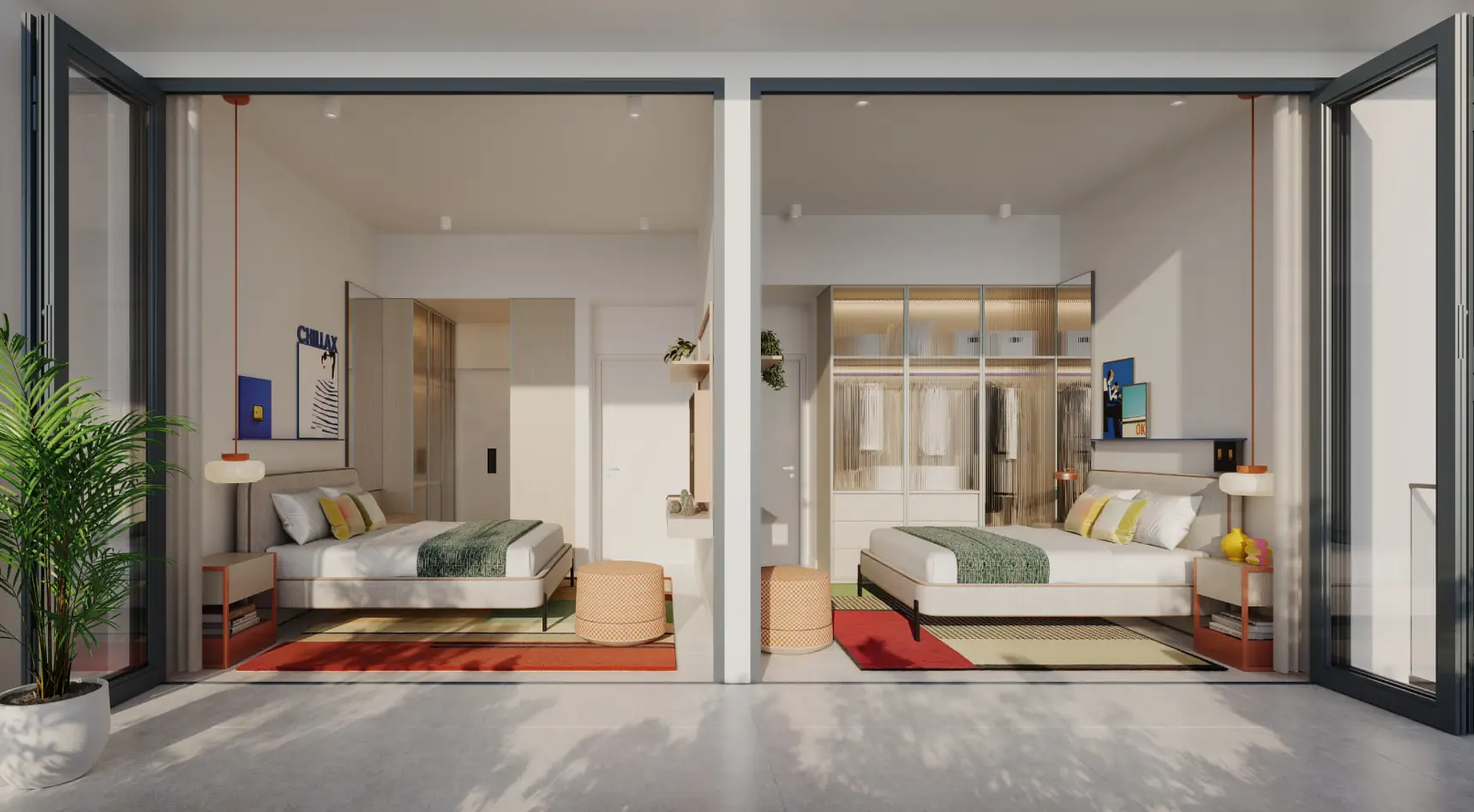
IRTH GROUP "Rove Home Dubai Marina" catalogue marketing image, used as an illustration. Confirm the specific property's condition, specification, access and availability separately.
Listen in the bedroom before the living room
Enter the room that carries the greatest consequence if noise is uncomfortable. Stand where the bed or desk would be and spend a period without conversation. Listen with ordinary equipment operating and ask what was switched off for the viewing. Note whether sound is continuous, intermittent or associated with a visible event. These descriptions are more useful than writing only quiet or noisy in your property comparison sheet.
Compare different positions inside the room without assuming that one improvement solves the whole concern. Moving a desk away from a window may help the working arrangement while leaving the bedroom requirement unresolved. Consider whether the furniture position you tested is realistic once storage and circulation are included. The home-office apartment guide can help connect that sound observation with a usable workspace instead of an improvised corner chosen only for the viewing.
Compare open and closed window conditions
Ask permission to check the windows in the way the household would use them. Record whether each was open, closed and latched, and whether visible seals or handles need attention. Avoid assuming that a window replacement is straightforward. A change to a facade or glazing arrangement may involve technical review and building requirements. Establish the actual condition first, then ask qualified professionals about a proposed improvement and any necessary approvals.
The result should distinguish the current home from an imagined upgraded version. If the apartment feels suitable only after an unquoted window alteration, the improvement belongs in the decision as a separate cost and uncertainty. Ask for a written scope, practical installation arrangements and confirmation of applicable rules before relying on it. An informal statement that thicker glass will fix everything does not establish the outcome for the particular room or source.
Investigate corridors and shared walls respectfully
Observe the entrance, door closing, lift arrival and normal movement in shared areas. Ask whether the apartment adjoins a service space or another residential room, using available plans rather than private information about neighbours. You do not need the personal details or habits of another resident to assess the property. Building operations, construction arrangements and the conditions of a legitimate viewing provide the appropriate basis for your investigation.
Do not manufacture disturbance by knocking on neighbouring walls or asking someone to create intrusive noise. Record naturally occurring observations and request a suitable technical assessment if sound transfer is material to the transaction. A single conversation heard during a visit should be described accurately without turning it into a claim about permanent conditions. Equally, silence during that visit does not demonstrate that adjoining activities will never be audible after you move in.
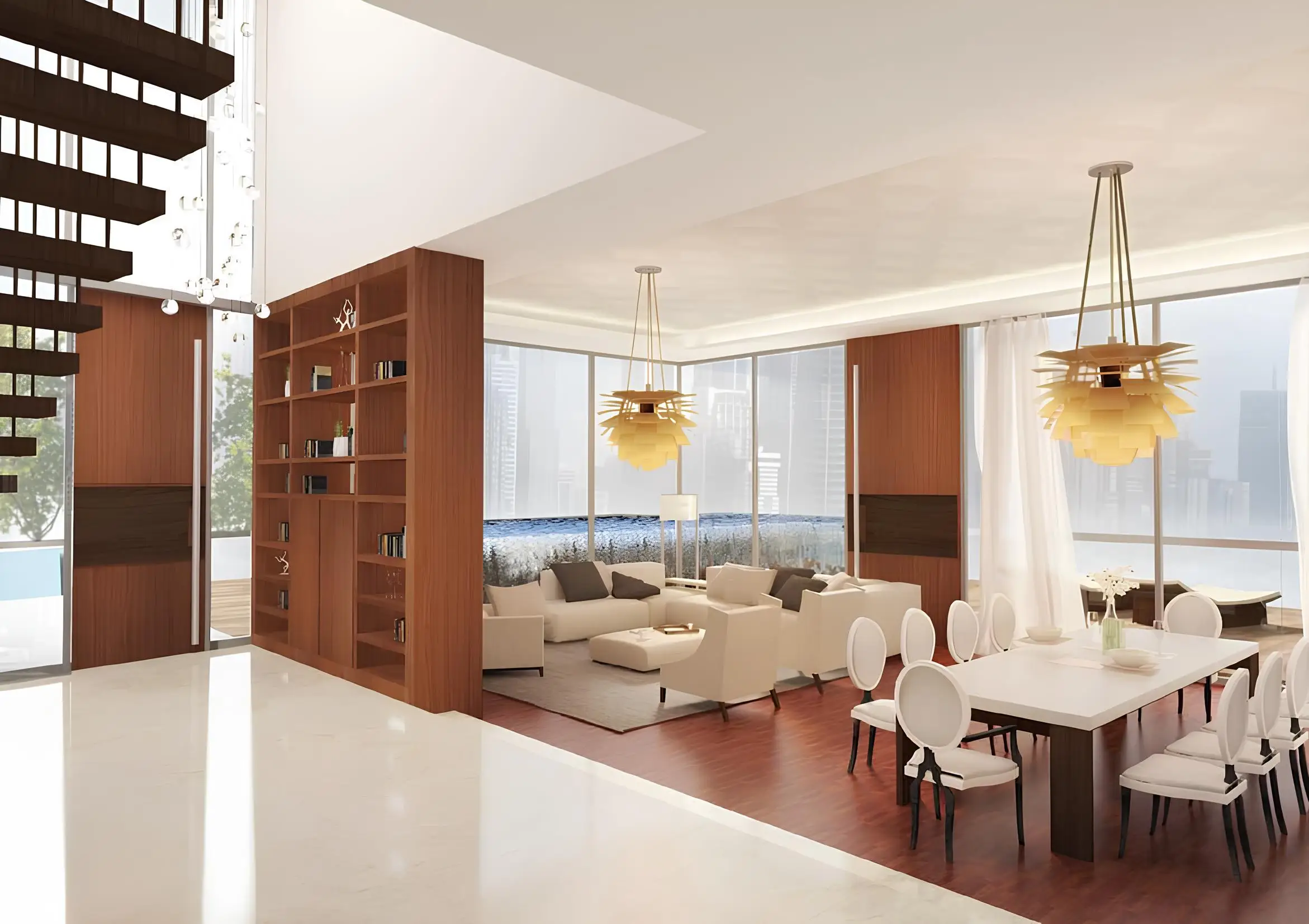
SCOPE INVESTMENT "Stella Maris Tower" catalogue marketing image, used as an illustration. Confirm the specific property's condition, specification, access and availability separately.
Check cooling and building equipment in normal use
Listen while the apartment cooling operates under conditions representative of everyday use. Ask about any fan, pump or service equipment near the home and who maintains it. If an unusual sound is apparent, request an inspection and a documented diagnosis rather than guessing the cause from the room. The question is whether the system operates properly and what evidence supports an expected repair, not simply whether someone can switch it off during the viewing.
Separate the sound of equipment from the recurring cost of running it. A buyer may be comfortable with one and still need information about the other. Use the Dubai cooling and utility cost guide to build the operating budget, while your sound log records the actual room experience. This prevents a broad assurance about energy efficiency from being mistaken for proof that the installed system suits your comfort preferences.
Review nearby construction without guessing a completion date
Look at adjoining plots and visible works, then request reliable current information about relevant projects. Describe what is operating now separately from what a masterplan shows for later. A brochure illustration of completed landscaping does not establish when a neighbouring worksite will finish. If the purchase depends on a change in surrounding activity, identify the source and uncertainty of that assumption before assigning the property a comfort score.
Dubai Municipality's building and planning circulars include material under noise prevention for construction works. That official resource is a starting point for relevant requirements, rather than a prediction of the sound inside your unit. Ask the responsible building or project contact about current operations and the appropriate enquiry route. Keep any reported rule, your actual observation and a future timetable in separate fields of the viewing record.
Understand what a phone recording can establish
A recording may help you remember an event or explain the timing of a concern, provided it is made appropriately and without intruding on another person's privacy. Record your own observation rather than private conversations. Keep the device position and conditions in your notes. A recording made close to a window should not be described as if it represents the sound at a bed on the opposite side of the room.
Do not use an ordinary phone reading as proof that a property meets an acoustic requirement. If a numerical or compliance conclusion matters, engage an appropriately qualified acoustic professional to determine the method, equipment and scope. The Dubai Building Code resource provides the official design reference. A buyer's observation log and a professional technical report answer different questions and should remain clearly identified in the purchase file.
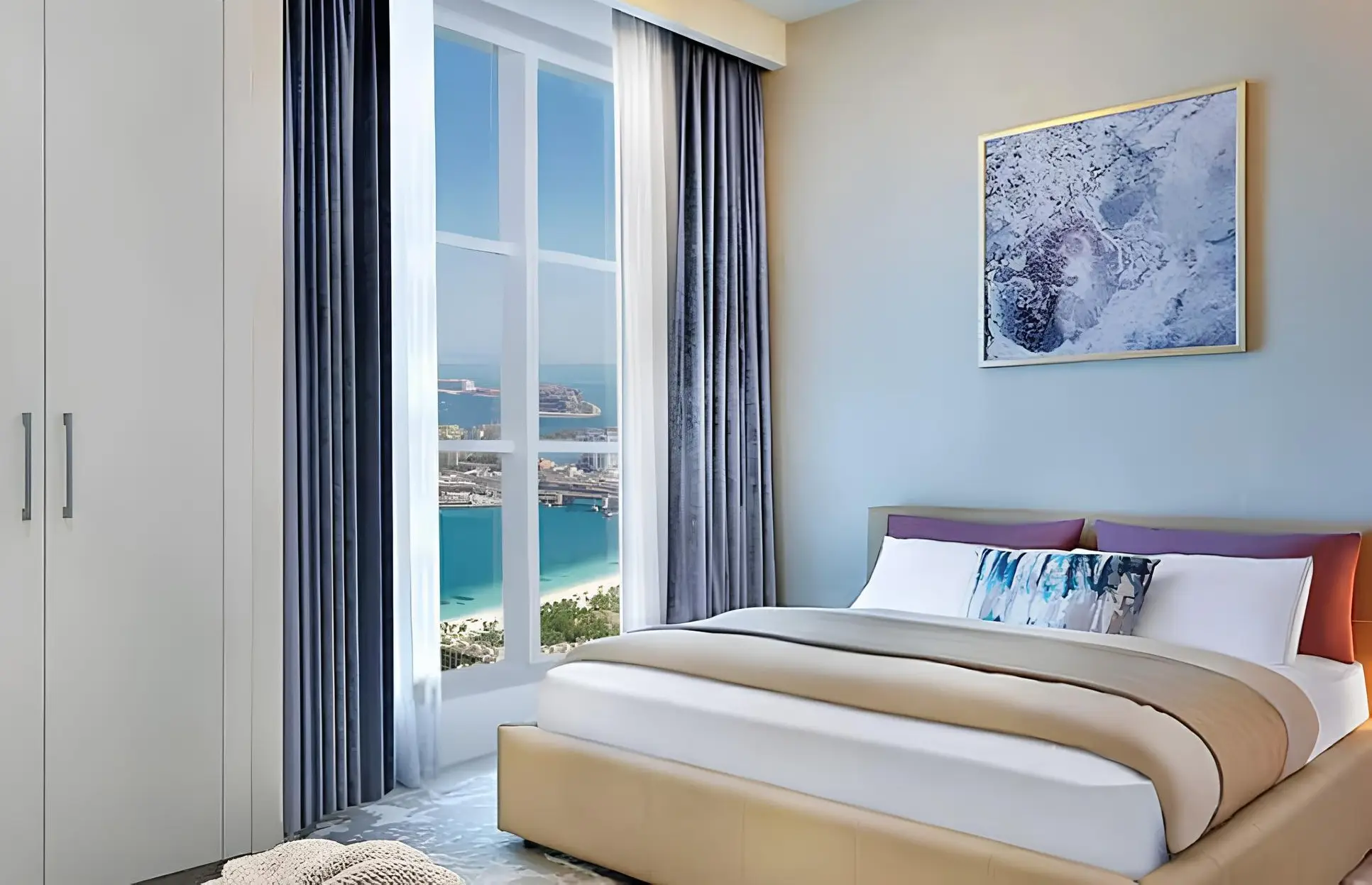
MADA'IN "Marina Arcade Tower" catalogue marketing image, used as an illustration. Confirm the specific property's condition, specification, access and availability separately.
Compare compromises through a worked shortlist
Imagine two otherwise suitable apartments. In one, the bedroom was comfortable during the relevant evening visit but the route to work was inconvenient. In the other, access was excellent but equipment near the bedroom required further investigation. This hypothetical comparison has no automatic winner. Your brief determines the significance of each trade-off, while a second visit or technical report can reduce an uncertainty that an attractive asking price cannot resolve.
Avoid pretending that a discount measures an unresolved sound problem precisely. An owner-occupier may find a property unsuitable even if its price is lower, while a landlord needs to consider the intended resident and legitimate disclosure of known conditions. Compare alternative homes before assuming that you must accept the issue. Keep affordability, practical fit and the cost of any professionally evaluated improvement as separate parts of the decision.
Turn a repair promise into evidence
Where a defect or equipment concern has been identified, request the proposed work in writing. Clarify the responsible party, scope, access arrangements, completion timing and how the result would be checked. Preserve the distinction between a maintenance action and an assurance about every possible external sound. Replacing a faulty component does not independently establish that traffic, neighbouring activity or corridor movement will suit the household after completion.
Arrange appropriate follow-up inspection before relying on a material repair in the purchase decision. Ask the transaction professionals how important commitments should be documented and coordinated with the proposed completion. The handover and snagging guide helps organise an issue list. Use it for a traceable process rather than assuming that a verbal promise during a viewing will later provide a clear scope or remedy.
Frequently asked questions about apartment noise
Does a high floor guarantee a quiet Dubai apartment? No floor number establishes the experience of every room. Check the exact unit position, relevant sources and the hours when the household needs quiet. The comparison should use observed conditions and unresolved questions rather than a blanket rule based on height.
Can a furnished viewing make the future sound experience certain? The furnishings and conditions during the visit are part of the observation, but they do not settle every later arrangement. Record what was present and what you plan to change. Seek professional advice if the proposed room setup or a material technical concern affects your decision.
Should I reject a home after one audible event? Consider the type, frequency and consequence of the event, together with the limits of the visit. One observation can justify further investigation without proving a permanent condition. A sound that directly conflicts with an essential household requirement may carry more weight than a brief event in a rarely used room.
Can an agent guarantee that neighbours will always be quiet? Future personal behaviour cannot be established through a property description. Request building information and legitimate observations, and avoid relying on promises about other residents. Focus the decision on the evidence available for the home and your tolerance for the remaining uncertainty.
Your practical action plan
1. Define the rooms, hours and activities that need quiet.
2. Map the exact unit and likely sound sources.
3. Visit at useful times and record the actual room conditions.
4. Request qualified assessment or repair evidence for important concerns.
5. Compare the remaining uncertainty with practical alternatives before offering.
Make the sound record part of your viewing brief
Keep one record for each apartment with the unit identity, room, time, window position, equipment state, observed source and next action. This makes repeated viewings comparable and helps professionals answer the question that matters. A thoughtful noise investigation is successful when it improves the evidence behind your choice, even if it leads you to pursue a different apartment rather than a promised technical fix.
For a remote purchase, appoint an appropriate local representative to make the observation and record its limits. A live video can help you follow the room arrangement, but its microphone, connection and playback cannot independently establish how the bedroom will sound in person. If quiet is essential, plan the relevant direct inspection or qualified assessment before depending on that remote presentation as the evidence supporting your offer.
Contact Property Gulf with the rooms and hours where quiet matters, your intended use, preferred locations and budget. Ask for a viewing programme that tests those requirements in exact shortlisted homes. Combine the sound record with current condition, layout, travel and ownership costs before choosing the apartment whose compromises you can realistically accept.