

Dubai apartment parking should be assessed as a complete daily journey: the right to use a particular space, the vehicle's fit, the route into the building, and the walk from the bay to the apartment. A listing that says parking included answers only part of that question. Two units with the same advertised allocation can create very different practical experiences.
Confirm the documented arrangement, inspect the actual bay, and compare it with the vehicles and visitors your household expects. This guide covers dimensions, access, second cars, deliveries, visitor arrangements, and charging enquiries. It helps organize a viewing and document review without assuming that every building follows the same rules or that a photographed parking position belongs to the offered unit.
What this guide covers
• Verify the allocation for the exact apartment
• Measure the bay with the real vehicle in mind
• Walk and drive the access route
• Assess the walk from parking to the home
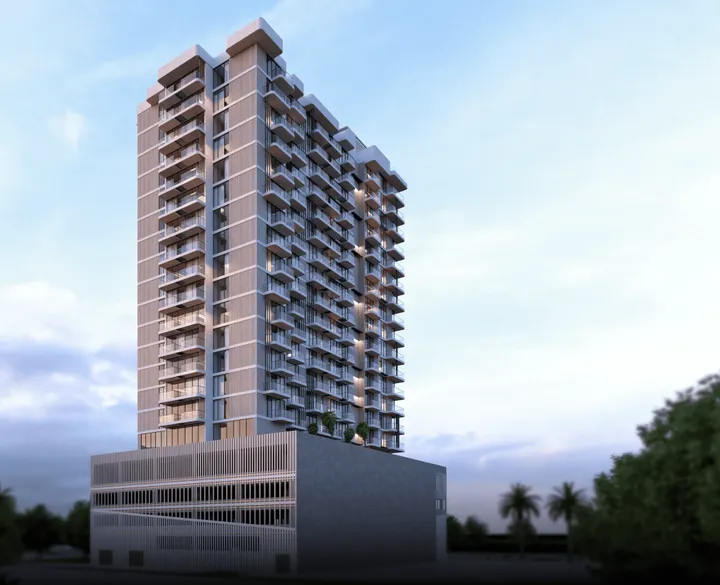
TETR1S Tower architectural visualization from the existing Property Gulf library. The actual unit, specification and current project status require separate verification.
Verify the allocation for the exact apartment
Ask which parking space is assigned to the unit and how the right or allocation is evidenced in the relevant documents. Record the bay identifier, level, and arrangement. The responsible professional should clarify whether the advertised parking is part of the property, a building allocation, or another arrangement. Keep that explanation with the unit-specific records.
Check whether the number of spaces shown in marketing matches the actual offer. A photograph of several vehicles near the building does not establish rights to all the spaces pictured. If a second bay is described as available, ask whether it is confirmed for your transaction, separately charged, or only an enquiry awaiting approval.
Match the allocation to the apartment you are considering rather than a show unit or another layout. The transfer document guide provides a way to record property-detail discrepancies. Resolve important differences before assigning the parking benefit a value in your comparison.
Measure the bay with the real vehicle in mind
Record the clear width, depth, position of columns, and any obstructions. Compare them with your actual vehicle dimensions and the space needed to open doors. A vehicle can technically fit within markings while leaving an inconvenient route for passengers, groceries, or a child seat. Use the whole routine as the test.
Where access and permission allow, inspect the bay with the intended vehicle or obtain appropriate measurements. Do not attempt unsafe manoeuvres or use an unrelated occupied space for testing. Ask the manager about practical constraints and any vehicle restrictions applicable to the parking area. Keep specialist driving or safety questions with the appropriate professional.
Consider changes in household vehicles. You do not need to purchase around every hypothetical future car, but identify foreseeable requirements. If a larger vehicle is likely, note the uncertainty and ask whether the bay remains practical. A clear record is more useful than a general impression that the parking looks spacious.
Walk and drive the access route
Inspect entrances, ramps, turns, gates, and the route to the allocated level. Observe signs and access procedures. A convenient bay can still be reached through a route that creates difficulty for your vehicle or schedule. Confirm any relevant height or access limitations with the responsible management entity and appropriate evidence.
Ask how resident access is established and what happens when a card, remote, or recognition system is unavailable. Record the support contact and replacement process. The day-to-day journey should remain understandable when a device fails, rather than depending on a particular staff member recognizing you informally.
Compare the route during relevant periods if access timing matters. A quiet tour provides a limited observation of queueing or shared use. Record what you saw and ask a targeted follow-up where uncertainty remains. Avoid assigning a permanent waiting time to the building based on one brief visit.

Illustrative property-planning scene from the Property Gulf media library; not a photograph of a unit offered for sale.
Assess the walk from parking to the home
Walk the actual route with shopping, luggage, mobility needs, or a pram in mind. Note doors, steps, lift changes, and the distance to the relevant entrance. A bay close to one lift may still be inconvenient if that lift does not provide a straightforward route to your floor.
Observe lighting, signs, and ordinary access conditions, and ask the responsible manager about any concern. A general property viewing is not a technical safety assessment. Where specific accessibility or safety needs influence your decision, assess the route with the relevant person and obtain suitable professional guidance.
Consider how often the route is used by different household members. Someone carrying groceries several times a week may value a feature differently from someone who rarely drives. Include those observations in the shared property brief so parking is assessed as part of household convenience rather than only a count of spaces.
Clarify second-car options
Ask what arrangements are currently available for an additional vehicle and obtain the actual process and charges. Separate an existing confirmed space from a waiting list, a temporary arrangement, or an informal suggestion. Your housing budget should not rely on an extra bay that has not been established for the intended period.
Compare the second-car route and access with the primary allocation. A separately arranged space may be on another level, in another building, or outside the ordinary resident route. Record practical differences and any renewal or availability conditions. A low quoted charge does not answer every question about continuing convenience.
For public parking enquiries outside the building, use current RTA parking service information and the relevant official arrangements. Do not assume that nearby public spaces can replace a private allocation permanently or at a fixed cost without current evidence.
Understand visitor and delivery arrangements
Ask how visitors enter, where they may park, and whether registration, limits, or separate charges apply. The practical value depends on your actual visitor pattern. Occasional relatives, regular care support, and social gatherings may require different arrangements. Confirm the current rule instead of using another resident's informal practice as the entire answer.
Discuss deliveries, taxis, and furniture moves separately from visitor parking. A drop-off point may be suitable for a short passenger journey while unsuitable for unloading a large item. Ask about booking, access, supervision, and the route to the service lift where relevant. Keep the responsible contact in your move-in plan.
Consider the effect on neighbours and shared access. A convenient delivery arrangement should work within the building's rules rather than depend on obstructing another bay or passage. The first-month move-in guide helps organize deliveries and permissions before large furniture arrives.
Investigate charging without assuming installation permission
If you use or plan an electric vehicle, ask management what charging facilities and approval routes currently apply. Distinguish an existing usable charger from a proposed installation. Confirm who owns the equipment, who can access it, how billing works, and what happens when the facility is unavailable.
For a proposed private installation, obtain appropriate provider, technical, and management advice. Do not assume a nearby socket is suitable or that a bay allocation automatically authorizes electrical work. The relevant requirements should be established before you count private charging as an included benefit of the apartment.
Include equipment, installation, subscriptions or access charges where applicable in the cost comparison. Ask for current written information rather than importing a quotation from another building. A workable alternative charging plan may be sufficient for some households, but it should be evaluated against the actual vehicle use and schedule.
Illustrative buyer-comparison scene from the Property Gulf media library.
Review management and maintenance procedures
Ask who handles access faults, damaged devices, bay markings, and other operating issues. Clarify the reporting route and what information a request should include. A resident should be able to identify the bay and issue without searching through a long general building chat. Keep the contacts with the property operating file.
Check how temporary works or closures are communicated and what alternative arrangement is provided under the relevant rules. Do not assume that a space remains continuously available without interruption. The useful question is how the building manages foreseeable maintenance and informs residents about changes.
Review applicable shared costs alongside parking access. The ownership-cost guide explains why included services and separately payable items need a clear breakdown. Parking convenience and building operating costs belong in the same complete property decision.
Compare parking across a shortlist consistently
Use the same fields for every apartment: confirmed spaces, bay position, vehicle fit, entry route, pedestrian route, second-car arrangement, visitor process, charging, and relevant costs. Mark missing evidence as unresolved. This prevents one property from appearing better simply because its advisor supplied a fuller description.
Score critical needs before optional benefits. If your vehicle cannot be accommodated through a verified practical arrangement, attractive visitor features may not solve the essential problem. If the household has no car, you may give greater weight to drop-off and pedestrian access. The comparison should follow actual use rather than a universal parking ranking.
Explain the trade-off in one or two sentences. A distant bay with easy access may suit one household, while a closer bay with less convenient vehicle clearance may suit another. The written explanation remains useful after multiple viewings and helps an advisor target the next enquiry.
A hypothetical two-car household comparison
Imagine a household comparing two apartments. Apartment A has one documented space and an unconfirmed possibility of a second. Apartment B has two confirmed spaces, but one requires a longer route to the lift. Both units otherwise meet the household's layout and budget requirements. The parking decision is therefore about certainty and daily convenience together.
The advisor is asked to confirm the second-space arrangement for Apartment A, including cost and period. The household measures the spaces and walks both routes. If the additional space remains uncertain, the comparison retains that uncertainty rather than assuming the favourable result. Apartment B's longer route is recorded as a real inconvenience rather than ignored because the allocation count is higher.
The household then reviews the complete cost and ordinary vehicle use. One person may drive less frequently and accept the longer route. Another household may need more convenient access for both vehicles. The example shows why allocation, evidence, and routine create a stronger decision than the phrase two parking spaces alone.
Keep parking information in the handover record
At possession, reconcile the bay identifiers, devices, access registration, and relevant instructions with the confirmed arrangement. Check that the supplied card or remote operates through the appropriate authorized demonstration. Record unresolved access issues and the contact responsible for follow-up. A space can be physically present while your access setup remains incomplete.
Retain written allocation evidence and current operating contacts with the property file. Update the record when management procedures or household vehicles change. If you later rent or sell the home, accurate parking information can help the next resident evaluate the same practical questions without relying on an old photograph or informal recollection.
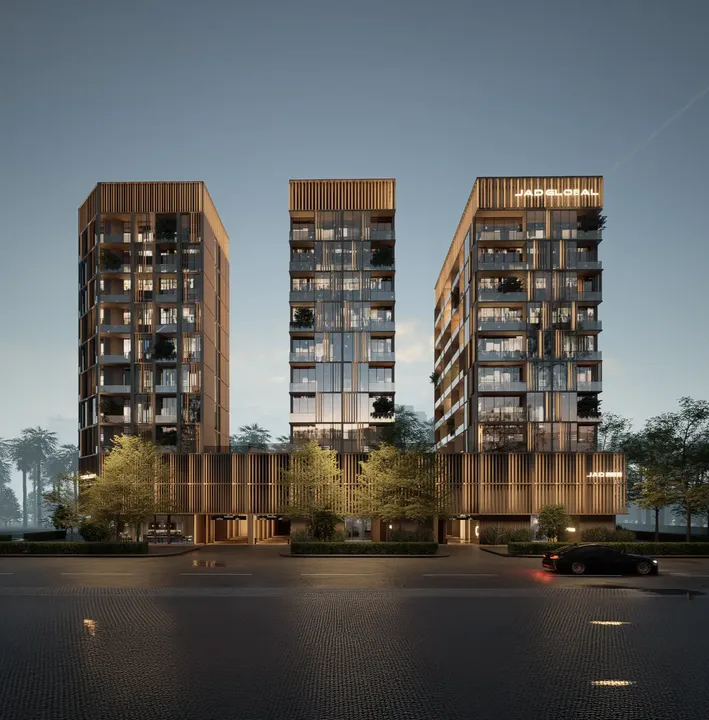
JAD 288 architectural visualization from the existing Property Gulf library. Shown as an example of project marketing imagery, not proof of delivered condition or availability.
Prepare an access record for the household
Create a practical record with confirmed bay identifiers, the route to the apartment, access devices, support contacts and the current visitor procedure. Keep it separate from sensitive ownership or identity documents. A family member who needs to use the parking can receive useful instructions without access to the complete purchase file. Update the record when a device is replaced or the building procedure changes.
If the household has several vehicles, describe which space each normally uses and how a temporary change is handled under the actual rules. This can reveal a clearance or access issue before it becomes a daily inconvenience. Ask management about the authorized process for relevant vehicle registration rather than assuming an informal arrangement will remain sufficient.
At a later sale or tenancy, reconcile the record with current documentation before reusing it in marketing. A historical second-space arrangement may have expired or changed. Accurate updated information helps the next resident assess the same practical needs and avoids turning an old operating note into an unsupported advertised inclusion.
Frequently asked questions about parking
Does parking included identify a specific space?
Ask for the exact allocation and its supporting evidence. The phrase alone does not explain location, rights, availability, or access. Confirm the arrangement for the unit and record any separately payable or conditional element.
Can I assume a larger vehicle will fit?
No. Compare vehicle dimensions with clear bay space, door movement, ramps, turns, and applicable restrictions. Arrange suitable measurements or an authorized practical check. Do not assess fit from the painted markings alone.
Can I install a charger in my allocated bay?
Confirm technical suitability, provider requirements, management permission, and the installation process first. Allocation to a space does not by itself establish approval for electrical work. Use appropriately qualified professionals for the assessment and installation.
Should visitors use nearby public parking?
That may be one option, but confirm current official arrangements, practical access, availability, and charges. Keep it separate from the building's own visitor process. Do not present it as a guaranteed permanent substitute without relevant evidence.
Your practical action plan
1. Verify the actual allocated bay and documented rights.
2. Test vehicle dimensions, route and pedestrian access.
3. Confirm second-car, visitor and delivery arrangements.
4. Check charging permissions through management and relevant providers.
5. Record access costs and limitations before choosing the unit.
Include the full access journey in your brief
Use the viewing checklist, then request apartments with verified parking arrangements. Share vehicle dimensions, second-car needs, visitor pattern, and any charging requirement so the shortlist can explain practical access alongside the home.